
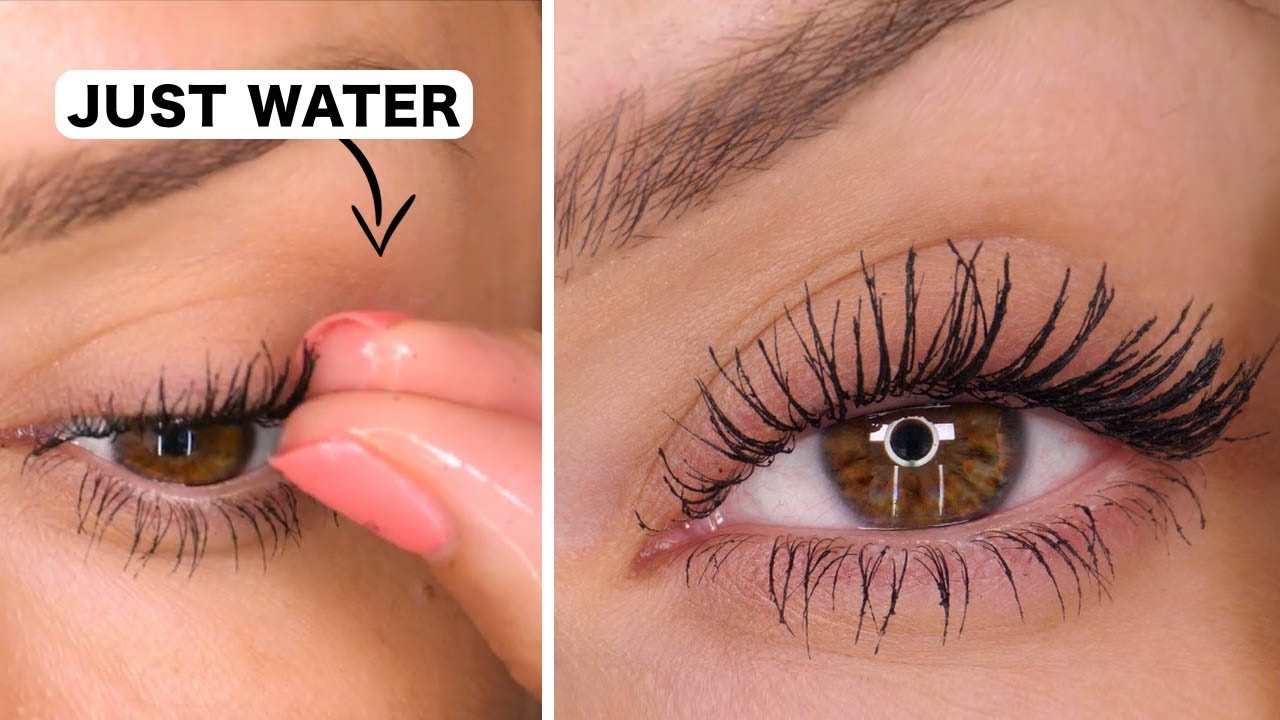
In the United States, most true tubing mascaras can come off with warm water. They do not melt like regular mascara. Instead, the formula forms small tubes around each lash. Warm water helps loosen those tubes so they slide off with gentle pressure.
This does not apply to every mascara labeled “tubing.” Some formulas use a blend of tubing polymers, waxes, oils, or waterproof ingredients. Always check the removal directions on the product sold in the U.S.
Does tubing mascara come off with water?
Yes, true tubing mascara usually comes off with warm water alone. You may need to hold a warm, wet washcloth over your closed eyes for a few seconds. Then gently slide the mascara away from the lashes with your fingers or the cloth.
The mascara may come off in small flakes, strips, or tiny tubes. This can look unusual, but it is normal. The product is leaving the lashes as a film rather than dissolving into dark liquid.
Water temperature matters. Cool water may not soften the mascara enough. Very hot water is not needed and can irritate or burn the delicate skin around the eyes.
| Removal method | What usually happens |
|---|---|
| Cool water | May not loosen the tubes well |
| Warm water | Usually loosens the tubes |
| Warm washcloth | Adds gentle pressure and helps removal |
| Oil cleanser | May remove residue but is often not needed |
| Waterproof eye makeup remover | Can work, but may leave an oily film |
| Rubbing or pulling | Can tug lashes and irritate the eye area |
The key difference is that tubing mascara is designed to resist smudging during normal wear but release with water and light pressure.
Why does tubing mascara remove differently?
Tubing mascara uses film-forming ingredients to wrap around individual lashes. These films create flexible coatings that look like mascara but behave differently from the waxes and oils found in many traditional formulas.
Traditional mascara often leaves pigment on the surface of the lashes. Makeup remover must break down that pigment, wax, oil, or waterproof film. Tubing mascara instead creates a coating that can loosen and slide away.
This is why you may notice:
- Less dark smearing under the eyes
- Small pieces coming off during washing
- Less need for oil-based remover
- A clean-looking removal process
- A slight pulling sensation if the product is not wet enough
“Tubing” does not mean the mascara is made from physical plastic tubes. It refers to the way the formula forms a film around the lashes.
The exact formula depends on the brand. Common film-forming ingredients may include polymers such as acrylates copolymers or other synthetic film formers. Ingredient names and performance vary, so the word “tubing” is not a guarantee of identical removal for every product.

How to remove tubing mascara with water
Use warm water and gentle pressure. Do not scrub the lashes as if you were removing waterproof paint.
Follow these steps
Wash your hands.
Clean hands reduce the chance of transferring dirt or germs to the eye area.Close your eyes.
Keep your eyes shut while wetting the lashes.Use comfortably warm water.
The water should feel warm, not hot.Wet a soft washcloth or your fingertips.
A clean, soft cloth can make removal easier.Hold the cloth over your lashes.
Leave it in place for about 10 to 20 seconds. This gives the water time to soften the film.Gently slide the mascara away.
Use light downward or outward movements. Do not scrub back and forth.Rinse the eye area.
Remove any loose pieces that remain.Pat dry.
Use a clean towel and avoid rubbing the lashes.
You may also remove tubing mascara in the shower. Keep your eyes closed and let warm water run over the face for a short time. If the product does not loosen, use a damp washcloth rather than increasing the water temperature.
Signs that removal is working
You may see the mascara:
- Lift in small sleeves
- Come away in soft flakes
- Slide off the tips of the lashes
- Leave little black pieces on the washcloth
- Stop feeling stiff on the lashes
If the mascara spreads into a dark, oily smear, it may not be a pure tubing formula. It may contain waxes, oils, or waterproof ingredients.

What if tubing mascara does not come off with water?
If water does not remove the mascara, first check the product directions. The formula may be a hybrid or may need a cleanser.
Try this order:
- Use warmer water, but avoid hot water.
- Hold a damp cloth over the closed eyes for longer.
- Gently roll or slide the mascara from the lashes.
- Use a mild eye makeup remover if residue remains.
- Rinse the area well after using remover.
Do not pull hard on the lashes. Strong pulling can cause lash breakage or remove loose natural lashes.
A mascara may resist water for several reasons:
- The water is too cool.
- The product has not been wet long enough.
- Several thick coats were applied.
- The formula contains waterproof ingredients.
- The mascara has dried on the lashes.
- The product is not a true tubing mascara.
- An oil, balm, or long-wear face product is holding the film in place.
If the product feels glued to the lashes, stop rubbing. Apply a gentle eye makeup remover to a cotton pad, close the eye, and hold the pad over the lashes. Follow the product label, then rinse if the instructions call for it.

Can you use makeup remover on tubing mascara?
Yes, you can use makeup remover if warm water is not enough. However, you often do not need an oil-based remover for a true tubing formula.
A water-based or gentle eye makeup remover may be a better first choice. Oil-based products can loosen some tubing formulas, but they may also leave a film that affects the next makeup application.
Read the label before using any remover near the eyes. Avoid products that are not made for the eye area. Keep the bottle or pad from touching the eye itself.
Micellar water may remove some tubing mascaras, but results vary by formula. It may loosen the coating without creating the neat “tubes” associated with warm-water removal.
Do not use household oils, soap, alcohol, or harsh cleansers near the eyes. These products can cause stinging and dryness. The U.S. Food and Drug Administration advises consumers to stop using eye cosmetics if they cause irritation and to keep makeup tools clean.

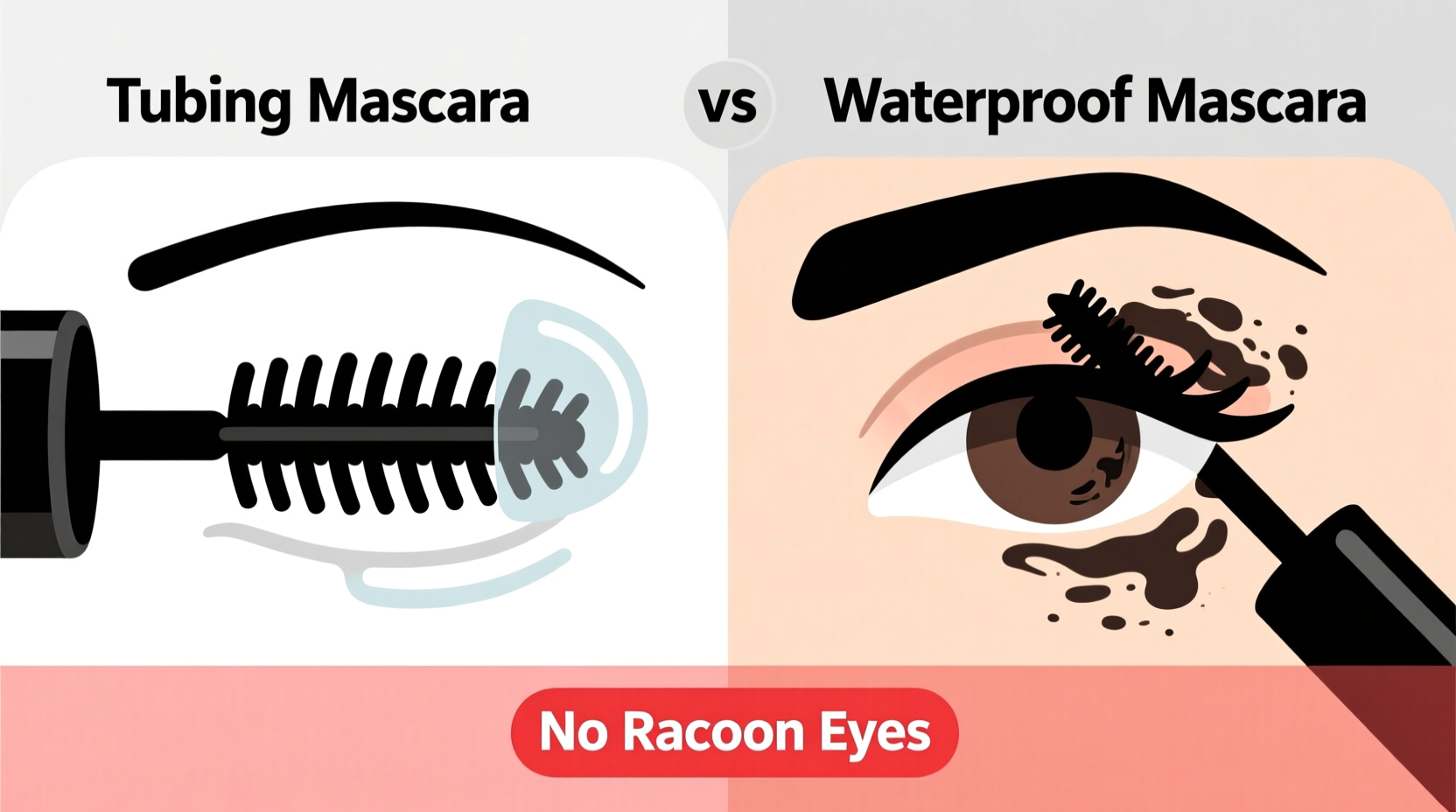
Tubing mascara vs. waterproof mascara
Tubing mascara and waterproof mascara solve different problems.
Tubing mascara uses a flexible film that usually releases with warm water and light pressure. It can be a useful option for people who dislike smudges and do not want to use oil-based remover.
Waterproof mascara uses ingredients designed to resist water. It often needs an oil-based or dual-phase makeup remover. Warm water alone may not remove it fully.
| Feature | Tubing mascara | Waterproof mascara |
|---|---|---|
| Main film behavior | Forms a coating around lashes | Resists water on the lash surface |
| Removal | Usually warm water and gentle pressure | Often needs makeup remover |
| Smudging | Often low during normal wear | Often low during water exposure |
| Removal feel | May slide off in pieces | May dissolve or wipe away |
| Best first method | Warm water | Product-labeled remover |
| Main caution | Do not pull dry tubes | Do not scrub repeatedly |
Some products combine both types of performance. A label may claim long wear, water resistance, or tubing action. That is why the product’s own instructions matter more than the general category.

Is tubing mascara safe for sensitive eyes?
Tubing mascara is not automatically safe for every person with sensitive eyes. Irritation can come from preservatives, pigments, fragrances, film-forming ingredients, or contamination. The risk depends on the individual and the product.
For safer use:
- Check the ingredient list before buying.
- Do not share mascara.
- Keep the wand clean.
- Do not add water to the tube.
- Replace old eye makeup according to the label.
- Stop using the mascara if you develop pain, redness, swelling, or unusual discharge.
- Remove contact lenses before cleansing if your eye-care professional has advised this.
- Seek medical care for severe pain, vision changes, or symptoms that do not improve.
The FDA notes that eye cosmetics can cause infection when they become contaminated. A mascara tube is moist, and repeated contact with the lashes can introduce bacteria into the product.
Do not sleep in tubing mascara. Even if it does not smear, leaving eye makeup on overnight can irritate the eyelid area and make removal harder the next day.

Does tubing mascara damage eyelashes?
Tubing mascara does not inherently damage eyelashes when applied and removed gently. The main risk comes from pulling, rubbing, scraping, or repeatedly removing a stubborn product.
Apply thin coats and let each coat set according to the label. Thick layers may take longer to loosen and can encourage more rubbing during removal.
If your lashes feel dry or seem to break, take a break from mascara and review your removal method. Avoid lash curlers after the mascara has dried unless the product instructions clearly allow it. Do not use tweezers to remove mascara tubes.
Natural lashes grow in cycles. A few lashes may shed during normal washing, but sudden gaps or heavy lash loss deserve attention from an eye-care professional or dermatologist.

Common mistakes when removing tubing mascara
The most common mistake is using force before using enough water. A tubing formula may need time to soften.
Avoid these habits:
- Using cold water and scrubbing harder
- Pulling on dry mascara
- Using a rough towel
- Applying very hot water
- Peeling the mascara with fingernails
- Repeatedly wiping the same lash line
- Using face wash inside the eyes
- Mixing several removers at once
- Continuing to use a product that burns or causes redness
If a warm compress does not help, switch to a gentle eye makeup remover. If the eye becomes painful or vision changes, stop cleaning and seek medical advice.
Frequently asked questions
Can tubing mascara come off in the shower?
Usually, yes. Warm shower water can loosen the tubes. Keep your eyes closed and use gentle finger pressure or a soft washcloth. Do not aim a strong stream directly at the eyes.
Does cold water remove tubing mascara?
Cold water may remove some of it, but warm water usually works better. The film often needs warmth and moisture before it slides away.
Will tubing mascara come off in the rain?
Light rain may not remove it. Tubing mascara is made to resist normal moisture during wear. A longer exposure to warm water, plus gentle pressure, is more likely to remove it.
Can I wear tubing mascara while swimming?
Do not assume it will stay in place during swimming. Water, rubbing, chlorine, and salt can affect wear. Check the product directions and avoid rubbing your eyes in the water.
Does tubing mascara work with lash extensions?
Ask your lash technician before using it. Some mascaras may be unsuitable for lash extensions, and rubbing during removal can weaken the bond. Use only products approved for extensions by the manufacturer or your technician.
Key takeaways
- True tubing mascara usually comes off with warm water.
- It often slides away in small tubes or flakes instead of smearing.
- Use a warm, damp cloth and gentle pressure.
- Do not pull, scrub, or use hot water.
- If water does not work, check the label and use a gentle eye makeup remover.
- Stop using the product if it causes pain, swelling, strong redness, or vision changes.
Conclusion
So, does tubing mascara come off with water? Usually, yes—especially with warm water and light pressure. The formula forms a removable film around the lashes, so it tends to slide off rather than dissolve.
For the best result, close your eyes, hold a warm damp cloth over the lashes, and gently wipe downward. If the mascara smears, stays stuck, or causes irritation, treat it as a different type of formula and follow the product’s removal directions.
