
Introduction
A good skin care routine for combination skin uses gentle products on the whole face and gives extra care to oily areas. In the United States, this often means managing an oily forehead, nose, and chin while protecting drier cheeks from irritation.
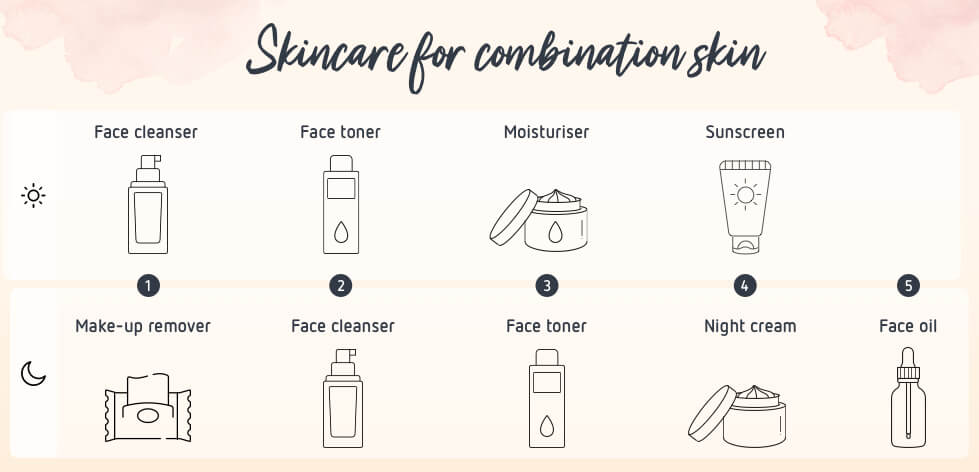
The best routine is not long. It usually needs four core steps:
- A gentle cleanser
- A light moisturizer
- Broad-spectrum sunscreen in the morning
- One targeted treatment, if needed
Combination skin can change with the season, age, stress, hormones, and the climate where you live. A person in dry Arizona may need more moisture than someone in humid Florida. Start with a simple routine, then adjust one step at a time.

What Is Combination Skin?
Combination skin has both oily and dry areas. The T-zone—the forehead, nose, and chin—often feels oily or looks shiny. The cheeks may feel tight, rough, or normal.
Some people also have:
- Enlarged-looking pores around the nose
- Blackheads or small breakouts in the T-zone
- Dry patches near the cheeks or mouth
- Skin that becomes oily by midday but tight after cleansing
- Sensitivity to strong products
Skin type is not fixed. Cold weather, indoor heating, air conditioning, sweat, hormones, and harsh cleansers can all change how the skin feels.
A simple test can help. Wash your face with a mild cleanser, pat dry, and wait about 30 minutes without applying products. If the T-zone becomes shiny while the cheeks feel tight, you may have combination skin. This is only a guide, not a medical diagnosis.
The Best Morning Routine for Combination Skin
A morning routine should remove excess oil, add light moisture, and protect the skin from ultraviolet radiation.
Step 1: Cleanse gently
Use a mild, fragrance-free cleanser with lukewarm water. Massage it over the face with clean fingertips for about 20 to 30 seconds. Rinse well and pat dry.
Avoid scrubbing the nose or washing the face many times a day. These habits can weaken the skin barrier and may cause more dryness or irritation. The American Academy of Dermatology Association recommends gentle cleansing and avoiding harsh scrubbing.
If your face feels tight after washing, the cleanser may be too strong. Try a cream, lotion, or low-foam cleanser. If you wake with a very dry face, rinsing with water in the morning may be enough.
Step 2: Add a targeted serum only if you need one
A serum is optional. Do not add one just because it is popular.
Useful options include:
- Niacinamide: May help reduce the look of oiliness and support the skin barrier.
- Vitamin C: May help protect against free-radical damage when used with sunscreen.
- Hyaluronic acid: Can add water to the skin, especially when followed by moisturizer.
- Salicylic acid: Can help unclog pores, but it may be too drying for daily use on the whole face.
Apply one active product at a time. Using several new products at once makes it hard to find the cause if redness or stinging develops.
Step 3: Moisturize the whole face
Combination skin still needs moisturizer. Skipping it can leave dry areas unprotected and may make the routine harder to tolerate.
Choose a light lotion, gel cream, or fluid moisturizer. Look for terms such as:
- Fragrance-free
- Non-comedogenic
- Oil-free, if heavy products cause breakouts
- Ceramides
- Glycerin
- Dimethicone
- Hyaluronic acid
Use a thin layer on oily areas and a slightly thicker layer on dry areas. You do not need to use the same amount everywhere.
Step 4: Apply sunscreen
Finish with a broad-spectrum, water-resistant sunscreen with SPF 30 or higher. The AAD recommends sunscreen as part of daily skin protection. Apply it to the face, ears, neck, and other exposed skin.
A sunscreen with a light fluid or gel texture may feel better on the T-zone. A cream formula may feel better on dry cheeks. Mineral sunscreens with zinc oxide or titanium dioxide can be useful for people with sensitive skin, although some may leave a white cast.
Reapply when spending extended time outdoors, sweating, or swimming. Sunscreen reduces sun damage, but it does not replace hats, shade, or protective clothing.

The Best Evening Routine for Combination Skin
Night care should remove sunscreen, makeup, sweat, and dirt without stripping the skin.
Step 1: Remove makeup and sunscreen
If you wear makeup or water-resistant sunscreen, start with a cleansing balm, oil cleanser, micellar water, or makeup remover. Follow with a gentle water-based cleanser if residue remains.
You may not need a double cleanse every night. If one mild cleanser removes your products without leaving a film, that may be enough.
Step 2: Use one treatment when needed
Choose a treatment based on the main concern.
| Main concern | Possible ingredient | How to begin |
|---|---|---|
| Blackheads or oily pores | Salicylic acid | Use one or two nights per week |
| Fine lines or repeated breakouts | Retinoid | Begin one or two nights per week |
| Uneven marks | Azelaic acid or retinoid | Start slowly and watch for irritation |
| Dryness or sensitivity | No active treatment | Focus on moisturizer and barrier care |
Apply treatment to dry skin unless the product label says otherwise. Using it on slightly damp skin can increase absorption and may increase irritation for some products.
Do not use salicylic acid, a retinoid, and a strong exfoliating acid on the same night when starting. More active ingredients do not always produce better results.
Step 3: Moisturize
Use moisturizer after treatment. If your cheeks are dry, apply a richer cream there. If your T-zone is oily, use less product in that area.
A moisturizer with ceramides can support the skin barrier. Petrolatum can help protect very dry spots, but it may feel too heavy for acne-prone areas. Apply it only where needed.

How to Choose Products for Combination Skin
The best products are those that solve a problem without creating a new one.
For cleansers
Choose a cleanser that leaves the skin comfortable after rinsing. Good choices include gentle cream, lotion, gel, or low-foam formulas.
Avoid relying on a cleanser that causes a “squeaky clean” feeling. That feeling often signals that too much oil has been removed.
For moisturizers
Use texture as your guide:
- Gel moisturizer: Best for people who dislike a heavy feel
- Lotion: Good for mixed oily and dry areas
- Cream: Better for dry cheeks or a damaged skin barrier
- Ointment: Useful for small, very dry patches
“Non-comedogenic” means the product is designed not to clog pores. It is helpful, but it is not a guarantee. Skin can react differently to the same formula.
For sunscreen
Look for:
- Broad-spectrum protection
- SPF 30 or higher
- A texture you will use every day
- Water resistance for outdoor activity
- Tint, if a white cast is a concern
A tinted sunscreen may also help even out the look of mild redness or discoloration. Sunscreen must be applied in a sufficient layer to provide the protection listed on the label.
A Simple Weekly Schedule
A schedule can prevent overuse of strong products.
| Day | Evening treatment |
|---|---|
| Monday | Moisturizer only |
| Tuesday | Salicylic acid or retinoid |
| Wednesday | Moisturizer only |
| Thursday | Moisturizer only |
| Friday | Salicylic acid or retinoid |
| Saturday | Moisturizer only |
| Sunday | Moisturizer only |
This is an example, not a rule. If your skin is sensitive, use treatments less often. If your skin is already calm and has used an ingredient safely for several weeks, you may slowly increase use according to the product directions.
Do not exfoliate just to remove normal skin flakes. Dryness often means the barrier needs more care, not more scrubbing.

How to Add New Products Safely
Add one new product at a time. Keep the rest of your routine stable for at least several days, and longer when possible.
Before applying a new product to your face, patch test it. Apply a small amount to an area such as the inner forearm or behind the ear. Repeat as directed on the product label and watch for burning, swelling, hives, or a rash.
Stop using the product if you develop:
- Strong burning
- Swelling
- Blisters
- Severe redness
- Hives
- A rash that spreads
Seek urgent medical care for trouble breathing, facial swelling, or other signs of a serious allergic reaction.
Mild tingling is not always a sign that a product is working. Persistent stinging usually means the product is irritating your skin.
Common Mistakes With Combination Skin
Washing the face too often
Frequent washing can dry the cheeks and irritate the skin barrier. Cleanse after waking if needed, before bed, and after heavy sweating.
Using a strong cleanser to control oil
A harsh cleanser may remove surface oil for a short time but leave the skin dry. Choose a gentle cleanser and use a targeted pore treatment only where needed.
Applying acne products to the entire face
If breakouts occur mainly on the nose and chin, start there. Treating dry cheeks with the same strong product may cause unnecessary irritation.
Skipping moisturizer
Oily skin still needs water and barrier support. A lightweight moisturizer can improve comfort without feeling greasy.
Exfoliating too often
Scrubs, cleansing brushes, peeling acids, and acne treatments can add up. Use fewer active products, not more, when your skin becomes red or sore.
Changing the routine every few days
Most skin care products need consistent use before you can judge them. Frequent changes also make it difficult to identify an irritant.
Using fragrance when your skin is sensitive
Fragrance is not harmful for everyone, but it can irritate some people. Fragrance-free products may be a safer starting point for sensitive or reactive skin.
When Combination Skin Needs a Dermatologist
See a board-certified dermatologist if you have painful acne, deep cysts, widespread redness, persistent itching, or dark marks that continue to worsen.
Professional care may also help when:
- Over-the-counter products have not helped after several weeks
- You have frequent flare-ups
- Your skin cracks, bleeds, or forms a rash
- You are unsure whether the problem is acne, rosacea, eczema, or contact dermatitis
- A product causes swelling, hives, or severe irritation
Pregnant or breastfeeding people should ask a health professional before using acne treatments. In particular, topical and oral retinoids require medical guidance during pregnancy.
A dermatologist can also help choose a treatment strength and schedule that fits your skin. This matters when combination skin is also sensitive or acne-prone.
Key Takeaways
- Use a gentle cleanser rather than a harsh oil-stripping wash.
- Moisturize the whole face, using more on dry areas and less on oily areas.
- Wear broad-spectrum SPF 30 or higher each morning.
- Treat oily pores with one active ingredient at a time.
- Start salicylic acid or retinoids slowly.
- Stop products that cause strong burning, swelling, or a spreading rash.
- See a dermatologist for painful acne, persistent redness, or severe irritation.
FAQs
Should I use different products on different parts of my face?
You can. Use a lighter moisturizer on the T-zone and a richer one on dry cheeks. You may also apply salicylic acid only to oily or congested areas. Avoid applying strong treatments to dry skin unless they are needed there.
Is a toner necessary for combination skin?
No. A toner is optional. It may add hydration or deliver an active ingredient, but a cleanser, moisturizer, treatment, and sunscreen can form a complete routine without one.
How often should I exfoliate combination skin?
Start once a week or less. If your skin stays calm, you may increase use based on the product directions. Do not exfoliate when your skin is cracked, sunburned, peeling, or irritated.
Can I use retinol if I have combination skin?
Many people with combination skin can use a retinol product, but they should start slowly. Use a small amount one or two nights per week, moisturize, and increase only if the skin remains comfortable. Ask a health professional about retinoids during pregnancy or breastfeeding.
Why is my skin oily and dry at the same time?
The skin may produce more oil in some areas while losing water or becoming irritated in others. Harsh cleansing, dry air, active ingredients, and genetics can all contribute. Treat each area based on its needs rather than trying to dry out the entire face.
Conclusion
A good skin care routine for combination skin is simple and flexible. Cleanse gently, use targeted treatment only where needed, moisturize every day, and protect your skin with sunscreen.
Start with the basic routine for several weeks. Then adjust one product or one area at a time. If your skin becomes painful, very red, itchy, or persistently inflamed, stop experimenting and seek care from a dermatologist.
