
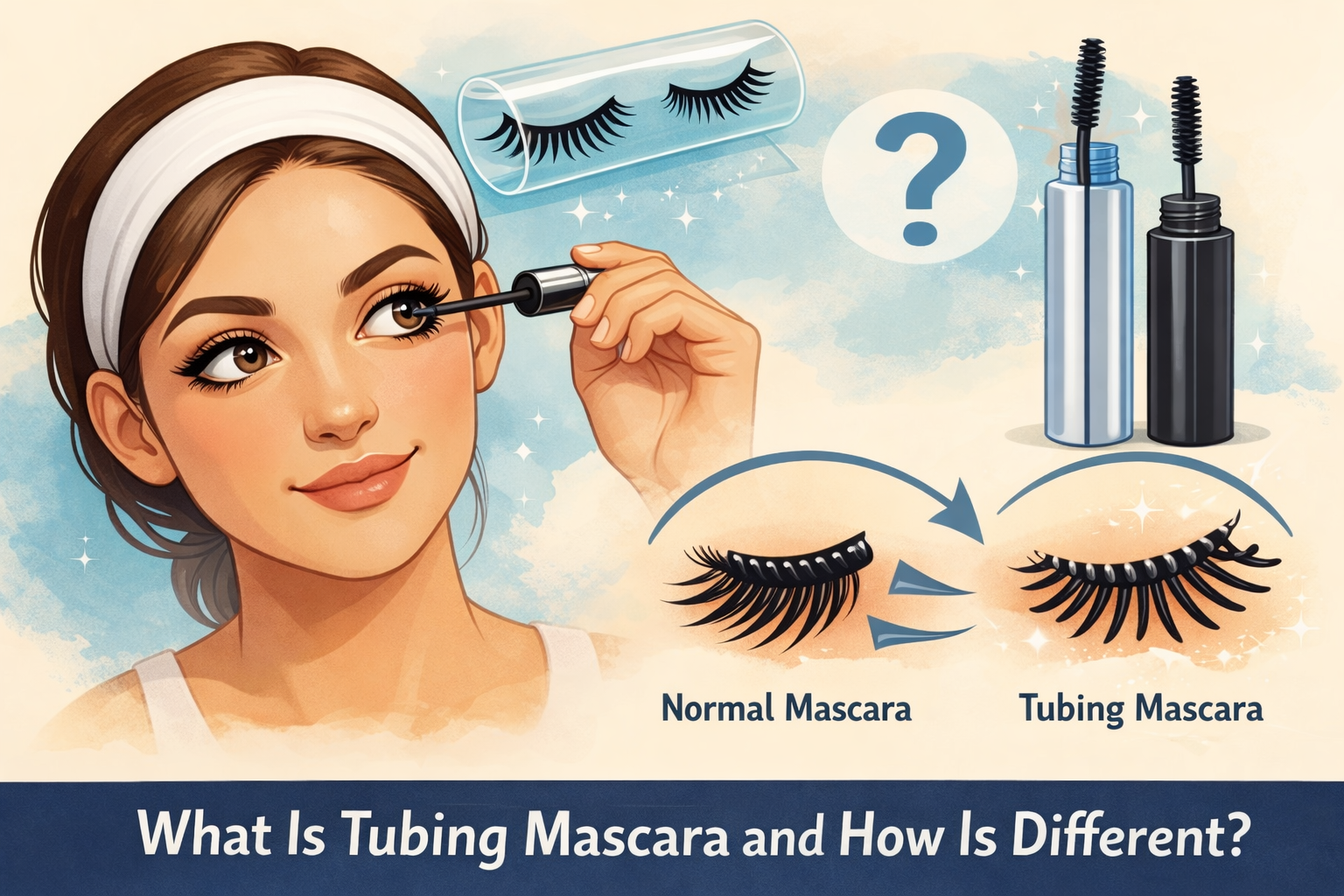
Tubing mascara coats each lash with a tiny, flexible film instead of using only a paint-like layer of wax and pigment. In the United States, these mascaras are popular with people who want less smudging, easy removal, and clean-looking length. The “tubes” are not hollow fibers placed inside your lashes. They are small polymer coatings that wrap around individual lash hairs.
When you apply tubing mascara, the formula dries into these coatings. The tubes help hold color and shape on the lashes during the day. To remove them, soften the mascara with warm water and use gentle pressure. The coatings then slide off in small pieces or soft strips.
What Is Tubing Mascara?
Tubing mascara is a type of eye makeup that forms a polymer film around each eyelash. A polymer is a large molecule that can link together to form a flexible layer. In mascara, this layer acts like a sleeve around the lash.
Traditional mascaras usually deposit pigment, waxes, oils, and film-forming ingredients on the surface of the lash. Tubing mascaras rely more heavily on film-forming polymers. The exact ingredients vary by brand and product.
The word “tubing” describes the way the mascara coats the lash. It does not mean that every formula contains the same polymer or that every product removes in exactly the same way.
Tubes versus a traditional lash coating
A traditional mascara may sit mainly on the top and sides of a lash. A tubing formula can wrap more fully around the lash hair as it dries. This may create a smoother coating and help separate nearby lashes.
The practical difference often looks like this:
| Feature | Tubing mascara | Traditional mascara |
|---|---|---|
| Main coating | Flexible polymer film | Pigment, wax, oils, and film formers |
| Lash effect | Defined length and separation | Volume, thickness, or dramatic color |
| Smudge resistance | Often strong after drying | Varies by formula |
| Removal | Warm water and gentle pressure | Makeup remover usually needed |
| Flaking | Can occur if the film breaks | Can occur as dry pigment or wax falls |
| Water resistance | Often resists light moisture | Depends on the formula |
| Best removal method | Soak, then slide off | Dissolve and wipe away |
These are broad differences. A traditional waterproof mascara can resist water better than some tubing mascaras. A tubing mascara can also contain waxes, pigments, and other ingredients.

How Does Tubing Mascara Work?
Tubing mascara works by forming a thin film around each lash. The formula spreads over the lash, dries, and creates a flexible coating that holds pigment and shape.
Here is the process in simple steps:
- The wet formula spreads across the lash.
- Film-forming polymers begin to dry.
- The polymers create a continuous coating around the lash.
- Pigments add color to the coating.
- The dried film helps the lash look longer, darker, and more defined.
The coating can make a lash look longer because it extends slightly past the natural tip. It may also add some thickness because the lash now has a layer around it.
This effect is cosmetic, not permanent. Tubing mascara does not change the growth rate, strength, or natural length of your lashes.
Why the mascara does not smear as easily
Once dry, the polymer film can be less likely to dissolve when exposed to small amounts of sweat, humidity, or tears. It may also resist the rubbing that causes some traditional mascaras to leave dark marks under the eyes.
That does not make every tubing mascara waterproof. Some formulas can loosen in heavy rain, while swimming, or after long exposure to water. Check the product label if you need a formula for water sports or very wet conditions.
Why it comes off in small tubes or flakes
Warm water softens the film. Gentle pressure from your fingers helps the coating slide away from the lash. The removed film may look like tiny black threads, flakes, or curved pieces.
This appearance does not mean your lashes are falling out. It is usually the dried mascara film. However, pulling hard can remove natural lashes, so the coating should be softened before you try to remove it.

What Ingredients Make Tubing Mascara Work?
Film-forming polymers create the main tubing effect. Product labels may list ingredients such as acrylates copolymers, copolymer blends, or other synthetic film formers. The ingredient list differs by product and region.
A tubing mascara may also contain:
- Pigments, which provide black, brown, blue, or other color
- Water, which helps create the wet formula
- Humectants, which help retain moisture in the formula
- Thickeners, which control texture and application
- Preservatives, which help limit microbial growth
- Conditioning ingredients, which improve feel or flexibility
- Waxes or oils, which may add body or glide
Do not identify a product as tubing based only on one ingredient. A film-forming polymer can appear in many types of mascara. The best clues are the product’s stated removal method and its description of forming tubes or a flexible film around lashes.
Ingredient names can also vary. If you have allergies or sensitive eyes, read the full label and check the manufacturer’s current ingredient list before use.

How to Apply Tubing Mascara Correctly
Apply tubing mascara to clean, dry lashes. The product needs a clear surface so the film can spread evenly.
Step 1: Wipe excess product from the wand
A thick blob of mascara can create clumps. Remove extra product on the inside edge of the tube or with a clean tissue. Do not pump the wand in and out, since that can push air into the container.
Step 2: Start at the lash base
Place the wand near the base of the upper lashes. Move it upward with a gentle zigzag motion. This helps coat the lash from root to tip.
Avoid pressing the wand into the eyelid. The eye area is delicate, and a sharp wand can cause injury if your hand slips.
Step 3: Let the first coat set
Wait briefly before adding more product. Applying several wet layers at once can cause clumps or uneven tubes.
If you want more length, add a thin second coat to the upper lashes. For a softer look, use less product on the lower lashes.
Step 4: Separate lashes before the formula fully dries
Use a clean lash comb or the mascara wand to separate lashes while the product is still workable. Do not force apart lashes after the coating has fully hardened.
Signs of a good application
A well-applied tubing mascara should:
- Coat lashes from base to tip
- Keep nearby lashes fairly separate
- Feel light once dry
- Resist ordinary blinking and mild moisture
- Remove without strong rubbing
If the lashes feel stiff, heavy, or sharply crunchy, you may have applied too much product.

How to Remove Tubing Mascara
Remove tubing mascara with warm water and gentle pressure. You usually do not need an oil cleanser or strong makeup remover unless the product label says otherwise.
Follow these steps:
- Wash your hands.
- Wet the eye area with warm water.
- Hold a warm, damp washcloth over closed eyes for several seconds.
- Gently pinch the softened lashes with clean fingertips or the cloth.
- Slide the coating down and away from the lashes.
- Rinse away any remaining pieces.
- Pat the area dry without rubbing.
The water should feel comfortably warm, not hot. Hot water can irritate or burn the thin skin around the eyes.
Do not pull at dry mascara. If the coating does not slide off, wet it again and wait longer. Some formulas need more soaking time, especially when several coats are layered.
Can you use makeup remover?
You can use a gentle eye makeup remover if warm water does not remove the product. Follow the mascara label first, since formulas differ.
Oil-based removers may loosen some products, but they are not always needed. If you wear contact lenses, remove the lenses before cleansing unless your eye-care professional has given you different instructions.

Tubing Mascara Compared With Waterproof Mascara
Tubing mascara and waterproof mascara solve different problems.
Tubing mascara is designed to form a removable film around the lashes. Waterproof mascara usually depends on water-resistant ingredients, such as waxes, oils, and film formers, to keep water from dissolving the product.
A waterproof formula may be the better choice for swimming or intense exposure to water. A tubing formula may be easier for daily wear when your main concern is under-eye smudging and simple removal.
| Your main need | Formula that may fit better |
|---|---|
| Easy daily removal | Tubing mascara |
| Resistance to tears and humidity | Tubing or water-resistant formula |
| Swimming or heavy water exposure | Waterproof mascara |
| Bold lash volume | Often a traditional volume formula |
| Defined, separated lashes | Often a tubing formula |
| Minimal rubbing during removal | Tubing mascara |
No formula is ideal for every use. Waterproof mascara can be difficult to remove and may require more rubbing. Tubing mascara can lose its film when exposed to large amounts of water.

Benefits and Limits of Tubing Mascara
Tubing mascara can be useful, but it is not automatically better than every other type.
Potential benefits
- Less smudging: The dried film may stay in place better than some traditional formulas.
- Easy removal: Warm water can soften the coating.
- Clear lash definition: The film often separates lashes and emphasizes length.
- Less oily residue: Many tubing formulas do not need an oil cleanser.
- Good fit for sensitive routines: Less rubbing may help reduce mechanical irritation around the eyes.
These benefits depend on the product, the number of coats, skin type, climate, and daily activity.
Common limits
- Less dramatic volume: Some tubing formulas focus on length and separation rather than a thick, false-lash effect.
- Possible flaking: The film can break apart when the mascara gets old or is applied too heavily.
- Variable water resistance: Not every tubing mascara is suitable for swimming.
- Removal can feel unusual: The mascara may come off as small pieces rather than dissolving into dark liquid.
- Some formulas can still irritate: “Tubing” does not mean hypoallergenic or irritation-free.
A product label can tell you how the formula is intended to work. It cannot guarantee that every user will have the same result.

Common Tubing Mascara Problems and Fixes
The mascara smudges
Possible causes:
- The formula was not fully dry.
- You applied it too close to the lower lash line.
- Your eyelids or under-eye area are oily.
- The product is not a true tubing formula.
- Tears or heavy moisture softened the film.
What to try:
Let each coat dry before adding another. Use less product on lower lashes. Check whether the label describes tube-forming or warm-water removal.
The mascara flakes
Possible causes:
- Too many coats created a thick film.
- The product is old.
- The lashes were rubbed during the day.
- The coating became brittle after drying.
What to try:
Apply thinner coats and avoid layering other eye products over the mascara. Replace the product according to its label and discard it if its smell, texture, or appearance changes.
The tubes will not come off
Possible causes:
- The water was too cool.
- You did not soak the lashes long enough.
- Several layers created a thicker coating.
- The product requires a cleanser for removal.
What to try:
Use comfortably warm water and hold a damp cloth over closed eyes for longer. Then slide the softened coating away. Do not tug or scrub.
The mascara clumps
Possible causes:
- Too much product was left on the wand.
- The formula began drying on the wand.
- You applied a new coat before the first coat set.
- The product is old.
What to try:
Wipe excess product from the wand. Comb through the lashes while the mascara is still slightly wet. Replace the product if the texture stays thick or stringy.
Your eyes sting or water
Stop using the mascara and remove it gently. Do not keep wearing an eye product that causes pain, burning, swelling, or persistent redness.
Seek medical care if symptoms are severe, affect your vision, continue after removal, or include marked swelling or discharge. People with eye disease, recent eye surgery, or repeated reactions should ask an eye-care professional before trying another eye cosmetic.

Is Tubing Mascara Safe for Sensitive Eyes?
Tubing mascara is not automatically safer for sensitive eyes. Its removal method may reduce rubbing, but the formula can still contain preservatives, pigments, fragrances, or other ingredients that irritate some people.
Use these precautions:
- Check the ingredient list before use.
- Avoid products with ingredients that have caused you a reaction before.
- Do not share mascara.
- Keep the wand and tube clean.
- Do not add water or saliva to the tube.
- Follow the brand’s use and replacement instructions.
- Stop use if you develop pain, swelling, itching, or vision changes.
- Replace the product after an eye infection, even if some remains.
The U.S. Food and Drug Administration advises consumers to avoid sharing eye cosmetics and to discard eye makeup that may have become contaminated. The FDA also recommends care when using cosmetics near the eye and advises consumers to avoid use if an eye infection is present.
Mascara should never be used while driving or during another activity where a sudden hand movement could injure the eye.
Frequently Asked Questions
Does tubing mascara damage your eyelashes?
Tubing mascara does not usually damage lashes when applied and removed gently. Pulling at dry tubes, scrubbing the eye area, or using an old contaminated product can increase the risk of irritation and lash breakage.
Is tubing mascara waterproof?
Not always. Many tubing mascaras resist light moisture, tears, and humidity, but they may loosen in heavy water. Read the product label if you need strong water resistance.
Can tubing mascara make lashes grow?
No. Tubing mascara can make lashes look longer by coating the natural lash and extending its visible tip. It does not make the lash grow or change its natural growth cycle.
Can you curl lashes before using tubing mascara?
Yes. Curl clean, dry lashes before applying mascara. Curling after the mascara dries can crack the film or pull on the lashes.
Does tubing mascara work on short lashes?
It can. A thin formula may define short lashes without adding much weight. Use the tip of the wand for small lashes and apply light coats to avoid clumps.
Can you wear tubing mascara with contact lenses?
Many people do, but the product must not enter the eye. Follow the mascara and contact-lens instructions. Remove lenses before taking off makeup if your eye-care professional or product directions recommend it.
Key Takeaways
- Tubing mascara forms a flexible polymer coating around each lash.
- The coating can create a longer, darker, and more defined look.
- Warm water and gentle pressure usually loosen the tubes.
- Tubing mascara is often smudge-resistant but not always waterproof.
- Apply thin coats and allow them to dry between layers.
- Never pull or scrub hard during removal.
- Stop using the product if it causes pain, swelling, or lasting irritation.
Conclusion
Tubing mascara works by wrapping each lash in a flexible film. That film helps hold color and shape while reducing some types of smudging. Warm water softens the coating, so it can slide away with less rubbing than many traditional mascaras.
Choose tubing mascara when easy removal and clean lash definition matter most. Choose another formula when you need very bold volume or strong protection during swimming. The best result comes from thin application, careful removal, and prompt replacement when the product changes or irritates your eyes.
Sources and Evidence
- U.S. Food and Drug Administration: Eye Cosmetic Safety
- U.S. Food and Drug Administration: Cosmetics Safety Q&A
- U.S. Food and Drug Administration: Cosmetics and the Law
- Cosmetic product labels and manufacturer instructions should be checked for the exact formula, removal method, contact-lens guidance, and replacement advice.

