
Care for permed hair with gentle washing, deep conditioning, low heat, and regular trims to protect its new shape.
Learning how to care for perm hair takes more than buying a curl cream. A perm changes the hair’s inner bonds, so your strands need time, moisture, and gentle handling. With the right routine, you can enjoy soft curls or waves while reducing frizz, dryness, and breakage. This guide explains how to care for perm hair with practical steps based on hair science, salon practice, and real-life lessons.

What a perm does to your hair
A permanent wave, or perm, uses chemical solutions to reshape the bonds inside the hair. The stylist wraps your hair around rods, applies a waving lotion, and then uses a neutralizer to lock in the new pattern.
This process can create curls, waves, or added body. However, it also makes the hair more vulnerable to dryness because the cuticle may become less smooth after chemical treatment.
Knowing this helps you understand how to care for perm hair. Your new texture is not weak by default, but it needs more care than untreated hair.
The main concerns after a perm include:
- Dryness and rough texture
- Frizz and loss of curl shape
- Split ends and breakage
- Scalp irritation
- Uneven curls from poor styling habits
- Damage from bleach, coloring, or heat
A perm does not permanently damage every head of hair. Hair strength depends on its condition before treatment, the chemicals used, the processing time, and the skill of the stylist.

How to care for perm hair during the first 48 hours
The first two days are important. Your hair needs time to settle into its new shape after the chemical service.
Many stylists advise waiting at least 48 hours before shampooing. Washing too soon may loosen the curl pattern, especially if the perm solution has not fully stabilized. Follow your stylist’s exact instructions because processing methods can differ.
During this early period:
- Do not wash or soak your hair.
- Avoid tight ponytails, buns, clips, and headbands.
- Do not brush the curls.
- Avoid sweating heavily if possible.
- Keep your hair away from rain and swimming pools.
- Sleep with your hair loose or gently gathered on top of your head.
If your hair gets wet by accident, do not panic. Press it gently with a soft towel and let it air-dry. Avoid rubbing, twisting, or using a hot blow dryer.
One mistake I often see is treating freshly permed hair like ordinary hair. People tie it back for work or brush it after sleeping. That can leave dents in the curl pattern before it has fully settled.

Build a gentle washing routine
How to care for perm hair starts with the way you wash it. Shampoo removes oil, sweat, and product buildup, but frequent washing can also remove moisture from chemically treated strands.
Most people with permed hair do well with washing two or three times each week. Your schedule may differ if you exercise often, have an oily scalp, or live in a hot, humid climate.
Choose products made for curly, dry, or chemically treated hair. A mild, moisturizing shampoo is usually a better choice than a strong clarifying shampoo for regular use.
Use this simple method:
- Wet your hair with lukewarm water.
- Apply shampoo mainly to the scalp.
- Massage with your fingertips, not your nails.
- Let the suds rinse through the lengths.
- Apply conditioner from the mid-lengths to the ends.
- Leave the conditioner on for a few minutes.
- Rinse with cool or lukewarm water.
Do not pile your hair on top of your head while washing. This creates tangles and friction. Let the hair fall down your back and gently smooth the cleanser through it.
A clarifying shampoo can help remove heavy buildup, but use it sparingly. Once every few weeks may be enough. Follow with a rich conditioner because clarifying formulas can leave permed hair feeling dry.
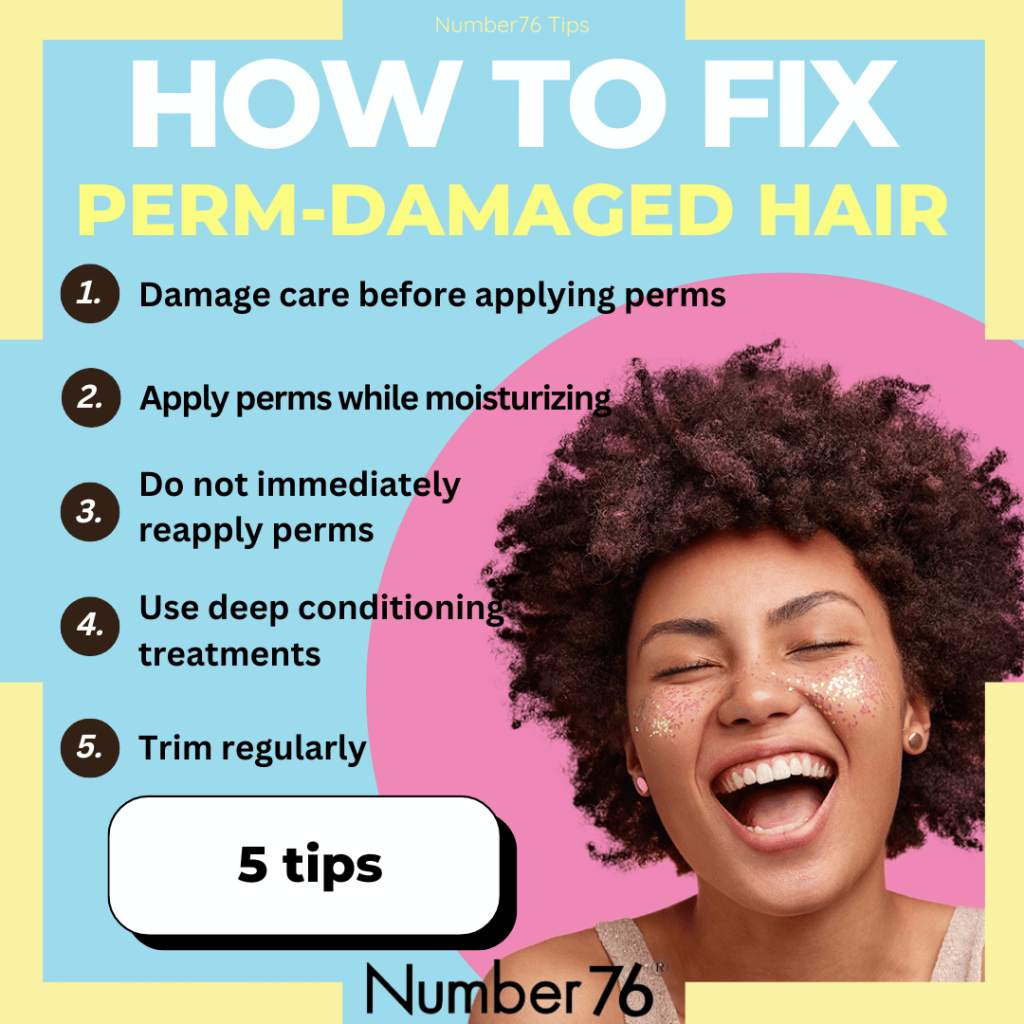
Use moisture and protein in balance
Permed hair often needs more moisture, but moisture is not the only part of a healthy routine. Hair also contains keratin, a protein that helps give it strength.
Deep conditioning once a week can improve softness and reduce tangles. Look for ingredients such as:
- Glycerin
- Aloe vera
- Panthenol
- Shea butter
- Argan oil
- Coconut oil
- Fatty alcohols such as cetyl alcohol
Protein treatments may help hair that feels weak, stretchy, or overly soft when wet. Ingredients such as hydrolyzed keratin, wheat protein, rice protein, or silk protein can provide temporary support.
Too much protein can make hair feel stiff or rough. Too much moisture can leave some hair limp and difficult to style. The best approach is to watch how your hair responds rather than follow a rigid schedule.
If your hair snaps easily, feels rough, or has many split ends, reduce chemical services and ask a licensed stylist for an assessment. Hair products cannot repair a split end permanently. They can only smooth it until the damaged part is trimmed.

Detangle and style without causing breakage
Gentle handling is one of the most important parts of how to care for perm hair. Wet hair stretches more easily, and chemically treated hair may break when pulled.
Use a wide-tooth comb or your fingers to detangle. Start at the ends and work upward in small sections. Apply conditioner or a leave-in product first so the comb can move through the hair with less friction.
Avoid dry brushing if you want to keep your curls defined. Brushing dry curls can separate the pattern and create a large, fluffy shape.
For daily styling:
- Apply leave-in conditioner to damp hair.
- Add a curl cream or light styling gel.
- Scrunch the hair upward with your hands.
- Blot with a cotton T-shirt or microfiber towel.
- Let the hair air-dry or use a diffuser on low heat.
- Do not touch the curls while they dry.
A cotton T-shirt can create less friction than a rough bath towel. Gently squeeze out water instead of twisting the hair.
A useful styling rule is to use less product than you think you need. Add more only if necessary. Heavy layers can make curls dull, sticky, or flat.

Protect permed hair from heat
Heat styling can worsen the dryness caused by chemical processing. Flat irons, curling irons, and hot blow dryers can weaken the hair’s outer layer over time.
Air-drying is the gentlest option. If you need a dryer, use a diffuser with low or medium heat and low airflow. Keep the diffuser moving instead of holding it in one place.
Always apply a heat protectant before using hot tools. Even then, heat protection does not make unlimited heat safe. It reduces risk but does not remove it.
Try these habits:
- Use hot tools only when needed.
- Keep the temperature as low as possible.
- Do not straighten freshly permed hair often.
- Let the hair dry before using a curling iron.
- Avoid repeated passes over the same section.
- Give your hair several heat-free days each week.
One common mistake is using a flat iron to “fix” frizz after a perm. This may make the hair look smooth for a day, but repeated heat can weaken the new texture and make the ends brittle.

Protect your hair while sleeping
Night care can help preserve curls and reduce morning frizz. Cotton pillowcases can create friction that roughens the cuticle and pulls apart the curl pattern.
A satin or silk pillowcase may reduce friction. You can also wear a loose satin bonnet if it stays comfortable and does not press tightly on the hairline.
Before bed, try one of these methods:
- Place long hair in a loose “pineapple” at the top of your head.
- Use a soft scrunchie instead of a tight elastic.
- Sleep with shorter hair loose on a smooth pillowcase.
- Mist very dry ends lightly with water before adding a small amount of leave-in conditioner.
Do not sleep with soaking-wet hair. Wet hair is more fragile, and staying damp for many hours can create tangles and an unpleasant scalp feeling.
If your curls look flat in the morning, refresh them with a little water and a small amount of curl product. Avoid adding several layers of cream each day.

Manage swimming, sun, and humidity
Chlorine, salt water, strong sun, and humid air can affect permed hair. Chlorine may leave hair dry and rough, while salt water can pull moisture from the strands.
Before swimming, wet your hair with clean water and apply a small amount of conditioner. Hair that is already saturated absorbs less pool or ocean water.
Wear a swim cap when practical. After swimming, rinse your hair as soon as possible and use a gentle shampoo if needed.
Sun exposure can also make hair feel dry and may fade colored hair. A hat provides simple protection. Some leave-in products contain UV filters, but they should not be treated as complete protection.
Humidity can make curls expand and frizz. An anti-humidity gel or light styling product may help. Avoid using too much oil in humid weather because it can make the hair feel heavy without stopping moisture from entering the strand.

Know when to trim or retouch
Regular trims help remove split ends and keep the shape fresh. A small trim every eight to twelve weeks works for many people, though the best timing depends on growth, damage, and style.
Do not perm the entire length every time. When new growth appears, ask for a root or partial retouch if your stylist believes your hair can handle it. Applying strong chemicals repeatedly to already permed ends increases the risk of overprocessing.
Be cautious about combining services. Perming, bleaching, relaxing, and permanent coloring can place significant stress on the same hair. Your stylist should review your hair history before recommending another chemical service.
Delay a retouch if your hair is:
- Breaking during brushing
- Very dry or rough
- Stretchy when wet
- Covered with split ends
- Irritated at the scalp
- Recently bleached or relaxed
A strand test can reveal how your hair may react before a full service. It is a simple step, but it can prevent a much larger problem.
Avoid common perm hair care mistakes
Learning how to care for perm hair also means knowing what not to do. Small daily habits can affect the results more than an expensive product.
Avoid these mistakes:
- Washing with very hot water
- Brushing curls when they are dry
- Using a rough towel
- Applying heavy oils to the scalp
- Sleeping with tight hair ties
- Repeatedly straightening the hair
- Skipping conditioner
- Coloring too soon after perming
- Perming damaged or bleached hair without a professional check
- Using strong clarifying shampoo too often
Do not expect every product labeled “curly” to work for every person. Hair porosity, thickness, density, curl pattern, and climate all matter.
For example, fine permed hair may need a light mousse instead of a thick butter. Coarse, dry hair may respond better to a rich conditioner and cream. Testing one product at a time makes it easier to learn what your hair likes.
If your scalp burns, develops sores, or stays irritated after a perm, contact a medical professional. Cosmetic advice cannot replace care for a scalp injury or allergic reaction.
A simple weekly routine for permed hair
A consistent routine makes how to care for perm hair much easier. You do not need a shelf full of products.
Try this basic plan:
- Wash with a gentle moisturizing shampoo two or three times weekly.
- Condition every time you shampoo.
- Use a deep conditioner once a week.
- Detangle with a wide-tooth comb while the hair is conditioned.
- Apply leave-in conditioner and curl styling product to damp hair.
- Air-dry or diffuse with low heat.
- Sleep on satin or use a loose satin bonnet.
- Refresh curls with water between wash days.
- Trim damaged ends every few months.
- Review your routine if the hair becomes dry, limp, or brittle.
Take a photo of your hair after styling. Compare it after a few weeks. This can help you notice whether your curls are becoming healthier or whether a product is causing buildup.
Your routine may change with the seasons. Winter air can increase dryness, while summer humidity may require lighter products and stronger frizz control.
Frequently Asked Questions About How to Care for Perm Hair
How often should you wash permed hair?
Most people can wash permed hair two or three times per week. Wash more often if your scalp becomes oily or sweaty, but use a gentle shampoo and condition the lengths.
Can you brush permed hair?
You can detangle permed hair with a wide-tooth comb or your fingers, especially when it is damp and covered with conditioner. Avoid brushing dry curls because it can cause frizz and disrupt the curl pattern.
Can you use oil on permed hair?
A small amount of lightweight oil can smooth dry ends and add shine. Apply it mainly to the mid-lengths and ends, since too much oil can weigh down curls or create buildup.
How long should you wait to wash your hair after a perm?
Many stylists recommend waiting about 48 hours before shampooing. Your stylist’s instructions should come first because the correct waiting time can vary by product and technique.
Can you color hair after getting a perm?
Coloring after a perm may be possible, but timing matters. Ask a professional to assess the hair first, and avoid combining services when the hair is dry, weak, bleached, or breaking.
Why is my permed hair frizzy?
Frizz may result from dryness, humidity, friction, rough towels, over-brushing, or product buildup. Use conditioner, handle the hair gently, and apply styling products while it is still damp.
Conclusion
Healthy permed hair needs gentle washing, regular conditioning, careful detangling, low heat, and protection from friction and harsh chemicals. Give the hair time to settle after the service, watch for signs of damage, and adjust products to your texture and climate.
The best way to care for perm hair is to keep the routine simple and consistent. Start with one change today, such as switching to a gentle shampoo or sleeping on satin, then track how your curls respond. Explore more professional hair care guides, and share your favorite perm care tips in the comments.
