
How to care for aging facial skin starts with daily sunscreen, gentle cleansing, steady moisture, and proven active ingredients.
Aging skin needs care that protects its thin outer barrier while addressing dryness, fine lines, uneven tone, and loss of firmness. The best routine is not the most costly one. It is the one you can use every day. This guide explains how to care for aging facial skin with simple steps, safe product choices, and advice based on dermatology research and real skin care practice.

What happens to skin as it ages?
Skin changes with time because of both natural aging and outside stress. From about age 25 onward, the body slowly makes less collagen and elastin. These proteins help skin look firm and smooth.
The skin also makes less oil and holds less water. This can lead to dryness, rough texture, fine lines, and more visible pores. Cell renewal slows too, so dull skin may take longer to shed.
Sun exposure is one of the largest causes of visible skin aging. Ultraviolet, or UV, rays can damage collagen, trigger dark spots, and cause uneven texture. Smoking, air pollution, poor sleep, and repeated facial movement can add to this damage.
Common signs of aging facial skin include:
• Fine lines around the eyes and mouth
• Dry or tight skin after cleansing
• Dark spots and uneven skin tone
• Loss of firmness around the cheeks or jaw
• Rough or dull texture
• Increased sensitivity or redness
Learning how to care for aging facial skin means treating these concerns without stripping or irritating the skin. Think of your skin barrier as a brick wall. The skin cells are the bricks, and natural oils are the mortar. Harsh products can weaken that mortar.

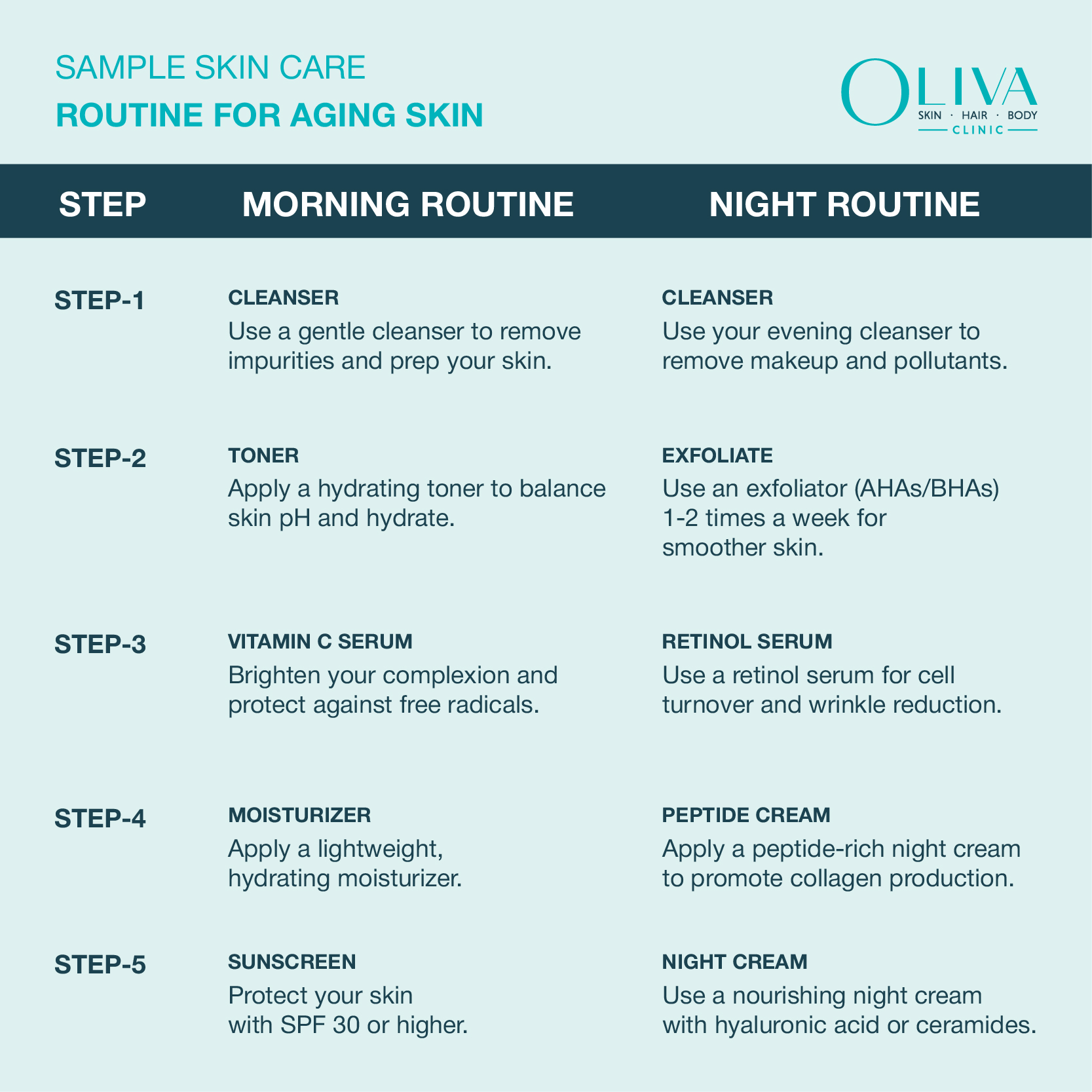
Build a simple morning skin care routine
A morning routine should protect the skin from sunlight and support its moisture barrier. You do not need many products. A gentle cleanser, moisturizer, and broad-spectrum sunscreen form the base.
Step 1: Cleanse gently
Use a mild, fragrance-free cleanser if your face feels oily, sweaty, or dirty in the morning. If your skin is very dry, rinsing with lukewarm water may be enough.
Avoid hot water and rough washcloths. Both can remove helpful oils and increase dryness. Massage the cleanser with clean fingertips for about 20 seconds, then rinse well.
Step 2: Add a helpful serum
A serum is optional. Choose one based on your main concern.
• Vitamin C may help brighten uneven tone and support protection from environmental stress.
• Niacinamide may help reduce redness, support the skin barrier, and improve the look of pores.
• Hyaluronic acid can draw water into the outer layers of skin. It works best when followed by moisturizer.
Apply one new serum at a time. Using many active products at once can cause stinging and peeling.
Step 3: Moisturize
A good moisturizer reduces water loss and makes fine lines look softer. Look for ingredients such as ceramides, glycerin, squalane, dimethicone, and petrolatum.
Creams are often better for dry aging skin than light gels. If your skin is oily, choose a lotion or gel cream labeled noncomedogenic.
Step 4: Apply sunscreen
Use a broad-spectrum sunscreen with SPF 30 or higher every morning. Broad-spectrum products protect against both UVA and UVB rays. UVA rays can pass through clouds and windows, so sunscreen matters even on many indoor days.
Apply enough to cover your face, ears, neck, and other exposed areas. A useful guide is about two finger lengths of sunscreen for the face and neck. Reapply every two hours when outdoors, or sooner after sweating or swimming.
This is one of the most important parts of how to care for aging facial skin. No serum can replace daily sun protection.

Create a calming evening routine
Night care gives the skin time to recover from the day. It also allows you to use ingredients that may make skin more sensitive to sunlight.
Step 1: Remove sunscreen and makeup
Use a gentle cleanser at night. If you wear water-resistant sunscreen or makeup, you may need a cleansing balm or oil first, followed by a mild cleanser.
Do not scrub hard to remove makeup. Let the cleanser break down the product. Rubbing can worsen redness and may irritate the delicate skin around the eyes.
Step 2: Use a retinoid slowly
Retinoids are vitamin A ingredients with strong evidence for improving fine lines, texture, and uneven tone. Retinol is available in many over-the-counter products. Stronger retinoids may require a prescription.
Start with a small amount two nights per week. Use about a pea-sized amount for the whole face. Avoid the corners of the nose, lips, and eyes at first because these areas become irritated easily.
After a few weeks, increase use if your skin feels comfortable. Mild dryness may occur. Burning, swelling, or painful peeling means you should stop and let your skin recover.
A simple “sandwich” method can help. Apply moisturizer first, then retinol, followed by another thin layer of moisturizer. This may reduce irritation.
Do not use retinoids during pregnancy unless your health care professional says they are safe. People who are breastfeeding should also ask a medical professional before use.
Step 3: Seal in moisture
Finish with a nourishing moisturizer. If your skin is very dry, apply a thin layer of petrolatum to dry areas. This reduces water loss and supports the skin barrier.
The goal is not to make your face feel tight or “squeaky clean.” Healthy skin should feel calm, soft, and comfortable.

Choose ingredients that support aging skin
Product labels can be confusing. A few well-studied ingredients can make your routine easier to plan.
Retinoids for fine lines
Retinoids help increase cell turnover and support collagen activity. They may improve the look of fine lines, rough texture, and some dark spots.
Results take time. Most people need at least eight to twelve weeks of regular use to notice a change. More is not better. Applying extra product can cause irritation without speeding results.
Vitamin C for brightness
Vitamin C may help reduce the look of sun-related discoloration and support the skin’s defense against free radicals. L-ascorbic acid is a well-studied form, but it can be irritating for some people.
Store vitamin C in a cool, dark place. If the product turns dark brown or develops a strange smell, it may have become less effective.
Niacinamide for barrier support
Niacinamide is a form of vitamin B3. It can help support the skin barrier, reduce water loss, and improve the appearance of uneven tone.
Many products contain 2% to 5% niacinamide. Higher strength is not always better. A lower strength may be a wiser choice for sensitive skin.
Peptides for a gentle option
Peptides are short chains of amino acids. They are used in products designed to support the look of firmness and smoothness.
Research on different peptide formulas varies. Peptides can be a helpful part of a routine, but they should not replace sunscreen or a moisturizer.
Ceramides for dry skin
Ceramides are natural fats found in the skin barrier. Moisturizers with ceramides may help reduce dryness and support barrier function.
They are especially helpful when aging skin feels rough, tight, or easily irritated.
Alpha hydroxy acids for texture
Lactic acid and glycolic acid can loosen dead skin cells and improve dull texture. Use them carefully because over-exfoliation can lead to redness, burning, and more sensitivity.
Start once weekly. Avoid using an exfoliating acid on the same night as retinol until your skin has adjusted.
Protect the skin barrier
A strong skin barrier is central to how to care for aging facial skin. It helps keep water in and irritants out.
Many people damage their barrier without realizing it. They use a strong cleanser in the morning, an acid at night, a scrub on the weekend, and a retinoid between those steps. The result is often dry, red, itchy skin.
Use these barrier-friendly habits:
• Wash with lukewarm water
• Choose fragrance-free products if your skin is sensitive
• Pat your face dry instead of rubbing it
• Apply moisturizer while skin is slightly damp
• Limit scrubs and cleansing brushes
• Add only one active product at a time
• Give irritated skin a break from retinol and acids
A useful lesson from everyday skin care is that consistency beats intensity. Gentle care repeated for months usually works better than an aggressive routine used for a few days.

Address common aging skin concerns
Different concerns need different strategies. Trying to fix everything at once often creates more problems.
Fine lines and wrinkles
Daily sunscreen is the first step. A retinoid may help soften the look of fine lines over time. Moisturizer can also make lines look less noticeable by improving the skin’s surface hydration.
Facial exercises and creams cannot fully remove deep wrinkles. Procedures such as Botox, fillers, laser treatments, and chemical peels may help, but they require consultation with a qualified medical professional.
Dark spots
Sun protection prevents dark spots from becoming darker. Vitamin C, niacinamide, retinoids, and azelaic acid may help improve uneven tone.
Dark spots can have many causes. A new, changing, bleeding, or irregular spot should be checked by a dermatologist. Skin care should never delay a skin cancer evaluation.
Dryness
Use a creamy cleanser and a moisturizer with ceramides, glycerin, or petrolatum. Apply moisturizer within a few minutes of washing.
A humidifier may help during dry winter months. Drink water for overall health, but extra water alone will not repair a damaged skin barrier.
Sagging skin
Creams can improve hydration and make skin look smoother, but they cannot lift loose skin in the same way as a medical procedure.
Daily sunscreen and a retinoid may support the look of firmness. For more visible lifting, discuss realistic options with a board-certified dermatologist or qualified cosmetic surgeon.
Redness and sensitivity
Keep the routine simple. Avoid fragrance, harsh scrubs, very hot water, and strong acids.
Persistent redness may be linked to rosacea, eczema, contact dermatitis, or another condition. A dermatologist can help find the cause and choose safe treatment.

Know what to avoid
Knowing what not to do is just as important as knowing what to use. Aging skin often becomes less tolerant of harsh care.
Avoid these common mistakes:
• Sleeping in makeup or sunscreen
• Using several new products at the same time
• Scrubbing flaky skin
• Applying lemon juice, baking soda, or toothpaste to the face
• Tanning indoors or outdoors without protection
• Using prescription-strength products without medical guidance
• Expecting fast results from a new routine
Natural does not always mean gentle. Essential oils and plant extracts can trigger irritation or allergic reactions. “Clean” and “chemical-free” are also not reliable measures of safety. Everything is made of chemicals, including water and the natural oils in skin.
Patch test a new product on a small area near the jaw or inner arm. Test it for several days before applying it to your whole face. A patch test cannot prevent every reaction, but it can reduce the chance of a widespread flare.

Adjust your routine for the seasons
Skin needs can change during the year. Cold air, indoor heat, wind, and low humidity often increase dryness. Hot weather may increase sweat, oil, and irritation.
In winter:
• Use a richer moisturizer
• Reduce exfoliation
• Keep showers warm, not hot
• Apply ointment to cracked areas
In summer:
• Use lightweight layers
• Reapply sunscreen often
• Wear a wide-brimmed hat
• Rinse sweat from the skin gently
• Avoid heavy products if they clog your pores
Travel can also affect aging facial skin. Airplane cabins are dry, and changes in water quality may cause temporary irritation. Carry a simple moisturizer and sunscreen in travel-size containers.

Support skin health from the inside
Skin care products help, but daily habits matter too. Sleep, nutrition, movement, and stress control all support overall health.
Eat a balanced diet with vegetables, fruit, beans, whole grains, nuts, and protein. Nutrients such as vitamin C, zinc, and protein help the body maintain normal tissue repair. Supplements are not a replacement for a balanced diet, and high doses may be harmful.
Avoid smoking. Smoking can reduce blood flow and damage collagen. Limit alcohol if it dries your skin or affects your sleep.
Aim for steady sleep and regular movement. These habits may not erase wrinkles, but they help the body and skin function well.
How to care for aging facial skin is not only about chasing a younger look. It is also about comfort, protection, and helping your skin stay healthy through each stage of life.
Follow a practical weekly plan
A clear schedule can make skin care easier.
Every morning
Cleanse gently or rinse with lukewarm water.
Apply a serum if desired.
Use moisturizer.
Apply broad-spectrum SPF 30 or higher.
Every evening
Remove makeup and sunscreen.
Cleanse gently.
Use retinol or another active product if planned.
Apply moisturizer.
Once or twice each week
Check whether your skin feels calm and comfortable.
Use a mild exfoliant only if your skin is not irritated.
Wash makeup brushes and replace old products.
Review your routine and remove products you do not need.
Keep a simple note of what you use. Write down the date you start each active ingredient. This makes it easier to identify the cause if redness or peeling appears.
When to see a dermatologist
A dermatologist can help when over-the-counter products are not enough or when a skin change seems unusual.
Make an appointment for:
• A mole or spot that changes in size, shape, or color
• A sore that does not heal
• Frequent rashes, burning, or swelling
• Sudden or severe dryness
• Persistent facial redness
• Deep acne or painful bumps
• Dark patches that do not improve
A dermatologist may recommend prescription retinoids, treatment for rosacea, procedures for sun damage, or a skin cancer check. Professional advice is especially important if you have a history of skin cancer, take medication that affects skin healing, or have a chronic skin condition.
No skin care guide can diagnose a condition through text. Product advice also has limits because skin type, medical history, climate, and medication use all matter.
Frequently asked questions about how to care for aging facial skin
What is the most important step in caring for aging facial skin?
Daily broad-spectrum sunscreen with SPF 30 or higher is the most important step. It helps limit UV damage, which contributes to wrinkles, dark spots, and loss of firmness.
Is retinol safe for aging facial skin?
Retinol is safe for many adults when used slowly and as directed. Start two nights per week, use a small amount, moisturize well, and stop if you develop strong burning or swelling.
How often should aging skin be exfoliated?
Many people need exfoliation only once a week, while sensitive skin may need none. Avoid exfoliating when your skin is dry, cracked, red, or using retinol for the first time.
Should aging facial skin use a heavier moisturizer?
Dry aging skin often benefits from a cream with ceramides, glycerin, or petrolatum. Oily or acne-prone skin may prefer a lighter lotion that is labeled noncomedogenic.
Can skin care products remove deep wrinkles?
Creams can hydrate the skin and soften the look of fine lines. They cannot fully remove deep wrinkles, although professional treatments may create more noticeable changes.
Is vitamin C better to use in the morning or at night?
Vitamin C is often used in the morning under moisturizer and sunscreen. It can also be used at night if your skin tolerates it, but introducing too many active ingredients at once may cause irritation.
When should someone start using anti-aging skin care?
It is never too early to protect the skin with sunscreen and gentle moisture. Strong active ingredients should match your skin needs rather than a specific age.
Conclusion
How to care for aging facial skin comes down to a few steady habits: protect your face from UV rays, cleanse without stripping, moisturize often, and introduce proven ingredients slowly. Retinoids, vitamin C, niacinamide, ceramides, and gentle exfoliants can help, but none of them replace sunscreen or patience.
Start with a simple routine and give it time. If your skin burns, swells, or develops a lasting rash, stop the new product and seek professional advice. Choose care that keeps your skin calm, protected, and comfortable, then explore trusted dermatology resources or share your routine with a qualified skin care professional.
