
Care for 4b hair with gentle cleansing, steady moisture, low tension, and regular protection.
4b hair has tight, springy coils that can form sharp bends and lose moisture fast. The best way to learn how to care for 4b hair is to treat it gently, keep the hair and scalp clean, reduce friction, and build a simple routine you can follow. This guide shares practical steps, science-based tips, common mistakes, and real-life lessons to help your coils stay soft, strong, and healthy.
What Is 4b Hair?
Type 4b hair has tightly coiled strands with a less defined curl pattern than 4a hair. The coils may look like small “Z” shapes or sharp bends rather than clear spirals. Each strand can range from fine to thick, and one head may have more than one curl pattern.
The shape of 4b hair makes it beautiful and versatile. It also creates more points where the strand can bend and break. Natural oils from the scalp may not travel down the full length of the hair, so the ends often become dry first.
Knowing your hair’s needs is more useful than focusing only on your curl type. Porosity, strand thickness, density, climate, chemical treatments, and styling habits all affect how your hair responds to products.
Common traits of 4b hair
4b hair often has these features:
• Tight coils with a zigzag shape
• Shrinkage that can make hair appear much shorter
• High moisture needs
• A higher risk of knots and single-strand knots
• More breakage when handled dry or roughly
• Strong versatility for twists, braids, puffs, wash-and-go styles, and stretched looks
Type 4b hair is not naturally weak. It simply needs careful handling because its bends can create stress along the fiber. Think of each coil like a delicate spring. It can stretch and return, but repeated pulling can wear it down.

How to Care for 4b Hair: Build a Simple Routine
A good routine does not need ten products. It needs the right steps in the right order. Focus on cleansing the scalp, conditioning the hair, adding moisture, sealing when needed, and protecting the ends.
The ideal routine may look different for each person. Someone with fine 4b hair may need light products and less frequent layering. Someone with dense, coarse 4b hair may need richer conditioners and more sectioning.
Step 1: Cleanse the scalp regularly
Wash your hair often enough to remove sweat, oil, product buildup, and flakes. For many people, this means every 7 to 14 days. Some people may need weekly washing, especially after exercise or heavy product use.
Apply shampoo mainly to the scalp. Let the lather move through the lengths as you rinse instead of scrubbing the hair together. That approach helps reduce tangles and friction.
Choose a gentle shampoo for regular washes. A clarifying shampoo can help remove stubborn buildup, but use it only when needed because frequent use may leave the hair feeling dry.
Step 2: Detangle with conditioner
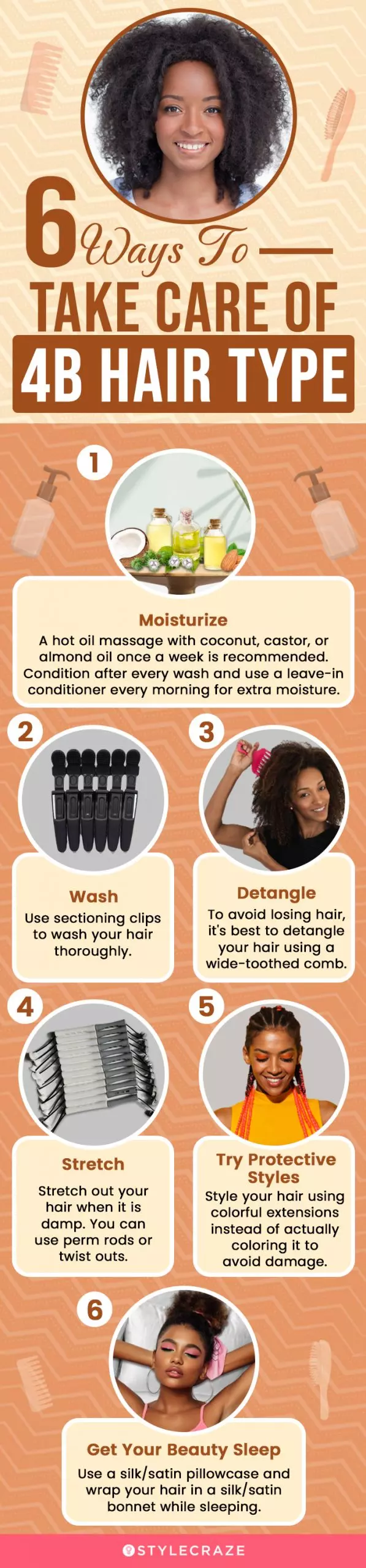
Detangle 4b hair when it is damp and coated with a slippery conditioner. Divide the hair into four to eight sections, depending on its density. Work from the ends toward the roots with your fingers or a wide-tooth comb.
Finger detangling takes more time, but it can help you feel knots before they turn into painful pulls. If you use a comb, keep your movements slow and avoid forcing it through a tight section.
Never rush through detangling before work or an event. That is when many people create unnecessary breakage. Give yourself enough time, especially if your hair has been loose for several days.
Step 3: Deep condition
Use a deep conditioner after cleansing when your hair feels dry, rough, or difficult to manage. Let it sit according to the product directions, often for 10 to 30 minutes. Gentle heat may help the conditioner spread through dense hair, but high heat can cause damage.
Deep conditioning does not permanently repair split ends. It improves slip and softness for a time. You still need trims when the ends remain split, thin, or rough.
Step 4: Add moisture in layers
After washing, apply a leave-in conditioner to damp hair. Follow with a cream or styling product if your hair needs more softness or control. Add a small amount of oil only if it works well for your hair.
Many people use the liquid, oil, cream method. This can help some dry hair types, but it is not a rule. Oils do not add water to the hair. They can help slow moisture loss by coating the surface, but too much oil may cause buildup.
Step 5: Stretch or style with low tension
Twists, braids, banding, and gentle blow-drying on low heat can stretch 4b hair. Stretching may reduce tangles and make styling easier. However, do not pull the roots tightly or keep a stretched style under strong tension.
A style should feel comfortable from the first day. Pain, headache, bumps, or scalp soreness are warning signs. Tight styles can contribute to traction alopecia, a type of hair loss caused by repeated pulling.

How Often Should You Wash 4b Hair?
Most people with 4b hair benefit from washing every one to two weeks, but your scalp’s needs should guide the schedule. A clean scalp supports a healthy hair routine. Avoid extending wash day for too long simply because you want to preserve a style.
Sweat, dust, gels, edge control, and oils can collect on the scalp. Buildup may cause itching, flakes, odor, or a dull coating on the hair. Washing removes these materials and gives your conditioner a better chance to work.
If you exercise often, wash more frequently or rinse the scalp between full wash days. A person who sweats daily may need weekly cleansing. A person with a dry scalp may need a gentler shampoo and a careful review of product ingredients.
Signs that it is time to wash
Look for these signs:
• Itching that does not improve
• Visible flakes or product residue
• Scalp odor
• Hair that feels coated or stiff
• More shedding during styling
• A tender or irritated scalp
A dry scalp is not always caused by a lack of oil. It may relate to irritation, eczema, psoriasis, allergies, or another condition. See a dermatologist if you have severe itching, sores, pain, sudden shedding, or persistent flakes.
How to Keep 4b Hair Moisturized
Moisture is one of the most important parts of how to care for 4b hair. Still, adding more product is not always the answer. Hair needs water, a product that supports softness, and gentle handling that prevents moisture loss.
Start with clean, damp hair. Water is the main source of hydration. A leave-in conditioner can help the hair feel smoother and easier to comb. Creams can add softness and definition, while gels can offer hold.
Use the right amount of product
Apply products in small amounts. Too much product can create buildup, make the hair stiff, and attract lint. Work in sections so the product covers the full strand instead of sitting only on the surface.
Pay close attention to the ends. They are the oldest part of the hair and have faced the most washing, brushing, sun, and friction. Add a little leave-in conditioner or cream to the ends when they feel rough.
Refresh without soaking the hair daily
You do not need to drench your hair every day. Lightly mist dry areas with water or a water-based spray, then smooth a small amount of leave-in conditioner over them. If your hair becomes mushy, sticky, or overly soft, reduce the frequency of refreshes.
Balance moisture and protein
Hair needs both moisture and protein, but the balance differs from person to person. A protein treatment may help hair that feels weak, overly stretchy, or limp. Too much protein may leave hair stiff and brittle.
Use one new treatment at a time. Watch how your hair responds over the next few washes. This simple approach makes it easier to identify what helps and what causes dryness.

Detangling 4b Hair Without Breakage
Detangling is often the most stressful part of caring for 4b hair. The goal is not to remove every knot in one quick pass. The goal is to reduce force and keep the strands aligned.
Begin by separating the hair with your fingers. Remove shed hairs that have wrapped around nearby strands. Then apply conditioner and gently loosen knots from the ends upward.
A safe detangling method
Divide the hair into manageable sections.
Wet one section and apply a slippery conditioner.
Separate large tangles with your fingers.
Start at the ends and work toward the roots.
Use a wide-tooth comb only after the fingers can move through the section.
Twist or braid the finished section before moving to the next one.
Do not detangle dry hair unless you are using a method designed for dry manipulation. Dry combing can increase friction and snap fragile strands. If you prefer to detangle before washing, apply a light conditioner or oil and work in small sections.
Keep your tools clean. A comb with rough seams can catch and break hair. Replace brushes when the teeth become sharp, cracked, or bent.

Protective Styles for 4b Hair
Protective styles reduce daily manipulation and help shield the ends from clothing and dry air. Good options include two-strand twists, flat twists, loose braids, tucked styles, and low-tension updos.
A protective style is not automatically healthy. If it hurts, pulls the edges, or makes the scalp feel tight, it is too stressful. The style should allow you to cleanse and moisturize the scalp when needed.
Tips for safer protective styling
• Start with clean, conditioned hair
• Avoid braiding hair that is extremely dry
• Keep the style loose around the hairline
• Do not add excessive extension hair
• Avoid leaving a style in longer than your hair can handle
• Cover the hair at night with satin or silk
• Give your scalp and edges breaks between styles
Braids and extensions can create extra weight. Heavy hair adds tension to the roots, especially around the temples and nape. If you notice thinning edges, small bumps, or scalp pain, remove the style and reduce tension.

Night Care for 4b Hair
Night care helps reduce friction and preserve moisture. Cotton pillowcases can absorb product and create friction as you move. A satin or silk scarf, bonnet, or pillowcase may help the hair stay smoother.
Before bed, gently gather the hair into loose twists or sections if it tangles easily. Avoid tight bands that pull at the roots. If your hair is short, a satin pillowcase may be easier than wrapping it.
Do not sleep with wet hair under a tight bonnet. A damp, covered scalp may stay warm for hours and can feel uncomfortable. Let the hair dry properly, especially if you have a sensitive scalp.

Trimming and Preventing Split Ends
Trimming does not make hair grow faster. Hair grows from the follicle, not from the ends. However, removing damaged ends can help prevent splits from traveling farther up the strand.
Check your ends every few months. You may need a trim when the ends look thin, feel rough, tangle more than usual, or form many single-strand knots. The exact schedule depends on your styling habits and hair goals.
Use sharp hair shears rather than household scissors. Dull scissors can crush the strand. If you are unsure how to trim your hair, ask a licensed stylist who understands tightly coiled textures.
How to Protect 4b Hair From Damage
Heat, chemical treatments, tension, and rough handling can all affect hair strength. You do not have to avoid every styling choice, but you should understand the trade-offs.
Limit high heat
Frequent flat ironing and high-temperature blow-drying can weaken the cuticle and change the curl pattern. Use a heat protectant and the lowest setting that gives you the result you want. Make sure the hair is fully dry before using a flat iron.
Be careful with relaxers and color
Relaxers permanently change the structure of the treated hair. Overlapping relaxer onto previously processed hair can cause severe weakness. Follow professional timing and application practices.
Hair color can also reduce strength, especially when lightening is involved. Deep conditioning may improve feel, but it cannot reverse chemical damage. A trained stylist can help you choose a safer plan.
Reduce friction
Rough towels, cotton clothing, tight hats, and constant brushing can wear down the hair. Use a microfiber towel or soft cotton T-shirt to blot water. Handle the hair with flat fingers instead of scraping through it.
Avoid extreme tension
Tight ponytails, slicked edges, heavy extensions, and repeated pulling can damage the hairline. Healthy styling should never require pain. If a style causes a headache, it is not a protective style.
Ingredients That May Help 4b Hair
Product labels matter, but the full formula matters more than one popular ingredient. A product that works for one person may feel heavy or drying on another person’s hair.
Helpful ingredients may include:
• Glycerin, which attracts water in many conditions
• Aloe, which can add slip and a light feel
• Behentrimonium methosulfate, a conditioning agent often used in hair products
• Fatty alcohols such as cetyl alcohol and stearyl alcohol, which can soften hair
• Shea butter, which may help reduce dryness for some people
• Coconut oil, which may reduce protein loss in some hair, though it can make other hair feel hard
• Hydrolyzed proteins, which may support the feel of weak hair when used in moderation
Silicones are not automatically harmful. Some can reduce friction and improve smoothness. If you use products that contain silicones, cleanse well enough to prevent unwanted buildup.
Essential oils are not required for healthy hair growth. Undiluted essential oils can irritate the scalp. Never apply them directly to the scalp without proper dilution, and stop using any product that causes burning or rash.
Common Mistakes When Caring for 4b Hair
Many hair problems come from routines that are too harsh, too complicated, or too inconsistent. Small changes can make a major difference.
Washing only when the style is removed
Keeping a style for a long time without cleansing may lead to buildup and tangling. Create a wash plan before installing the style.
Using oil instead of water
Oil can make hair feel shiny, but it does not hydrate dry hair. Apply water or a water-based product first, then use oil only if your hair benefits from it.
Combing too often
Daily combing can create repeated friction. Detangle when needed, then use low-manipulation styles to keep the hair organized.
Styling wet hair too tightly
Wet hair stretches more easily. Tight braids or ponytails can place stress on the roots and strands. Let the hair become damp rather than soaking wet before installing a style.
Copying another person’s routine
Hair density, porosity, climate, and product use all matter. A routine that works for a friend may leave your hair heavy, dry, or coated. Test products in small amounts and adjust based on your results.
Ignoring scalp symptoms
Persistent itching, painful bumps, scaling, and sudden hair loss are not normal signs of “needing more moisture.” A dermatologist can identify scalp conditions and recommend suitable treatment.
A Practical Weekly Routine for 4b Hair
A simple schedule can make how to care for 4b hair less overwhelming. Adjust this routine to your scalp, lifestyle, and styling goals.
Wash day
Divide the hair into sections.
Pre-detangle gently with your fingers.
Cleanse the scalp with a gentle shampoo.
Condition and detangle from the ends upward.
Deep condition when the hair feels dry or difficult to manage.
Apply leave-in conditioner to damp hair.
Add a cream or gel if needed.
Finish with loose twists, braids, or another low-tension style.
Midweek care
• Check the scalp for sweat, flakes, or irritation.
• Moisturize dry areas with a light water-based product.
• Smooth the ends instead of brushing the full head.
• Retwist only the sections that need it.
• Sleep with satin or silk protection.
Monthly review
Ask yourself:
• Is my hair breaking more than usual?
• Do my ends feel rough or thin?
• Does my scalp feel clean and comfortable?
• Are my products causing buildup?
• Is my style creating tension?
Keep notes when you change products. This creates a clear record of what helps your hair and what does not. In my experience, the biggest improvement usually comes from doing fewer things more gently, not from buying another product.
How to Care for 4b Hair in Different Seasons
Weather affects moisture, frizz, and styling. Your routine may need small changes throughout the year.
In dry winter air, use richer conditioners and protect the ends from cold wind. A satin-lined hat can reduce friction. Avoid going outdoors with soaking wet hair in very cold weather.
In humid weather, lightweight products may feel better. Gels and mousses can help control frizz, but avoid applying layers of heavy product every day. Sweat also means you may need to cleanse the scalp more often.
During summer, protect your hair from strong sun, chlorine, and salt water. Rinse after swimming and apply conditioner before entering a pool. A swim cap can reduce exposure, though it may not create a complete barrier.
When to See a Dermatologist or Stylist
Hair care can improve dryness and breakage, but it cannot treat every cause of hair loss. Seek professional help if you notice sudden shedding, bald spots, a widening part, severe scalp pain, or thinning edges.
A dermatologist can check for conditions such as traction alopecia, alopecia areata, seborrheic dermatitis, psoriasis, or iron-related concerns. Medical hair loss may need treatment beyond oils, vitamins, or cosmetic products.
Choose a stylist who has experience with tightly coiled hair. A skilled stylist should ask about your hair history, explain the process, and avoid painful tension. You should feel comfortable speaking up if a service feels too tight or hot.
Frequently Asked Questions About How to Care for 4b Hair
How often should you wash 4b hair?
Wash 4b hair about every one to two weeks, or more often if your scalp becomes sweaty or oily. The best schedule keeps the scalp clean without leaving the hair overly dry.
What is the best moisturizer for 4b hair?
The best moisturizer is one that leaves your hair soft without buildup or stiffness. Start with water or a water-based leave-in conditioner, then add a cream if your hair needs more softness.
Should you comb 4b hair every day?
No. Daily combing can increase friction and breakage. Detangle in sections when needed, preferably with conditioner and plenty of slip.
Is 4b hair difficult to grow?
4b hair grows like other hair types, but shrinkage and breakage can make length harder to see. Gentle handling, scalp care, low-tension styling, and regular moisture help you retain more of the length you grow.
Can you use oils on 4b hair?
Yes, but use oils in small amounts and apply them after water or a water-based product. Oil can help reduce friction and slow moisture loss, but it cannot replace cleansing or hydration.
Are protective styles always good for 4b hair?
No. A protective style is helpful only when it protects the ends without creating pain or tension. Remove styles that pull the edges, cause bumps, or make the scalp sore.
How can you reduce shrinkage in 4b hair?
You can reduce shrinkage with loose twists, banding, threading, stretching, or careful low-heat blow-drying. Never stretch the hair so tightly that the roots or edges hurt.
Conclusion
Learning how to care for 4b hair starts with respect for the strand’s shape and needs. Clean the scalp, condition in sections, moisturize with water-based products, detangle slowly, protect the ends, and avoid tight or repeated tension.
Your routine does not need to be perfect. Start with one change, such as washing on a steady schedule or switching to gentler detangling. Pay attention to how your hair and scalp respond, then build from there. Share your routine, explore trusted hair-care resources, and keep learning what helps your coils thrive.
