
You can slow rosacea progression with early treatment, gentle skin care, trigger control, and regular medical reviews.
Rosacea is a long-term skin condition, but it does not have to control your life or steadily worsen. The best answer to “how do you stop rosacea from progressing” is to reduce inflammation early, protect the skin barrier, and work with a dermatologist when symptoms persist. This guide explains proven steps, common mistakes, treatment options, and signs that need medical care.
What rosacea is and why it may progress
Rosacea is a chronic inflammatory skin condition that often affects the central face. It can cause flushing, lasting redness, visible blood vessels, acne-like bumps, burning, and skin sensitivity. Some people also develop eye symptoms or thickened skin, especially around the nose.
Rosacea may progress in stages, but the pattern is different for each person. Some people have mild flushing for years. Others develop more frequent flares, persistent redness, or eye involvement without proper care.
The exact cause is not fully known. Research points to several factors, including:
• An overactive immune response
• Changes in facial blood vessels
• A weakened skin barrier
• Nerve sensitivity
• Genetic risk
• Heat, sunlight, stress, alcohol, spicy foods, and other personal triggers
Rosacea is not caused by poor hygiene. It is also not contagious. Understanding this can remove some of the shame and frustration that often come with facial redness.

How do you stop rosacea from progressing?
You usually cannot cure rosacea forever, but you can often control it and reduce the chance of worsening. The most effective plan combines daily prevention with medical treatment when needed.
Here is a practical approach:
Identify and reduce your personal triggers.
Use a gentle cleanser and moisturizer.
Apply broad-spectrum sunscreen every day.
Treat flares early instead of waiting months.
Avoid harsh products and unproven home remedies.
See a dermatologist for persistent redness, bumps, or eye symptoms.
Track your symptoms so treatment can be adjusted.
Rosacea care is more like tending a sensitive garden than putting out one large fire. Small, steady habits often work better than dramatic changes.
A key lesson from patient education is that people often focus only on food. Food can matter, but sunlight, heat, skincare products, stress, and delayed treatment may matter just as much. A complete plan looks at the whole day, not one ingredient.

Learn your rosacea triggers
Triggers do not cause rosacea in every person. A trigger is something that brings on flushing, burning, bumps, or redness in your own skin. Two people with rosacea may react very differently.
Common triggers include:
• Sun exposure
• Hot weather or sudden temperature changes
• Hot drinks
• Alcohol, especially red wine
• Spicy foods
• Intense exercise
• Emotional stress
• Hot baths, saunas, and steam rooms
• Wind and cold
• Fragrances and irritating cosmetics
• Certain medicines that widen blood vessels
Keep a simple diary for two to four weeks. Write down what you ate, the weather, your activity, products used, stress level, and symptoms. This can reveal patterns that are hard to spot from memory.
Do not remove many foods at once unless a health professional advises it. Strict diets can create stress and poor nutrition, and they may not help if food is not your main trigger.

Protect your skin from sunlight and heat
Sun exposure is one of the most common rosacea triggers. Ultraviolet light can increase inflammation and make redness harder to control. It can also damage the skin over time.
Use a broad-spectrum, water-resistant sunscreen with SPF 30 or higher. Mineral sunscreens containing zinc oxide or titanium dioxide may feel more comfortable for sensitive skin, although some people tolerate chemical filters well.
Use these habits every day:
• Apply sunscreen to the face, ears, neck, and other exposed areas.
• Reapply every two hours when outdoors, or after sweating or swimming.
• Wear a wide-brimmed hat and sunglasses.
• Seek shade between late morning and mid-afternoon.
• Keep your face cool during exercise or outdoor work.
• Avoid placing a hot towel or ice directly on the skin.
Heat control matters, too. Use lukewarm water instead of hot water. Keep showers short. If exercise causes flushing, try a cool indoor room, lower-intensity intervals, or a fan nearby.
Avoiding all exercise is not necessary. Regular movement supports general health and stress control. The goal is to lower overheating, not to stop living normally.

Build a gentle skin care routine
A damaged skin barrier can make rosacea feel worse. When the barrier is weak, products that once felt fine may sting. The skin may also lose moisture more quickly.
A simple routine is often best.
Morning routine
• Wash with lukewarm water and a mild, fragrance-free cleanser.
• Pat the skin dry with a soft towel. Do not rub.
• Apply a plain moisturizer.
• Finish with broad-spectrum SPF 30 or higher.
Evening routine
• Remove makeup gently.
• Cleanse without scrubbing.
• Apply moisturizer while the skin is slightly damp.
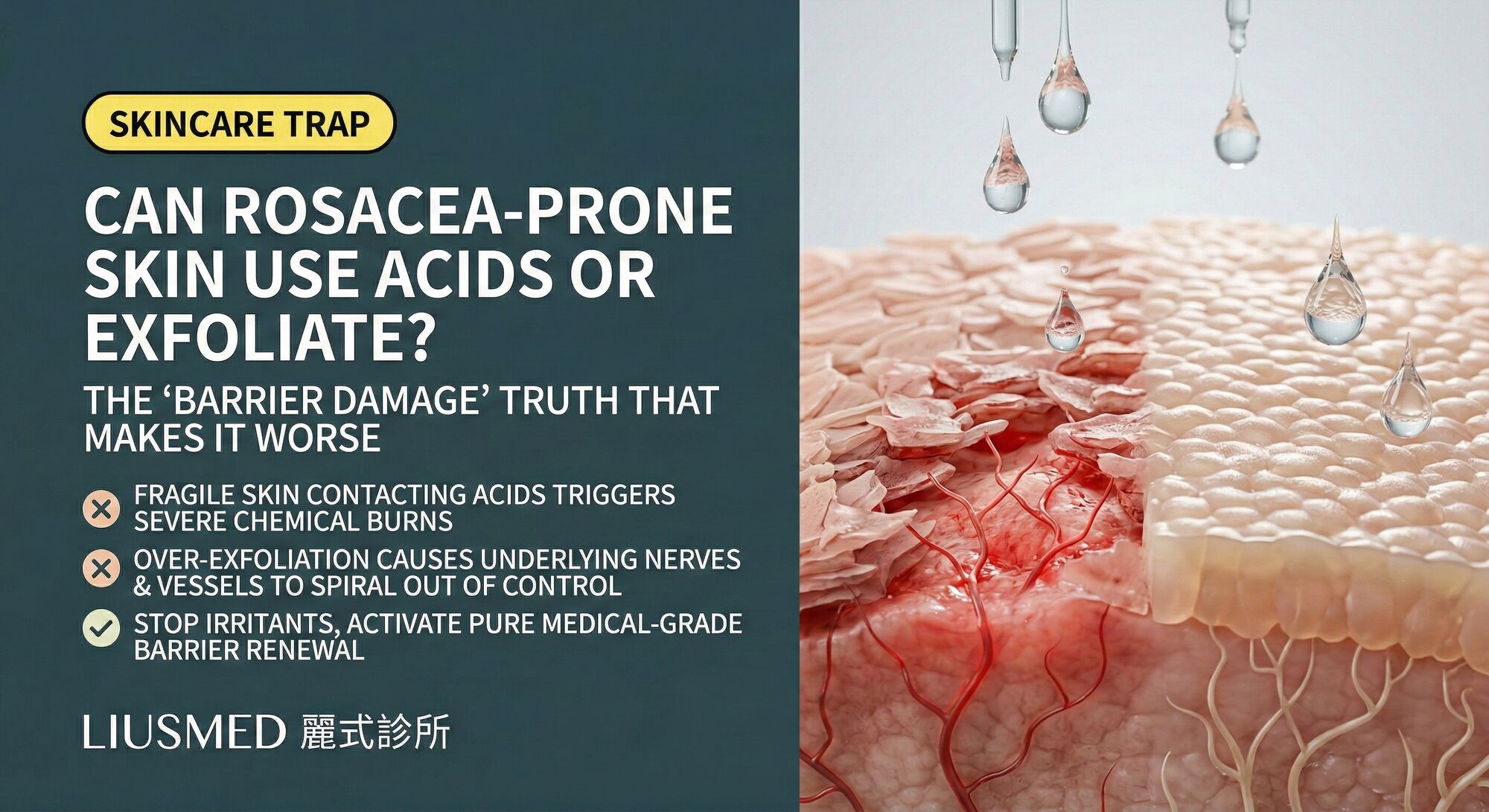
Choose products labeled fragrance-free and suitable for sensitive skin. Avoid products that contain strong perfume, menthol, camphor, eucalyptus oil, or harsh exfoliating acids if they cause burning.
Be careful with retinoids, benzoyl peroxide, scrubs, and high-strength vitamin C products. These ingredients can help some skin concerns, but they may irritate rosacea-prone skin. Introduce only one new product at a time, and test it on a small area first.
A common mistake is changing the entire routine during a flare. That can create more irritation and make it hard to identify the cause. A calm, boring routine is often the safest starting point.
Use medical treatment early when needed
Professional treatment can reduce inflammation and help prevent symptoms from becoming more persistent. A dermatologist may recommend different medicines based on your rosacea type.
Common prescription options include:
• Metronidazole cream, gel, or lotion for inflammatory bumps and redness
• Azelaic acid for bumps, inflammation, and some discoloration
• Ivermectin cream for inflammatory lesions linked to microscopic Demodex mites
• Brimonidine or oxymetazoline to temporarily reduce facial redness
• Low-dose doxycycline for inflammatory bumps or eye-related rosacea
• Laser or intense pulsed light treatment for visible blood vessels and persistent redness
These treatments are not interchangeable. A medicine that helps bumps may not remove visible blood vessels. A redness-reducing gel may work for several hours but does not cure rosacea.
Follow your clinician’s directions carefully. Applying more medicine will not make it work faster and may cause irritation. Improvement often takes several weeks, and some treatments need longer use.
If your skin burns badly, swells, develops a rash, or becomes very painful after a medicine, stop and contact your prescriber. Some reactions are irritation, while others may be allergy or another skin condition.

Treat the rosacea subtype you have
Rosacea can appear in more than one form. Knowing the main pattern helps guide treatment.
Erythematotelangiectatic rosacea
This type causes flushing, persistent redness, and small visible blood vessels. Sunscreen, trigger control, prescription redness treatments, and vascular laser therapy may help.
Papulopustular rosacea
This type causes red bumps and pus-filled spots. It can look like acne, but acne treatments may irritate it. Prescription creams or oral anti-inflammatory treatment may be useful.
Phymatous rosacea
This type causes thickened skin, often around the nose. It is less common and may become harder to reverse when treatment is delayed. A dermatologist can discuss medicine, laser treatment, or surgery when appropriate.
Ocular rosacea
This type affects the eyes and eyelids. Symptoms may include dry eyes, gritty sensations, burning, eyelid swelling, light sensitivity, or repeated styes.
Rosacea types can overlap. Someone may have redness, bumps, and eye symptoms at the same time. Treatment should match the full pattern rather than one symptom alone.
Manage ocular rosacea promptly
Eye symptoms deserve attention because untreated ocular rosacea can affect the surface of the eye. In rare cases, inflammation can involve the cornea and threaten vision.
Helpful daily habits may include:
• Use a warm, not hot, compress on closed eyelids.
• Clean the eyelid edges gently as advised by an eye-care professional.
• Take breaks from screens and blink often.
• Use preservative-free artificial tears if recommended.
• Avoid eye makeup during flares.
• Do not wear contact lenses when the eyes are painful or very irritated.
Seek prompt medical care for eye pain, blurred vision, strong light sensitivity, marked swelling, or a feeling that something is stuck in the eye. An ophthalmologist may need to work with your dermatologist.
This is one area where waiting can be a serious mistake. Facial redness may be uncomfortable, but eye inflammation can require faster treatment.
Consider treatments for persistent redness and blood vessels
Some rosacea symptoms respond well to daily care but do not disappear completely. Persistent redness and visible blood vessels may need a procedure.
A dermatologist may discuss:
• Pulsed-dye laser
• Nd:YAG laser
• Intense pulsed light
• Electrosurgery in selected cases
Results vary by skin tone, vessel size, treatment settings, and the clinician’s experience. Several sessions may be needed. Redness can return because rosacea remains a chronic condition.
Ask about side effects, expected results, downtime, cost, and the provider’s experience with your skin tone. Laser treatment is not a guarantee, and poor technique can cause burns or pigment changes.
Camouflage makeup with a green or yellow tone may temporarily reduce the appearance of redness. Choose noncomedogenic, fragrance-free products and remove them gently at night.
Avoid common mistakes that make rosacea worse
Many people search for how do you stop rosacea from progressing after trying products that damaged their skin barrier. The following mistakes are common:
• Scrubbing the face to remove redness
• Using rubbing alcohol or harsh astringents
• Applying lemon juice, vinegar, baking soda, or essential oils
• Taking very hot showers
• Using steroid creams on the face without medical advice
• Treating every flare as acne
• Starting several new products at once
• Skipping sunscreen because the weather is cloudy
• Stopping prescribed treatment as soon as the skin improves
Steroid creams can reduce redness for a short time, but unsupervised use on the face may lead to steroid-induced rosacea or rebound symptoms. Never use a strong steroid on facial skin unless a clinician specifically tells you to.
Home remedies may sound natural, but natural does not always mean gentle. The facial skin has many nerve endings and blood vessels. A harsh remedy can turn a mild flare into a painful one.
Support your skin through daily habits
Lifestyle changes do not replace treatment, but they can make control easier. Sleep, stress, temperature, and alcohol intake may affect symptoms in some people.
Try these practical steps:
• Keep a cool drink nearby during exercise.
• Eat spicy meals less often if they trigger flushing.
• Let hot drinks cool before drinking them.
• Limit alcohol if you notice a clear link.
• Practice slow breathing during stress.
• Use a fan or cooling towel in warm rooms.
• Cover your face in strong wind or cold.
• Keep a consistent sleep schedule.
Stress does not mean rosacea is “all in your head.” Stress can affect blood flow, nerve signals, and immune activity. Managing it is a physical support for your skin, not a judgment about your emotions.
Do not aim for perfect trigger avoidance. That can make daily life feel narrow and stressful. Aim for patterns that reduce flares while allowing you to work, exercise, eat, and socialize.
Know when to see a dermatologist
Make an appointment if facial redness lasts, returns often, or begins to affect your confidence. You should also seek care for frequent bumps, visible blood vessels, thickened skin, or symptoms that do not improve with gentle care.
A dermatologist can confirm the diagnosis because rosacea may resemble:
• Acne
• Seborrheic dermatitis
• Lupus
• Contact dermatitis
• Perioral dermatitis
• Steroid-induced skin changes
• Allergic reactions
There is no single test that confirms every case of rosacea. Diagnosis usually involves a medical history and skin examination. Tell the clinician when symptoms began, what triggers them, and which products or medicines you use.
Bring photos of your worst flares if your skin looks calmer on the appointment day. This simple step can help show how symptoms change over time.
Create a long-term rosacea control plan
The answer to how do you stop rosacea from progressing is not one perfect product. It is a plan that you can follow on ordinary days and during flares.
Use this simple framework:
Establish a gentle routine and keep it stable.
Add daily sunscreen.
Track triggers without blaming yourself.
Ask for medical treatment when symptoms persist.
Review your plan after several weeks.
Attend follow-up visits if medicine is not working or causes irritation.
Take one photo each month in similar lighting. This can show gradual changes more clearly than memory. It can also help you and your dermatologist judge whether treatment is working.
If treatment helps, do not assume you can stop everything at once. Ask how to maintain the result. Some people need ongoing treatment, while others use medicine during flares or seasonal changes.
Frequently asked questions about how do you stop rosacea from progressing
Can rosacea be stopped completely?
Rosacea has no guaranteed permanent cure, but treatment can control symptoms and reduce flares. Early care, sun protection, trigger management, and follow-up may help prevent worsening.
What is the best way to prevent rosacea from getting worse?
Use gentle skin care, wear SPF 30 or higher daily, avoid known triggers, and seek medical treatment for persistent symptoms. The best plan depends on whether you mainly have flushing, bumps, visible vessels, thickened skin, or eye symptoms.
Does sunscreen help stop rosacea from progressing?
Yes, daily sun protection can reduce a major source of inflammation and flushing. Choose a broad-spectrum SPF 30 or higher and use a formula that does not sting your skin.
Can diet cure rosacea?
No specific diet cures rosacea. Some foods and drinks can trigger symptoms in certain people, so a symptom diary is more useful than avoiding large groups of foods without evidence.
Should I use acne products for rosacea?
Some acne products can irritate rosacea-prone skin, especially scrubs, strong acids, and benzoyl peroxide. Ask a dermatologist before using acne treatment, particularly when your skin burns or stings.
When should I worry about ocular rosacea?
Contact a medical professional for persistent dry eyes, burning, gritty sensations, swollen eyelids, or repeated styes. Seek urgent eye care for eye pain, blurred vision, or strong sensitivity to light.
Can rosacea turn into thickened nose skin?
Some people develop phymatous rosacea, which can thicken skin, often around the nose. Early evaluation and treatment may help limit progression, although not everyone with rosacea develops this change.
Conclusion
The most useful answer to how do you stop rosacea from progressing is to act early and stay consistent. Protect your skin from sun and heat, use mild products, learn your personal triggers, avoid harsh home remedies, and get medical help for ongoing redness, bumps, thickened skin, or eye symptoms.
Rosacea management is not about having flawless skin every day. It is about reducing inflammation, protecting your comfort, and keeping symptoms from taking over your routine. Start with one change today, track your results, and discuss a personalized plan with a dermatologist when needed. Explore trusted skin-care resources and share your experience with others who are learning to manage rosacea.
