
Introduction
For most people in the United States, CeraVe is the best overall skincare brand for combination skin because it offers gentle cleansers, light moisturizers, and sunscreen for both oily and dry areas. It also has many fragrance-free options with ingredients such as ceramides, glycerin, and hyaluronic acid.
Still, no brand is best for everyone. Combination skin can mean an oily forehead and nose with dry cheeks, or a mix of oil, acne, sensitivity, and dehydration. The right choice depends on your main concern, budget, skin sensitivity, and the products you can use every day without irritation.
This guide compares leading skincare brands sold in the U.S. and explains how to choose a simple routine that supports both dry and oily areas.

Quick answer: Which skincare brand is best for combination skin?
CeraVe is the strongest all-around choice for combination skin. Its U.S. product range includes:
- Gentle cleansers that remove oil without a tight, dry feel
- Lightweight lotions and gel creams
- Ceramides that help support the skin barrier
- Fragrance-free options for sensitive skin
- Non-comedogenic products in several categories
Other brands may be better for a specific need:
| Main need | Brand to consider | Why it may fit |
|---|---|---|
| Best overall | CeraVe | Broad range and simple barrier-supporting formulas |
| Very sensitive skin | Vanicream | Short, low-irritant product options |
| Oily, acne-prone skin | La Roche-Posay | Useful acne and oil-control products |
| Low-cost basics | Cetaphil | Gentle cleansers and moisturizers |
| Dry but acne-prone skin | Aveeno | Soothing, lightweight options |
| Simple drugstore routine | Neutrogena | Many light gel and acne products |
These are practical starting points, not medical rankings. A product labeled “non-comedogenic” may still cause breakouts in some people. Skin care results vary by formula, use, climate, and your own skin.

What is combination skin?
Combination skin has two or more different skin patterns at the same time. The center of the face, called the T-zone, often produces more oil. The cheeks may feel normal, dry, flaky, or sensitive.
Common signs include:
- Shine on the forehead, nose, or chin
- Dry or tight cheeks
- Enlarged-looking pores in the T-zone
- Occasional clogged pores or pimples
- Makeup that fades in oily areas but clings to dry spots
- Skin that becomes tight after washing but oily later
Combination skin is not the same as dehydrated skin. Dry skin lacks oil. Dehydrated skin lacks water. A person with oily skin can still have dehydrated skin if harsh products damage the skin barrier.
The American Academy of Dermatology recommends gentle cleansing, regular moisturizing, and sun protection. These basics matter more than choosing a famous brand.

How to choose the best skincare brand for combination skin
The best brand should offer products that solve the needs of both sides of your face. Look for a range rather than one “miracle” product.
1. Choose a gentle cleanser
A good cleanser should remove sunscreen, sweat, and excess oil without leaving your skin squeaky or tight.
Look for:
- Mild, fragrance-free formulas
- Cream, lotion, or low-foam textures
- Glycerin and other water-binding ingredients
- Labels such as “gentle” or “for sensitive skin”
Avoid using a strong foaming cleanser twice a day if your cheeks feel dry afterward. A clean face should feel comfortable, not stripped.
2. Pick a light moisturizer
Combination skin often needs moisture, but a thick cream across the whole face may feel greasy. Start with a lotion, gel cream, or light moisturizer.
Helpful ingredients include:
- Ceramides: fats that help support the outer skin barrier
- Glycerin: draws water into the skin
- Hyaluronic acid: helps hold water near the skin surface
- Dimethicone: forms a smooth protective layer
- Niacinamide: may help support the barrier and reduce the look of excess oil
Use more moisturizer on dry areas and less on oily areas. You do not need to apply the same amount everywhere.
3. Use sunscreen every morning
A broad-spectrum sunscreen with SPF 30 or higher helps protect against sunburn and long-term UV damage. The U.S. Food and Drug Administration regulates sunscreen as an over-the-counter drug in the United States.
Combination skin often does well with:
- Fluid sunscreens
- Gel sunscreens
- Oil-free lotions
- Matte or “dry touch” formulas
A sunscreen that feels comfortable is more useful than one you stop using because it feels heavy.
4. Add one treatment at a time
Do not start several active products at once. This makes it hard to tell what helps or causes irritation.
Common options include:
- Salicylic acid: may help loosen oil and clear clogged pores
- Adapalene: an over-the-counter retinoid used for acne
- Azelaic acid: may help with acne and uneven skin tone
- Niacinamide: may help with oil balance and barrier support
Use acne treatments mainly where you have clogged pores or breakouts. Applying strong treatments to already-dry cheeks can make the problem worse.
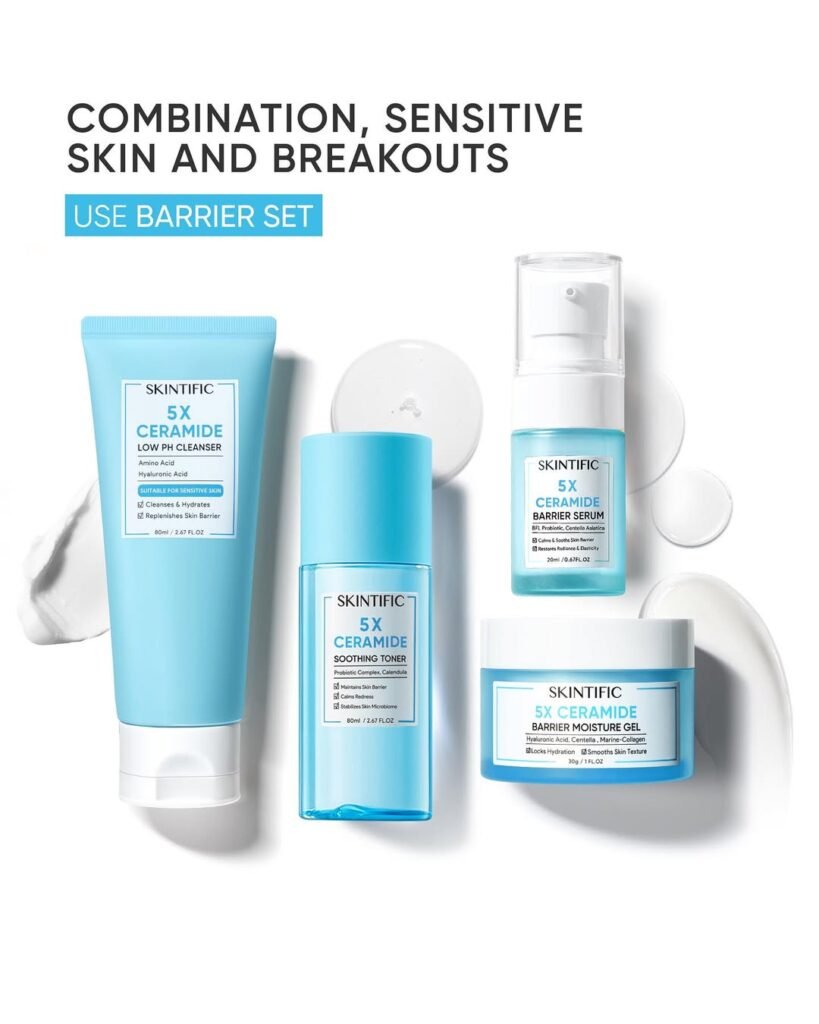
Best skincare brands for combination skin
CeraVe: best overall
CeraVe is a strong starting point for most people with combination skin. Its product range includes foaming cleansers for oilier areas, hydrating cleansers for dry areas, light lotions, and facial sunscreens.
Its formulas often include ceramides and other barrier-supporting ingredients. This makes the brand useful when your skin is oily in one area but easily irritated or dry in another.
Best for: beginners, normal-to-combination skin, and people who want a simple drugstore routine.
Limits: Some users may find certain formulas too rich, too light, or not ideal under makeup. CeraVe also makes active acne products, so check the label before adding more than one treatment.
Vanicream: best for very sensitive combination skin
Vanicream is a good option when combination skin also stings, itches, or reacts to fragrance. The brand focuses on simple formulas and offers fragrance-free cleansers and moisturizers.
A lightweight Vanicream lotion may work across the face, while a thicker cream can be used only on dry patches.
Best for: sensitive skin, fragrance reactions, and people who want fewer ingredients.
Limits: Some products may feel too plain or heavy for very oily skin. Vanicream is also not primarily an acne-treatment brand.
La Roche-Posay: best for oily or acne-prone combination skin
La Roche-Posay offers products aimed at acne, oil control, sensitive skin, and sun protection. Its Effaclar line may appeal to people with clogged pores, while Toleriane products may suit sensitive areas.
Best for: combination skin with frequent breakouts, visible oil, or a need for a lighter sunscreen.
Limits: Acne-focused products may contain ingredients that cause dryness. Use them slowly and avoid stacking several exfoliating products.
Cetaphil: best for gentle daily care
Cetaphil is widely available in U.S. drugstores and offers basic cleansers and moisturizers for sensitive skin. Its products can work well for people who want a short routine without strong active ingredients.
Best for: mild combination skin, beginners, and people who prefer simple daily care.
Limits: You may need a separate acne or dark-spot treatment if those are major concerns.
Aveeno: best for combination skin with dry or irritated areas
Aveeno uses ingredients such as colloidal oatmeal in some products. The FDA recognizes colloidal oatmeal as a skin protectant ingredient when used under the conditions listed in the OTC skin protectant monograph.
Best for: combination skin that becomes dry, itchy, or uncomfortable.
Limits: Some moisturizers may feel too rich on the T-zone. Check the exact product because formulas differ across the brand.
Neutrogena: best for light textures
Neutrogena makes gel moisturizers, facial cleansers, sunscreens, and acne products. Its light gel textures can suit people who dislike creams.
Best for: oily T-zones, humid weather, and people who prefer fast-absorbing products.
Limits: Some acne and cleansing formulas may be drying. Fragrance and active ingredients vary by product.

A simple combination-skin routine
A basic routine is often more effective than a shelf full of products.
Morning
- Wash with a gentle cleanser, or rinse with lukewarm water if your skin is dry.
- Apply a light moisturizer to the whole face.
- Add more moisturizer to dry areas if needed.
- Apply broad-spectrum SPF 30 or higher.
Evening
- Remove makeup and sunscreen.
- Cleanse gently.
- Apply one treatment product if you need one.
- Moisturize the whole face.
- Add a thicker cream only to dry patches.
Do not scrub the face to control oil. Scrubs can irritate the skin and make dry areas worse. Your skin should feel calm and comfortable after the routine.

How to adjust products for oily and dry areas
Combination skin does not require a complicated routine. It may require different amounts or products in different zones.
Try this approach:
- Use a gentle cleanser across the full face.
- Apply a thin moisturizer layer to the T-zone.
- Apply a thicker layer to the cheeks.
- Use salicylic acid only on clogged areas at first.
- Use a richer cream only where flaking occurs.
- Choose a light sunscreen for the whole face.
This method is sometimes called multi-masking or zone-based skin care. It can help, but do not treat every zone with a strong active ingredient. The skin barrier is connected across the face, so irritation in one area can still affect comfort and product use.
Example routine by concern
| Concern | Morning | Evening |
|---|---|---|
| Mild oil and dry cheeks | Gentle cleanser, light lotion, sunscreen | Cleanser, moisturizer |
| Blackheads on the nose | Gentle cleanser, light lotion, sunscreen | Cleanser, salicylic acid on nose, moisturizer |
| Acne and sensitivity | Gentle cleanser, moisturizer, sunscreen | Cleanser, one acne treatment, moisturizer |
| Flaky cheeks and oily forehead | Gentle cleanser, more moisturizer on cheeks, sunscreen | Cleanser, moisturizer, cream on cheeks |
| Uneven tone after acne | Gentle cleanser, moisturizer, sunscreen | Cleanser, azelaic acid or another suitable treatment, moisturizer |
These examples are general. Follow the product label and stop if you develop strong burning, swelling, hives, or a spreading rash.

Ingredients to seek and ingredients to use with care
Useful ingredients
Ceramides help support the skin barrier. They are useful when cleansing or acne products leave the skin dry.
Glycerin attracts water and appears in many gentle moisturizers.
Niacinamide may support the skin barrier and help reduce the look of oil. High-strength formulas can irritate some people, so more is not always better.
Salicylic acid can help with clogged pores. Start with a low-frequency product and use it only where needed.
Adapalene can help treat acne. It may cause dryness at first. Use it as directed, moisturize, and wear sunscreen.
Colloidal oatmeal can soothe some dry or irritated skin.
Ingredients that may cause trouble
Be careful with:
- Denatured alcohol high on the ingredient list
- Strong scrubs
- Essential oils
- Heavy fragrance
- Multiple exfoliating acids
- High-strength retinol or retinoid products
- Alcohol-based toners
“Natural” does not mean irritation-free. Plant oils and essential oils can trigger reactions in some people.
Pregnant or breastfeeding readers should ask a health professional before using acne medicines or retinoids. The American Academy of Dermatology also recommends discussing acne treatment with a dermatologist when acne is painful, deep, or leaves scars.

Common mistakes with combination skin
Washing too often
Washing several times a day may remove protective oils and worsen tightness. For most people, cleansing twice daily is enough. After heavy sweating, rinse or cleanse as needed.
Using a harsh product everywhere
A product that helps the nose may harm the cheeks. Apply treatment products to the areas that need them instead of spreading them across the entire face by habit.
Skipping moisturizer
Oily skin still needs water and barrier support. Skipping moisturizer can leave the surface dry while oil continues to build up.
Changing products too fast
Give a basic routine time to show whether it works. Add only one new product at a time. If you react, stop the newest product first.
Trusting the brand more than the label
A brand may make both gentle and irritating products. Read the exact ingredient list. Product names and formulas can change, and products sold in the U.S. may differ from those sold in other countries.
Ignoring sunscreen
Dark marks can last longer when skin receives regular UV exposure. Sunscreen also helps protect the results of acne and dark-spot care.

How to patch-test a new skincare product
Patch testing lowers risk, but it cannot guarantee that a product will never irritate your face.
- Apply a small amount to a limited area, such as the inner arm or behind the ear.
- Repeat as directed or once daily for several days.
- Watch for burning, itching, swelling, bumps, or a rash.
- If the area stays calm, apply the product to a small part of the face.
- Add it to your full routine only if your skin tolerates it.
Do not patch-test several new products at once. If you develop facial swelling, trouble breathing, blistering, or a severe rash, seek urgent medical care.
See a dermatologist if acne is painful, widespread, scarring, or not improving with consistent over-the-counter care. Professional help is also useful when redness, itching, or burning continues despite stopping new products.

The best combination-skin routine by budget
Low budget
A simple U.S. drugstore routine can include:
- Gentle cleanser
- Basic fragrance-free moisturizer
- Broad-spectrum SPF 30 or higher
- One treatment only if needed
CeraVe, Cetaphil, Vanicream, Aveeno, and Neutrogena all offer products in this category. Compare the exact formula, size, and texture rather than choosing by brand name alone.
Mid-range budget
You may choose a more specialized sunscreen, acne treatment, or moisturizer. La Roche-Posay is often useful when oil control, acne, or sunscreen texture is the main concern.
Higher budget
A higher price does not prove better results. Spend more only when a product gives you a clear benefit, such as a texture you will use consistently or a formula your sensitive skin tolerates.
The most cost-effective routine is usually the one you can use regularly without irritation.

Frequently asked questions
Is CeraVe or Cetaphil better for combination skin?
Neither is universally better. CeraVe may suit people who want ceramides and a wider mix of lightweight barrier products. Cetaphil may suit people who prefer simple cleansers and moisturizers. Compare the exact product and how your skin feels after use.
Should combination skin use gel or cream moisturizer?
Gel or lotion textures often suit oily T-zones. Creams may help dry cheeks. You can use a light moisturizer across the face and apply a richer product only to dry areas.
Is Korean skincare better for combination skin?
Not automatically. Korean and U.S. brands both offer useful products. Judge a product by its ingredients, texture, safety, price, and whether it fits your routine. Make sure imported products have clear ingredient information and are sold by a reliable U.S. retailer.
How often should combination skin exfoliate?
Start once weekly if you use an exfoliating acid. Increase only if your skin stays calm and the product label allows it. Stop if you develop burning, peeling, or lasting redness.
Can combination skin use retinol?
Many people with combination skin can use a retinoid, but it may cause dryness and irritation. Start slowly, moisturize, use sunscreen, and follow the label. Ask a health professional about retinoids during pregnancy or breastfeeding.
Conclusion
CeraVe is the best overall skincare brand for combination skin for many U.S. shoppers, but Vanicream may be better for very sensitive skin, La Roche-Posay for oily or acne-prone skin, and Cetaphil or Aveeno for gentle daily care.
Start with three basics: a gentle cleanser, a light moisturizer, and broad-spectrum SPF 30 or higher. Then add one targeted treatment only if you need it. The best routine is not the one with the most products. It is the one that keeps oily areas clear, dry areas comfortable, and your skin calm enough to use every day.
