
Treat dry combination skin by balancing gentle hydration on dry areas with lightweight, oil control on the T-zone.
Dry combination skin can feel confusing. Your cheeks may sting or flake, while your forehead, nose, and chin look shiny by midday. The best approach is not to use one harsh product everywhere. This guide explains how to treat dry combination skin with a simple routine, helpful ingredients, common mistakes to avoid, and clear signs that you may need a dermatologist.

What Is Dry Combination Skin?
Dry combination skin has two different needs at once. Some areas lack water or natural oil, while other areas produce more sebum. Most often, the cheeks and jaw feel dry, and the T-zone becomes oily.
Your skin may also feel tight after cleansing but look greasy a few hours later. You might notice flaky patches, clogged pores, dullness, or makeup that settles around dry areas.
The key is to treat your face like a room with different climates. Dry areas need comfort and moisture. Oily areas need balance, not aggressive stripping.
Common signs include:
• Tightness after washing
• Flaky or rough cheeks
• An oily forehead, nose, or chin
• Enlarged-looking pores in the T-zone
• Occasional breakouts
• Sensitivity to fragrance, scrubs, or strong acids
Skin type can change with weather, stress, hormones, age, and medication. A person may have more oil in humid summer weather and more dryness during a cold winter.

How to Treat Dry Combination Skin: The Basic Routine
The most reliable way to treat dry combination skin is to keep your routine simple. Use gentle products that protect the skin barrier instead of trying to remove every trace of oil.
A basic morning routine should include:
Cleanse gently, or rinse with lukewarm water if your skin feels dry.
Apply a hydrating serum or light moisturizer.
Use a moisturizer that feels comfortable on the cheeks without feeling heavy on the T-zone.
Finish with broad-spectrum sunscreen rated SPF 30 or higher.
At night, cleanse away sunscreen, makeup, sweat, and pollution. Then apply a hydrating product followed by moisturizer. If your cheeks are very dry, add a thin layer of a plain balm or ointment to those areas.
When learning how to treat dry combination skin, make one change at a time. This makes it easier to see what helps and what causes irritation.

Step 1: Choose a Gentle Cleanser
Cleansing removes dirt, sunscreen, makeup, and excess oil. However, a harsh cleanser can also remove protective oils that help keep water inside the skin.
Choose a creamy, lotion-like, or low-foam cleanser. Look for words such as:
• Gentle
• Fragrance-free
• Noncomedogenic
• Hydrating
• Suitable for sensitive skin
Avoid very hot water. It can increase dryness and irritation. Use lukewarm water, massage the cleanser lightly for about 20 to 30 seconds, and pat your face dry with a soft towel.
You may need to cleanse twice daily if you use heavy sunscreen or makeup. If your face feels tight after your morning cleanse, try rinsing with water instead. This small change often helps dry cheeks without making the T-zone feel greasy.
Avoid scrubs with rough particles. They can create tiny areas of irritation and make flaky skin look worse. Physical exfoliation is not the best first step when your skin barrier feels weak.
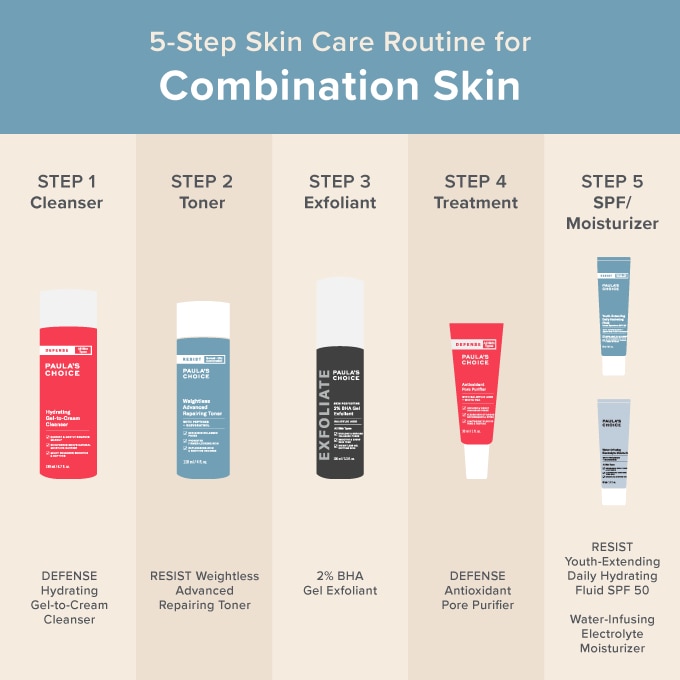
Step 2: Hydrate Without Feeling Greasy
Hydration means adding water to the outer layer of your skin. Moisturizing helps reduce water loss and supports the skin barrier. These are related but different jobs, so many people benefit from both a hydrating layer and a moisturizer.
Helpful ingredients include:
• Glycerin, which attracts water to the skin
• Hyaluronic acid, which helps hold water near the skin surface
• Panthenol, which can soothe and hydrate
• Ceramides, which support the skin barrier
• Squalane, which provides light emollient moisture
• Colloidal oatmeal, which may calm dry, irritated skin
Apply hydrating products to slightly damp skin. Follow with moisturizer while the skin still feels soft. This helps seal in water.
For dry cheeks, use a richer cream. For the T-zone, use a gel cream or light lotion. You do not need to use the same amount of product on every part of your face.
A useful method is zone care. Apply a thin layer across your face, then add a second layer only to dry areas. This is one of the most practical ways to treat dry combination skin.

Step 3: Protect the Skin Barrier
The skin barrier is the outer layer that helps keep moisture in and irritants out. When it becomes damaged, your skin may sting, flake, feel tight, or react to products that once felt fine.
Barrier care is central to understanding how to treat dry combination skin. A healthy barrier can also make your skin look smoother and help makeup apply more evenly.
Support your barrier by:
• Using a mild cleanser
• Moisturizing after washing
• Avoiding frequent scrubbing
• Limiting strong active ingredients
• Wearing sunscreen every day
• Protecting your face from cold wind
Ceramides, cholesterol, and fatty acids are common barrier-supporting ingredients. You do not need a product with all three, but a well-formulated moisturizer may include some of them.
If a product burns for more than a brief moment, wash it off. Burning is not proof that a product is working. It may signal irritation.

Step 4: Manage the Oily T-Zone Carefully
An oily T-zone does not mean your whole face needs drying products. Over-cleansing can make your cheeks worse and may leave your skin feeling uncomfortable.
Instead, focus oil control where you need it. A light moisturizer can work across the face, while a small amount of oil-absorbing product can be used on the forehead, nose, and chin.
Helpful options may include:
• Niacinamide in a low concentration
• A gentle clay mask used only on oily areas
• Salicylic acid for clogged pores
• Blotting papers during the day
Use salicylic acid cautiously. Start once or twice a week, and avoid applying it to areas that are already flaky or sore. If your skin becomes tight or irritated, reduce use or stop.
Do not stack several oil-control products at once. For example, using a foaming cleanser, clay mask, acid toner, and retinoid on the same day may overwhelm your skin.

Step 5: Exfoliate With Care
Exfoliation can remove some dead skin cells and improve the look of dull, uneven skin. It is not essential for everyone, though. If your skin is actively peeling, red, or sore, focus on barrier repair first.
For dry combination skin, a gentle chemical exfoliant is often easier to control than a rough scrub. Ingredients may include lactic acid, mandelic acid, or salicylic acid.
Follow these safety rules:
• Use only one exfoliating product at first.
• Start once weekly.
• Apply it to clean, dry skin.
• Avoid the corners of your nose, eyes, and mouth.
• Moisturize afterward.
• Wear sunscreen the next day.
Do not exfoliate to remove flakes caused by irritation. Flaking is often a sign that your skin needs less action, not more. This is a common mistake when people first learn how to treat dry combination skin.

Step 6: Add Active Ingredients Slowly
Active ingredients can help with acne, dark marks, fine lines, and uneven texture. They can also cause dryness if used too often.
Retinoids may help with acne and signs of aging, but they can cause peeling during the adjustment period. Start with a small amount two nights per week. Apply moisturizer before or after the retinoid if you are sensitive.
Vitamin C may help brighten the appearance of uneven tone. Some formulas can sting, especially on a damaged skin barrier. Begin with a gentle formula and use it on separate days from other strong products.
A safe schedule might look like this:
• Monday: Basic routine
• Tuesday: Retinoid, if appropriate for you
• Wednesday: Basic routine
• Thursday: Basic routine
• Friday: Gentle exfoliant, if your skin is calm
• Saturday: Basic routine
• Sunday: Basic routine
This schedule is only an example. Pregnant or breastfeeding people should ask a health professional before using retinoids. People with eczema, rosacea, or persistent acne may also need personalized guidance.

Morning and Night Routine for Dry Combination Skin
A practical routine does not need many products. The goal is consistency.
Morning
• Rinse with water or use a gentle cleanser.
• Apply a hydrating serum if needed.
• Use a light moisturizer across the face.
• Add extra moisturizer to dry cheeks.
• Apply broad-spectrum SPF 30 or higher.
Night
• Remove makeup and sunscreen.
• Cleanse gently.
• Use one treatment product, if needed.
• Apply moisturizer to the entire face.
• Add a richer cream to dry patches.
If sunscreen pills or makeup looks uneven, wait a few minutes between layers. Use less product at one time and press it into the skin instead of rubbing hard.
Reapply sunscreen when you spend time outdoors, sweat heavily, or swim. Sun exposure can worsen dryness, dark marks, and skin aging.
Ingredients to Look For and Avoid
Ingredient lists can feel like a foreign language. Focus on a few well-studied groups instead of chasing every new trend.
Helpful ingredients include:
• Glycerin for water-based hydration
• Ceramides for barrier support
• Hyaluronic acid for surface hydration
• Niacinamide for oil balance and barrier support
• Colloidal oatmeal for comfort
• Squalane for soft, light moisture
Use caution with:
• High amounts of drying alcohol
• Strong fragrance
• Essential oils
• Rough scrubs
• Frequent peel pads
• Very strong acne treatments
Fragrance is not harmful to everyone, but it can irritate sensitive or damaged skin. If your skin often stings, choose fragrance-free products.
Patch test new products on a small area near the jaw or behind the ear. A patch test cannot predict every reaction, but it can reduce the chance of a full-face flare.
Common Mistakes That Make Dry Combination Skin Worse
Many people treat the oily area too aggressively and the dry area too lightly. This creates a cycle of tightness, shine, flakes, and breakouts.
Avoid these common mistakes:
• Washing your face with hot water
• Using a harsh cleanser twice a day
• Applying strong acne products everywhere
• Scrubbing away flakes
• Skipping moisturizer because your T-zone is oily
• Changing several products at once
• Using old or expired makeup
• Ignoring sunscreen
Another mistake is expecting instant results. Hydration may improve within days, but barrier repair and acne control can take several weeks. Give one routine time to work unless you develop pain, swelling, or a clear reaction.
In practice, the simplest routines are often the easiest to maintain. A gentle cleanser, suitable moisturizer, and sunscreen can do more for your skin than a shelf full of competing products.
Lifestyle Habits That Support Skin Health
Products matter, but daily habits also affect how your skin feels. Dry indoor air, cold weather, wind, and long hot showers can increase water loss from the skin.
Try these habits:
• Keep showers warm rather than hot.
• Use a humidifier when indoor air is very dry.
• Moisturize within a few minutes of washing.
• Drink fluids when you feel thirsty.
• Eat a varied diet with vegetables, fruit, protein, and healthy fats.
• Wash pillowcases regularly.
• Clean makeup brushes often.
Drinking extra water will not instantly cure dry skin. Still, regular hydration supports overall health. Skin care works best when combined with sleep, balanced meals, stress care, and sun protection.
When to See a Dermatologist
Home care may not be enough when dryness or oiliness is linked to a skin condition. A dermatologist can check for acne, eczema, rosacea, seborrheic dermatitis, contact dermatitis, or psoriasis.
Seek professional advice if you have:
• Painful or deep acne
• Persistent redness
• Severe itching
• Cracks that bleed
• Swelling or hives
• A rash that spreads
• Burning that does not improve
• No improvement after several weeks of gentle care
A dermatologist can also recommend prescription treatments and help you avoid ingredients that may worsen your symptoms. Skin advice online has limits because it cannot replace an examination.
Frequently Asked Questions About How to Treat Dry Combination Skin
How often should I wash dry combination skin?
Wash your face at night to remove sunscreen, makeup, sweat, and pollution. In the morning, use a gentle cleanser or rinse with water if your skin feels tight.
Should I use moisturizer if my T-zone is oily?
Yes. Oily skin can still lack water and become irritated without moisturizer. Choose a light, noncomedogenic formula for the T-zone and apply more to dry areas.
Is hyaluronic acid good for dry combination skin?
It can help add surface hydration, especially when applied to slightly damp skin. Always follow it with moisturizer to reduce water loss.
Can I use salicylic acid on dry combination skin?
Yes, but use it carefully and mainly on oily or clogged areas. Start once or twice weekly and stop if you develop lasting dryness, burning, or peeling.
How long does it take to improve dry combination skin?
Some tightness may improve within several days, but a stronger skin barrier can take several weeks. Acne, dark marks, and texture concerns often need more time and consistent care.
Should I use different products on different parts of my face?
You can. Applying a richer moisturizer to the cheeks and a lighter product to the T-zone is a simple form of zone care.
Conclusion
Learning how to treat dry combination skin starts with balance. Cleanse gently, hydrate the whole face, use richer products only where needed, manage the T-zone without stripping it, and wear sunscreen every day.
Add active ingredients slowly, watch for irritation, and give your routine time to work. Start with a few reliable products rather than chasing every trend. If your skin remains painful, itchy, or inflamed, ask a dermatologist for personal advice.
Try this balanced routine for a few weeks, track how your skin responds, and explore more evidence-based skin care guides to build a routine that truly fits you.
