
Clean gently, condition well, limit heat, and build a simple routine that fits your hair’s needs.
Healthy hair care at home does not need to be costly or complex. The best routine depends on your hair type, scalp condition, texture, porosity, and daily habits. With the right steps, you can reduce breakage, control dryness, protect color, and help your hair look stronger and smoother. This guide explains how to care for hair at home with practical advice based on hair science, salon experience, and simple routines you can maintain.

Understand Your Hair and Scalp First
The first step in learning how to care for hair at home is knowing what your hair needs. Hair can be straight, wavy, curly, or coily. It may also be fine, medium, or thick. These traits affect how often you should wash, how much conditioner you need, and which products work best.
Your scalp matters as much as your strands. A healthy scalp supports healthy hair growth, while buildup, irritation, or excess oil can make hair look dull and flat.
Look at these key traits:
• Hair texture: Straight hair often becomes oily faster. Curly and coily hair may need more moisture.
• Hair thickness: Fine hair can become weighed down by heavy oils and creams. Thick hair may need richer products.
• Hair porosity: Low-porosity hair can resist moisture. High-porosity hair may absorb water quickly but lose it just as fast.
• Scalp type: Your scalp may be oily, dry, sensitive, or prone to flakes.
• Hair condition: Bleaching, coloring, chemical straightening, and heat styling can weaken the cuticle.
A useful test is to notice how your hair behaves after washing. Does it feel tight, greasy, rough, tangled, or soft? Your hair is giving you clues. Treat those clues like a conversation, not a fixed label.
Signs your hair may need more moisture
• Rough or straw-like texture
• Frizz that appears soon after washing
• Tangling and split ends
• Dull appearance
• Breakage during brushing
Signs your hair may need less product
• Limp roots
• Greasy hair soon after washing
• Sticky or waxy feel
• Curls that do not hold their shape
• A coated scalp
Hair needs can change with the season. Dry winter air may increase static and roughness, while summer heat and humidity may increase frizz and oil. Adjust your routine instead of using the same products all year.

Build a Simple Hair Care Routine
A good home hair care routine usually includes cleansing, conditioning, gentle drying, and protection. You do not need a bathroom shelf full of products. A few well-chosen products often work better than a crowded routine.
Follow these basic steps:
Detangle gently before washing if your hair knots easily. Use your fingers or a wide-tooth comb.
Wet your hair fully with lukewarm water. Dry hair does not spread shampoo well.
Apply shampoo mainly to the scalp. Let the foam rinse through the lengths.
Rinse well so no product stays on the scalp.
Apply conditioner from the middle of the hair to the ends. Use less near the roots if your hair is fine or oily.
Leave the conditioner on for the time listed on the label.
Rinse with cool or lukewarm water. Very hot water can increase dryness and irritation.
Blot your hair with a soft towel or cotton T-shirt. Do not rub it hard.
Add a leave-in conditioner or heat protectant if your hair needs extra moisture or styling support.
Let your hair air-dry when possible, or use a dryer on a lower heat setting.
This routine works because it protects the outer cuticle, which is the thin layer that helps hair look smooth and shiny. Think of the cuticle as roof shingles. Rough handling can lift those shingles, while gentle care helps them stay flat.
One mistake I often see is changing several products at once. If your hair improves or worsens, you will not know which product caused the change. Try one new item at a time and give it a few washes before judging the result.

Wash Your Hair the Right Way
Washing removes oil, sweat, dead skin cells, pollution, and styling residue. However, washing too often or using harsh products can strip needed oils. Washing too little can allow buildup and scalp irritation.
There is no single perfect washing schedule. Many people with oily scalps feel comfortable washing daily or every other day. Dry, curly, or coily hair may need washing once or twice a week. Exercise, climate, scalp health, and styling products also affect the schedule.
Use these shampoo tips:
• Choose a shampoo for your scalp, not only your hair length.
• Massage the scalp with your fingertips, not your nails.
• Use gentle pressure for about 30 to 60 seconds.
• Rinse until the water runs clear and the hair feels clean.
• Shampoo twice only when your scalp has heavy oil or product buildup.
• Avoid very hot water.
• Do not pile long hair on top of your head while washing. This can create tangles.
A clarifying shampoo may help remove heavy buildup from dry shampoo, wax, gel, or silicone-rich products. Use it occasionally rather than every day. Too much clarifying can leave hair dry and rough.
If you have persistent flakes, redness, burning, sores, or severe itching, regular shampoo may not solve the problem. A dermatologist can check for dandruff, eczema, psoriasis, contact irritation, or another scalp condition.
Condition and Moisturize Your Hair
Conditioner helps reduce friction between hair fibers. This makes hair easier to comb and can lower the risk of breakage. It also helps the cuticle feel smoother.
Apply conditioner mainly to the mid-lengths and ends. These areas are older and have had more exposure to sunlight, brushing, heat, and chemical treatments. Fine hair may need a light conditioner, while thick or curly hair may benefit from a richer formula.
For deeper care, use a hair mask once a week or every two weeks. A mask can help hair feel softer, but it cannot permanently repair a split end. Once a strand splits, trimming is the only lasting solution.
Choose products based on your needs:
• Dry hair: Look for moisturizing ingredients such as glycerin, aloe, fatty alcohols, or plant oils.
• Damaged hair: Consider formulas with conditioning proteins, amino acids, or bond-support ingredients.
• Fine hair: Choose light sprays, foams, or rinse-out conditioners.
• Curly hair: Use rich conditioners and leave-in products that support slip and curl shape.
• Oily roots: Keep heavy creams and oils away from the scalp.
A common mistake is confusing moisture with oil. Moisture helps hair feel flexible, while oil can reduce water loss and add shine. Oils do not replace conditioner, and using too much can make hair dull or difficult to wash.

Dry Hair Without Causing Damage
Wet hair is more fragile than dry hair. Water causes the hair shaft to swell, which can make it easier to stretch and break. Rough towel drying and forceful brushing can cause unnecessary damage.
Use this gentle drying method:
• Squeeze out extra water with your hands.
• Wrap the hair in a microfiber towel or soft cotton shirt.
• Press gently instead of twisting or rubbing.
• Let the hair air-dry until it is partly dry.
• Use a wide-tooth comb on curly or thick hair.
• Start detangling at the ends and move upward.
• Hold the hair above a knot to reduce pulling on the scalp.
A blow dryer is not automatically harmful. The main concerns are high heat, close contact, and long exposure. Keep the dryer moving, use a lower or medium setting, and hold it several inches away from the hair.
Heat protectant can reduce damage from styling tools, but it cannot make high heat harmless. A protectant is a seat belt, not permission to drive recklessly. Lower heat and fewer passes are still better.
Protect Hair From Heat and Styling Stress
Flat irons, curling irons, hot brushes, and frequent blowouts can weaken the hair cuticle. Repeated high heat may lead to dryness, split ends, changes in curl pattern, and breakage.
To protect your hair:
• Use heat tools only on fully dry hair unless the tool is made for wet hair.
• Apply a heat protectant evenly.
• Choose the lowest temperature that gives a good result.
• Avoid holding the tool in one place.
• Limit repeated passes over the same section.
• Give your hair several heat-free days each week.
• Use heatless styles such as braids, rollers, or twists when suitable.
Tight ponytails, buns, braids, and extensions can also cause stress. If a style hurts, feels tight, or causes a headache, it is too tight. Long-term pulling can contribute to traction alopecia, a form of hair loss caused by repeated tension.
Change the position of your ponytail and use soft fabric ties. Avoid sleeping with a tight style. Protective styles should protect the hair, not hide ongoing pain or breakage.

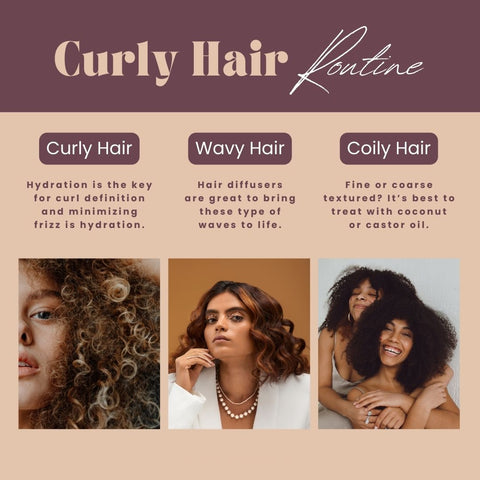
Care for Curly, Coily, and Textured Hair
Curly and coily hair often needs careful moisture management. The bends in the hair can make it harder for natural scalp oils to travel down the strand. This may leave the lengths dry even when the roots are not.
A helpful routine may include:
• Washing the scalp regularly with a gentle cleanser.
• Conditioning generously.
• Detangling while the hair is wet and coated with conditioner.
• Using a wide-tooth comb or fingers.
• Applying leave-in conditioner in small sections.
• Sealing the ends with a light cream or oil if needed.
• Drying with a diffuser on low heat or air-drying.
• Sleeping on a satin or silk-like pillowcase or wearing a smooth bonnet.
Do not comb curls aggressively when they are dry unless the style calls for it. This can increase frizz and cause breakage. Instead, refresh curls with water, a small amount of leave-in conditioner, or a light styling product.
Shrinkage is normal for curly and coily hair. It does not mean the hair is unhealthy or not growing. Hair grows from the follicle under the scalp, while shrinkage reflects the natural shape of the strand.

Prevent Split Ends and Breakage
Split ends develop when the protective cuticle wears away and the inner fiber begins to separate. They often appear after heat exposure, chemical processing, rough brushing, or long periods without trimming.
No product can permanently fuse a split end. Some conditioners and serums can temporarily smooth the appearance, but the split will remain. A small trim can prevent the split from traveling farther up the strand.
Reduce breakage with these habits:
• Use a wide-tooth comb.
• Detangle from the ends upward.
• Avoid brushing more than needed.
• Do not sleep with wet, loose hair if it tangles easily.
• Use soft hair ties without metal parts.
• Protect hair from sun, chlorine, and salt water.
• Rinse hair with fresh water before swimming.
• Wear a swim cap when practical.
• Trim when your ends look thin, split, or uneven.
Hair growth happens at the scalp, but length retention happens along the hair shaft. This explains why someone can have healthy growth but see little added length. The hair may be breaking at the same rate it grows.

Support Hair Health Through Nutrition and Lifestyle
Products affect the hair you can see. Nutrition and health affect the hair produced by the follicle. A balanced diet with enough protein, iron, zinc, vitamin D, and other nutrients supports normal body function and hair growth.
Good food choices include:
• Eggs, fish, beans, tofu, and lean meats for protein
• Leafy greens, lentils, and fortified foods for iron
• Nuts, seeds, and whole grains for zinc and healthy fats
• Fruits and vegetables for a range of vitamins
• Water throughout the day
Avoid taking high-dose hair supplements without medical advice. More is not always better. Excess amounts of some nutrients can cause harm, and supplements may not help if you do not have a deficiency.
Stress, illness, major weight loss, hormonal changes, and some medicines can trigger temporary shedding. If you notice sudden hair loss, bald patches, scalp pain, or heavy shedding that continues, talk with a health professional. Home care can improve the condition of the hair shaft, but it cannot diagnose the cause of hair loss.
A practical lesson is to look at the whole picture. When someone tells me their hair suddenly feels thinner, I do not begin with a new mask. I first ask about recent illness, diet changes, stress, medications, and scalp symptoms. The cause often matters more than the product.
Use Hair Products Safely
Hair products can be useful, but they should match your needs. Read labels and pay attention to how your hair and scalp respond. “Natural” does not always mean gentle, and “chemical-free” is not a scientifically useful promise because everything is made of chemicals.
Patch-test products that may touch your scalp or skin, especially dyes, relaxers, fragrance products, and essential oils. Apply a small amount as directed on the package and watch for irritation. Stop using a product if you develop burning, swelling, rash, or intense itching.
Keep these safety tips in mind:
• Follow the product instructions.
• Do not leave chemical treatments on longer than directed.
• Avoid applying relaxers or dyes to irritated skin.
• Do not mix chemical products unless the label allows it.
• Keep tools and combs clean.
• Replace products that change smell, texture, or color.
• Avoid sharing brushes, combs, or towels if someone has a scalp infection.
Hair color and chemical treatments can be used more safely with proper spacing and professional advice. However, every chemical process can increase dryness or breakage. Try not to bleach, straighten, or perm the same section repeatedly.
Create a Weekly Hair Care Schedule
A simple schedule makes hair care easier to follow. Your plan should be flexible, not strict. Adjust it when you exercise more, travel, swim, or experience a change in scalp health.
Here is an example:
Daily or as needed
• Protect hair from strong heat.
• Smooth or style gently.
• Avoid tight hairstyles.
• Remove tangles with care.
Two to four times each week
• Wash based on scalp oil and activity.
• Condition after shampooing.
• Refresh dry or curly hair with a small amount of water or leave-in product.
Once each week
• Use a hair mask if your hair is dry or processed.
• Wash brushes and combs.
• Check the ends for splits and roughness.
• Clean product buildup from the scalp if needed.
Every few months
• Review your products.
• Trim damaged ends if desired.
• Check whether your routine still fits your hair.
The best routine is the one you can repeat. A simple routine done consistently usually beats an expensive routine used only once in a while.
Common Hair Care Mistakes to Avoid
Many hair problems come from small habits repeated over time. The good news is that these habits are easy to change.
Avoid these common mistakes:
• Scrubbing the hair lengths with shampoo
• Using very hot water
• Rubbing hair dry with a rough towel
• Brushing forcefully through knots
• Applying heavy oils to an oily scalp
• Using high heat without protection
• Wearing tight styles every day
• Sleeping on rough fabric that creates friction
• Applying too many new products at once
• Expecting a mask to repair split ends
• Ignoring scalp pain, sores, or sudden hair loss
One of the most useful changes is reducing friction. Use a smooth pillowcase, gentle towel, soft ties, and careful detangling. Hair is strongest when it is treated with patience.
When to See a Dermatologist
Home care can improve dryness, frizz, buildup, and mild breakage. It cannot treat every scalp or hair condition. Professional advice is important when symptoms are severe, sudden, or persistent.
See a dermatologist or other qualified health professional if you notice:
• Sudden or severe shedding
• Round bald patches
• A widening part
• Receding areas
• Scalp pain, pus, sores, or bleeding
• Intense itching or thick scales
• Hair loss after a new medication
• Broken hairs with no clear styling cause
• No improvement after several weeks of gentle care
A dermatologist may examine the scalp, review your health history, and order tests when needed. Early care can make a difference for some forms of hair loss and scalp disease.
It is also wise to be cautious with online claims about miracle oils, fast growth, or permanent repair. Hair care advice should explain both its benefits and its limits. Healthy hair is a gradual process, not an overnight result.
Frequently Asked Questions About How to Care for Hair at Home
How often should I wash my hair at home?
Wash your hair when your scalp feels oily, sweaty, itchy, or coated with product. Oily scalps may need frequent washing, while dry, curly, or coily hair may need less frequent washing.
How can I care for dry hair at home?
Use a gentle shampoo, apply conditioner to the lengths, and limit high heat. A weekly moisturizing mask, gentle towel drying, and regular trims can also help reduce roughness.
Is it bad to wash your hair every day?
Daily washing is not automatically harmful if you use a mild shampoo and your scalp needs it. Problems are more likely when washing involves harsh products, very hot water, or rough handling.
How can I prevent hair breakage?
Detangle slowly from the ends upward, reduce heat, avoid tight styles, and use conditioner. Protect your hair during sleep and avoid repeated chemical processing on the same strands.
Does trimming make hair grow faster?
Trimming does not change the growth rate at the follicle. It removes split and weak ends, which may help you keep more length by reducing breakage.
What is the best way to dry hair?
Gently squeeze out water and blot with a soft towel or cotton shirt. Air-dry when possible, or use a blow dryer on a lower heat setting while keeping it moving.
Can oils repair damaged hair?
Oils can soften hair and reduce friction, but they cannot permanently repair split ends or reverse severe structural damage. Use a small amount on the lengths and wash it out if the hair feels heavy or coated.
Conclusion
Learning how to care for hair at home starts with a healthy scalp, gentle washing, regular conditioning, careful drying, and protection from heat and tension. Choose products based on your hair’s texture and needs, and remember that consistency matters more than a long product list.
Pay attention to changes in your hair and scalp. Small habits, such as using a wide-tooth comb, lowering heat, and avoiding tight styles, can protect your hair over time. Start with one or two changes this week, then build a routine that feels simple and sustainable. Explore more evidence-based hair care advice, and share the routine that works best for you.
