
Care for 3B hair with gentle cleansing, rich moisture, careful detangling, and low heat to protect each curl.
Learning how to care for 3B hair starts with understanding its shape, porosity, moisture needs, and daily stress. As a curl care writer, I have seen how small changes, such as washing less harshly and detangling with more slip, can turn dry, tangled curls into soft, defined hair. This guide explains how to care for 3B hair with simple steps, product tips, protective habits, and realistic routines that fit busy life.
What Is 3B Hair?
Type 3B hair has springy, well-defined curls. The curls often look like ringlets or corkscrews and may range from the width of a marker to a large straw. Some people have one curl pattern across the whole head, while others have a mix of 3A, 3B, and 3C curls.
The curl shape affects how moisture moves through the hair. Natural scalp oil must travel around each curve, so the ends may stay drier than the roots. This is one reason learning how to care for 3B hair requires more than simply choosing a “curly hair” product.
3B hair can be fine, medium, or thick. It can also have low, medium, or high porosity. These traits matter because two people with 3B curls may need very different routines.
Common features of 3B hair include:
• Defined spiral curls with natural volume
• More dryness at the ends
• Frizz when the hair lacks moisture or faces humidity
• Shrinkage, especially after washing
• Tangles around the nape and crown
• Sensitivity to rough towels, brushing, and frequent heat
Curl typing is useful for description, but it is not a complete hair care plan. Density, strand thickness, scalp health, chemical treatments, climate, and styling habits also shape your best routine.

How to Care for 3B Hair: The Basic Routine
A good 3B hair routine has five parts: cleanse, condition, detangle, style, and protect. You do not need a shelf full of products. You need a steady method that keeps the hair clean without removing too much moisture.
Start with this simple routine:
Wet the hair fully with lukewarm water.
Apply a gentle shampoo to the scalp.
Massage with your fingertips, not your nails.
Rinse the shampoo through the lengths without scrubbing them.
Apply a slippery conditioner from the middle of the hair to the ends.
Detangle in sections, starting at the ends and moving upward.
Rinse lightly, leaving some softness behind if your hair needs it.
Apply a leave-in conditioner and curl product to soaking-wet or very damp hair.
Scrunch the curls upward to encourage their shape.
Air-dry or use a diffuser on low heat and low airflow.
Your wash schedule depends on your scalp and lifestyle. Many people with 3B hair wash once a week, while others need to cleanse every few days because of sweat, exercise, oil, or product buildup. A clean scalp is important, so do not avoid washing for too long just to preserve a style.
A simple rule is this: cleanse when your scalp feels dirty, itchy, oily, or coated. Do not wait until discomfort becomes severe.

How Often Should You Wash 3B Hair?
Most 3B hair does well with shampooing every five to ten days, but there is no perfect number for everyone. A person who exercises often may need more frequent washing. Someone with a dry scalp may need a gentler cleanser and a longer gap between wash days.
Use a mild shampoo when your hair feels normal. Use a clarifying shampoo occasionally when products stop working, the curls feel heavy, or the hair looks dull even after conditioning. Clarifying products remove buildup, but frequent use can leave curls rough and dry.
When washing 3B hair, focus shampoo on the scalp. The foam that runs down the hair is often enough to clean the lengths. Scrubbing the ends can lift the cuticle and increase tangles.
Watch for signs that your wash routine needs a change:
• An oily or itchy scalp may signal that you need to wash more often.
• Dry, tight-feeling hair may signal harsh shampoo or overly hot water.
• Flat curls may point to product buildup.
• Small flakes can come from dryness, irritation, or a scalp condition.
Persistent itching, pain, redness, thick scaling, or sudden shedding should be checked by a dermatologist. Hair care products cannot treat every scalp problem.

Conditioning and Moisture for 3B Curls
Moisture is central to how to care for 3B hair, but more moisture is not always better. Hair needs a balance of water, conditioning agents, and occasional strengthening support. Too little moisture can cause roughness and breakage. Too much rich product can leave curls limp or greasy.
Use a rinse-out conditioner every time you shampoo. Choose a formula that gives enough slip for detangling. Ingredients such as fatty alcohols, plant oils, and conditioning agents can help hair feel smoother, but the best formula depends on your strand type and personal response.
A deep conditioner can help when your hair feels dry, tangled, or rough. Apply it after shampooing, cover the hair if you like, and follow the product directions. Heat is not always required, and excessive heat may increase damage.
Leave-in conditioner can support softness between wash days. Apply a small amount to wet hair, then add a curl cream or gel if you need more definition. Fine 3B hair may need a light leave-in, while dense or coarse hair may need a richer formula.
Try this moisture check:
• If your curls feel soft and springy, keep your current balance.
• If your hair feels dry but products sit on top, use less product and clarify occasionally.
• If your curls feel mushy, weak, or overly soft, reduce heavy conditioning and consider a light protein treatment.
Protein treatments can improve the feel of damaged hair, but they are not right for everyone. If hair becomes stiff or brittle after protein, stop using it and return to gentle conditioning.

Detangling 3B Hair Without Breakage
Detangling is one of the most important parts of how to care for 3B hair. Curly strands wrap around one another, so forcing a dry brush through them can cause snapping, frizz, and unnecessary shedding.
Detangle when the hair is wet and coated with conditioner or a detangling product. Divide thick hair into four to eight sections. Work slowly from the ends upward, and use your fingers, a wide-tooth comb, or a flexible detangling brush.
Use this method:
Separate one section with your fingers.
Hold the hair near the roots to reduce pulling on the scalp.
Loosen knots at the ends first.
Move upward a few inches at a time.
Rinse or style the section before starting the next one.
Some people prefer finger detangling because it gives them more control. Others prefer a brush because it saves time. Both methods can work when the hair has enough slip and you use gentle pressure.
One mistake I often see is waiting until wash day to attack a large, dry knot. That approach turns a small tangle into a painful task. Smooth a little leave-in conditioner over the area, separate it with your fingers, and work in short sessions.

Styling Products for Defined 3B Hair
The best styling routine depends on your goal. Curl cream gives softness and shape. Gel gives hold and helps protect definition from humidity. Mousse can add volume without as much weight as a cream or butter.
A useful product order is:
• Leave-in conditioner for moisture
• Curl cream for softness and shape
• Gel or mousse for hold
You do not need to use all three. Fine hair may look best with leave-in conditioner and mousse. Thick hair may need leave-in conditioner, cream, and gel. Start with a small amount because adding more is easier than removing buildup.
Apply products while the hair is wet. Water helps the product spread and encourages curl clumps. Use praying-hands motions to smooth the product over each section, then scrunch upward.
If you see a hard cast after the gel dries, do not panic. A cast can protect the curls while they set. Once the hair is fully dry, gently squeeze the curls with clean, dry hands to soften them.
Avoid judging a product after one use alone. Weather, water quality, application method, and drying time can all change the result. Test one new product at a time so you can tell what actually helps.

Drying 3B Hair and Reducing Frizz
Drying affects the final look as much as styling products do. Rubbing wet curls with a cotton towel can disturb the curl pattern and create frizz. Instead, use a soft cotton T-shirt or a microfiber towel to gently squeeze out extra water.
Plopping can help some people form curl clumps, but leaving hair wrapped for too long may flatten the roots or create uneven drying. Try a short period first and adjust based on your results.
Air-drying is gentle, but it may take many hours for dense 3B hair. A diffuser can speed up drying. Use low or medium heat, low airflow, and keep the diffuser moving. High heat can make hair feel dry and may increase damage over time.
Do not touch the curls repeatedly while they dry. Imagine wet curls as wet paint. Every touch can disturb the pattern before it sets.
Humidity can cause frizz because hair absorbs water from the air. A styling gel with strong hold may help, but no product can remove all frizz in every climate. Some frizz is normal, healthy, and part of having textured hair.

Night Care and Protective Styles
Night protection is a major part of how to care for 3B hair because friction can undo your work. Cotton pillowcases absorb moisture and create rubbing. A satin or silk pillowcase can reduce friction, although it will not replace good conditioning.
Before bed, gather long hair loosely at the top of your head in a “pineapple.” Use a soft scrunchie rather than a tight elastic. If your hair is short, place it inside a satin bonnet or sleep on a smooth pillowcase.
Protective styles can reduce daily manipulation. Good options include:
• Loose twists
• Large braids
• Low-tension buns
• Flat twists
• Satin-lined head coverings
A protective style should not hurt, pull, or cause a headache. Tight braids, heavy extensions, and repeated tension can contribute to traction hair loss. Medical research has linked prolonged pulling to damage around the hairline and other stressed areas.
Change the direction of your part and give your scalp breaks from tight styles. If you notice soreness, bumps, broken hairs, or thinning edges, remove the style and seek professional advice if the problem continues.
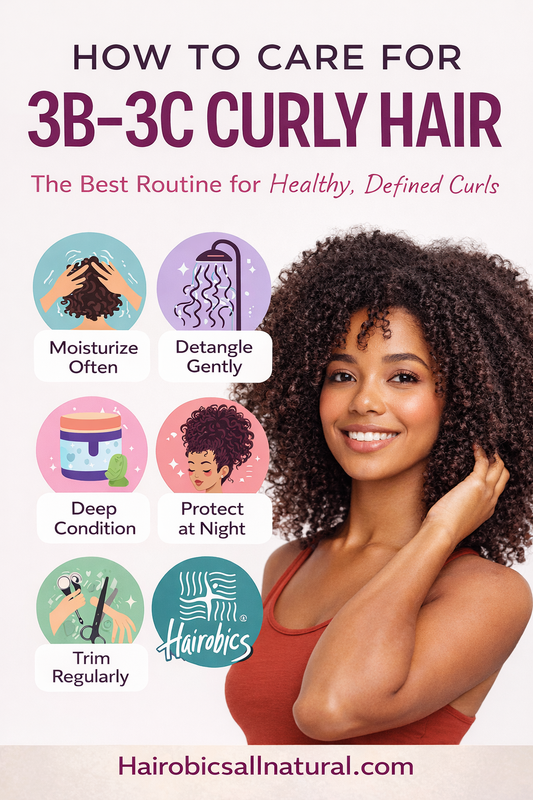
Heat, Color, and Chemical Damage
3B hair can be styled with heat, but frequent high heat may weaken the cuticle and change the curl pattern. Use a heat protectant before blow-drying, diffusing, straightening, or curling. Keep tools at the lowest temperature that gives a useful result.
Limit direct heat on the same section. Do not repeatedly pass a flat iron over hair that is already dry and styled. Hair should also be fully dry before using a flat iron, since pressing wet hair can cause severe internal damage.
Color and chemical services require extra care. Lightening removes natural pigment and can make hair more porous. Relaxers and other straightening treatments alter the internal structure of the hair. These services are not automatically unsafe, but they need a skilled professional and a careful maintenance plan.
Signs of damage include:
• Ends that split quickly
• Hair that breaks during gentle handling
• Curls that stay limp after washing
• Rough texture that does not improve with conditioner
• Short broken hairs around the head
Trim damaged ends when needed. A trim cannot repair a split end, but it can stop the split from traveling farther up the strand. Be realistic about limitations: products can smooth damaged hair for a time, but they cannot permanently rebuild a broken strand.

Common Mistakes to Avoid With 3B Hair
Many problems blamed on “bad curls” come from routine mistakes. Learning how to care for 3B hair often means removing habits that create stress rather than adding more products.
Avoid these common errors:
• Brushing dry hair when you want to keep curl definition
• Using a harsh shampoo at every wash
• Applying heavy butter or oil before checking whether your hair needs it
• Sleeping with loose, wet hair on a rough pillowcase
• Detangling from the roots down
• Using high heat without protection
• Wearing tight ponytails or extensions too often
• Layering many products without clarifying
• Cutting or trimming hair with dull tools
Oil can reduce the feeling of dryness, but it does not add water to the hair. Apply oil only when it fits your routine, and use a small amount. Heavy oil can attract dirt, weigh down curls, and make cleansing harder.
Another mistake is copying a routine from someone with a different density or porosity. Your curls may need less product, more water, or a different wash schedule. Keep notes for a few weeks and change one habit at a time.
A Simple Weekly 3B Hair Schedule
A weekly plan makes how to care for 3B hair easier to follow. Adjust it for your scalp, climate, activity level, and styling needs.
Wash day
• Cleanse the scalp with a gentle shampoo.
• Condition and detangle in sections.
• Apply leave-in conditioner and styling products.
• Dry with a T-shirt, microfiber towel, air-drying, or a diffuser.
Midweek refresh
• Mist the hair lightly with water.
• Add a small amount of leave-in conditioner if needed.
• Smooth frizzy areas with wet hands or a little gel.
• Avoid soaking the entire head if the curls do not need it.
Night routine
• Place the hair in a loose pineapple or bonnet.
• Sleep on satin or silk when possible.
• Remove tight styles before bed.
Monthly check
• Clarify if you notice buildup.
• Inspect the ends for splits.
• Review whether your products still suit your hair.
• Clean brushes, combs, clips, and other tools.
This plan is not a rulebook. For example, someone who swims may need to rinse chlorine soon after swimming and condition more often. Someone with a dry scalp may need a different shampoo schedule than someone with an oily scalp.
How to Care for 3B Hair in Different Seasons
Weather changes can affect curl behavior. In dry winter air, 3B hair may lose moisture more quickly. Use a richer conditioner, protect the ends, and avoid very hot water.
In humid weather, hair may expand and frizz as it absorbs moisture from the air. A stronger-hold gel can help curls keep their shape. Do not keep adding product every day, since buildup may become the bigger problem.
During summer, sweat, sun, swimming, and frequent washing can change your routine. Rinse after swimming, use a swim cap when practical, and condition the hair afterward. If you spend long hours in the sun, cover your hair or use products designed for sun exposure.
Hard water can also leave mineral deposits on hair. If your hair feels coated, dull, or unusually dry despite a good routine, a chelating product may help. Use it according to the label because these formulas can be stronger than regular clarifying shampoos.
Your environment is part of your hair routine. Treat your curls like a plant: the right care depends on the soil, light, water, and season.
Frequently Asked Questions About How to Care for 3B Hair
How often should you wash 3B hair?
Many people wash 3B hair every five to ten days. Wash sooner if your scalp feels oily, itchy, sweaty, or coated with product.
Is 3B hair always dry?
No. 3B hair can be oily at the roots and dry at the ends, or it can be well balanced. The curl shape may make it harder for natural oil to move down the strands, but dryness varies by person.
Should you brush 3B hair every day?
Daily brushing is usually not needed and may cause frizz or breakage. Detangle wet hair with conditioner when necessary, using your fingers, a wide-tooth comb, or a gentle brush.
What products are best for 3B curls?
Most 3B curls benefit from a gentle shampoo, rinse-out conditioner, leave-in conditioner, and a curl-holding product. Fine hair may prefer mousse or light gel, while thick hair may need cream and stronger gel.
How can you make 3B curls less frizzy?
Use enough water and conditioner, apply styling products to wet hair, avoid rough towels, and limit touching while the hair dries. Some frizz is natural and cannot be removed completely.
Can you use oils on 3B hair?
Yes, but use a small amount and treat oil as a sealant or finishing product rather than a moisturizer. Heavy oil may create buildup or weigh down curls, especially when used often.
How do you protect 3B hair at night?
Sleep with the hair in a loose pineapple, loose twists, or a satin bonnet. A satin or silk pillowcase can also reduce friction and help preserve curl definition.
Conclusion
Learning how to care for 3B hair becomes easier when you focus on consistency rather than perfection. Clean the scalp gently, condition well, detangle with slip, style on wet hair, limit heat, and protect the curls while you sleep.
Your best routine may take a little testing. Start with one change, watch how your hair responds, and adjust the amount of product or the wash schedule as needed. Treat your curls with patience, and explore more textured-hair resources or share the routine that works best for you.
