
Introduction
If you live in the United States and your skin became red, burning, itchy, or swollen after using a topical steroid, you may wonder whether you have red skin syndrome. This term often refers to topical steroid withdrawal (TSW). It is not a formal diagnosis accepted by every medical group, and similar symptoms can come from eczema, contact dermatitis, infection, rosacea, or another condition.
There is no proven one-step cure for red skin syndrome. The safest path is to confirm the cause with a U.S.-licensed dermatologist, avoid self-treating severe symptoms, and use a care plan that protects the skin barrier while checking for infection and other skin diseases.

What Is Red Skin Syndrome?
Red skin syndrome is a patient-used term for a group of skin symptoms that may appear after reducing or stopping topical corticosteroids. The symptoms may include:
- Red or darkened skin
- Burning or stinging
- Severe itching
- Skin that feels hot
- Flaking or peeling
- Oozing or small blisters
- Swelling
- Skin sensitivity
- Trouble sleeping
- Redness that spreads beyond the original rash
Some people call this condition topical steroid withdrawal syndrome or red skin syndrome. The terms are often used in online support groups and patient education. However, medical researchers still debate the condition’s definition, cause, and frequency.
Topical steroids are medicines that reduce skin inflammation. They are used for eczema, psoriasis, allergic rashes, and many other problems. When used correctly, topical steroids can be safe and effective. Risk may rise with strong steroids, long use, large treatment areas, frequent use, or use on thin skin such as the face, groin, or skin folds.
Red skin after steroid use does not prove that withdrawal caused the problem. The original condition may have returned. A new allergy, infection, or skin disease may also explain the symptoms.
Is There a Proven Cure for Red Skin Syndrome?
There is no universally accepted cure or standard treatment protocol for red skin syndrome. Treatment focuses on four goals:
- Confirm the diagnosis.
- Find and treat infection or another skin disease.
- Reduce pain, itch, heat, and swelling.
- Help the skin barrier heal over time.
A dermatologist may recommend stopping, reducing, or changing a topical steroid. The correct plan depends on the steroid’s strength, the body area, how long it was used, and the condition being treated.
Do not make a sudden change to prescribed treatment without medical advice if you have severe eczema, psoriasis, asthma, allergies, or another condition that may flare. Some people may need a supervised taper. Others may need to stop a product and use a different treatment.
The U.S. Food and Drug Administration, the American Academy of Dermatology, and other medical groups recognize topical corticosteroids as useful medicines when used as directed. They do not support using strong steroids without supervision or assuming that every flare after steroid use is withdrawal.
How to Get the Right Diagnosis
The first step is a full skin exam by a dermatologist. Bring a list or photos of every product used on the skin, including:
- Prescription steroid creams or ointments
- Over-the-counter hydrocortisone
- Moisturizers
- Antibiotic creams
- Antifungal products
- cosmetics
- Essential oils - “Natural” or imported creams
- Products bought online
Also write down the steroid name, strength, body area, treatment dates, and how often you used it. Photos taken during flares can help because skin may look different on the appointment day.
A dermatologist may check for:
- Atopic dermatitis or eczema
- Allergic contact dermatitis
- Irritant contact dermatitis
- Seborrheic dermatitis
- Psoriasis
- Rosacea
- Perioral dermatitis
- Fungal infection
- Bacterial infection
- Scabies
- Demodex-related inflammation
- Cutaneous T-cell lymphoma or another rare disorder
Testing may include a skin swab, fungal scraping, allergy patch testing, or a biopsy. These tests are not needed for every person. They become more useful when the rash is unusual, severe, persistent, or not responding to treatment.
Why diagnosis matters
Stopping all treatment can make some conditions worse. For example, untreated eczema can damage the skin barrier and increase infection risk. A fungal rash may spread if treated with a steroid alone. Rosacea and perioral dermatitis may worsen with repeated steroid use.
A diagnosis does not dismiss your symptoms. It helps separate steroid withdrawal from conditions that need a different treatment.

What to Do if You Suspect Topical Steroid Withdrawal
Use this sequence as a safety guide, not as a personal treatment plan.
1. Contact a dermatologist or primary care clinician
Ask for a skin exam and explain that you are concerned about topical steroid withdrawal. If you cannot see a dermatologist soon, a primary care clinician can check for infection and help arrange a referral.
Telehealth may help with an initial review, but severe or spreading symptoms may need an in-person exam. Some skin problems cannot be diagnosed reliably from a photo alone.
2. Do not restart or stop a strong steroid on your own
The safest choice depends on the diagnosis and the steroid used. A clinician may advise:
- Stopping the steroid
- Using it less often for a short period
- Switching to a weaker steroid
- Treating the original condition with another medicine
- Using a nonsteroid anti-inflammatory treatment
- Treating an infection before changing anti-inflammatory therapy
Avoid cycling between stopping and restarting medicines without guidance. This can make it harder to identify the cause and may lead to repeated flares.
3. Use gentle skin care
During a flare:
- Take short, lukewarm showers.
- Use a mild, fragrance-free cleanser only where needed.
- Pat the skin dry.
- Apply a plain, fragrance-free cream or ointment soon after bathing.
- Wear loose, soft clothing.
- Keep fingernails short.
- Use cool compresses for a few minutes when heat or itch is strong.
- Avoid scrubbing, exfoliating, and peeling flakes.
- Stop new products until the cause is clearer.
A thick ointment may reduce water loss, but some people find ointments too hot or uncomfortable during a severe flare. A plain cream may feel better. Try a small area first if your skin reacts easily.
4. Protect sleep and itch control
Poor sleep can make pain and itch feel worse. Ask a clinician or pharmacist which options are safe for you. Do not assume that sedating antihistamines, antibiotics, supplements, or herbal products will help. Some products can cause harm, interact with medicines, or irritate the skin.
5. Watch for infection
Broken or oozing skin can become infected. Warning signs include:
- Increasing pain
- Pus
- Yellow or honey-colored crusts
- Rapidly spreading redness
- Fever
- Chills
- Red streaks
- Swollen lymph nodes
- Feeling very ill
Seek prompt medical care if these signs appear. Bacterial, viral, and fungal infections need different treatments. Do not apply leftover antibiotics or steroid-antibiotic combinations without advice.
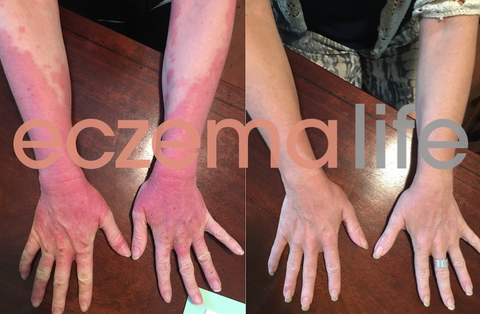
Red Skin Syndrome Treatment Options
Treatment varies because the cause may vary. A clinician may combine several approaches.
Moisturizers and barrier care
Moisturizers do not cure topical steroid withdrawal, but they can support the outer skin barrier. Choose products with few ingredients and no fragrance. Petrolatum, mineral oil, ceramides, or glycerin may help some people.
Avoid products that burn, sting, or cause a new rash. “Natural” does not always mean gentle. Fragrance, plant oils, and preservatives can trigger contact dermatitis.
Nonsteroid prescription medicines
A dermatologist may consider treatments such as:
- Topical calcineurin inhibitors, including tacrolimus or pimecrolimus
- Topical PDE-4 inhibitors
- Topical JAK inhibitors when appropriate
- Crisaborole for selected eczema cases
- Oral medicines for severe inflammatory skin disease
- Biologic medicines for certain types of eczema or psoriasis
These medicines do not treat every cause of red skin. Some can sting at first, and some have age, body-area, or medical restrictions. Use them only as prescribed.
Wet wraps
Wet-wrap therapy may reduce itch and help moisturizers stay on the skin. It is not suitable for every person. Wet coverings can worsen infection or cause skin damage if used incorrectly.
Ask a clinician to show you how to use wet wraps safely. Do not wrap infected skin or apply prescription medicine under an occlusive covering unless the prescriber specifically directs you.
Oral steroids
Oral corticosteroids may give short-term relief but can cause rebound flares and other side effects. They are not a routine cure for suspected topical steroid withdrawal. A clinician should decide whether they are appropriate.
Light therapy and systemic treatment
Phototherapy or systemic treatment may help when the underlying condition is severe or widespread. These treatments require medical screening and follow-up. They are not home remedies for red skin syndrome.
How Long Does Recovery Take?
Recovery time is different for each person. Some people improve in weeks. Others have symptoms for months or longer. Research does not provide a reliable timeline for every patient.
The time may depend on:
- The original skin condition
- Steroid strength
- Treatment duration
- Frequency of use
- Body area
- Amount of skin treated
- Previous steroid courses
- Infection or allergy
- Other medicines and health conditions
- Sleep and stress
A flare after stopping a steroid does not prove that withdrawal is occurring. It may mean the original disease is active again. Improvement also does not prove that one treatment caused the recovery.
Track symptoms once or twice a week rather than checking every hour. Record itch, pain, sleep, affected areas, product use, and signs of infection. This can help your clinician see patterns without making daily skin changes feel overwhelming.

What Not to Do
Avoid these common mistakes:
Do not use very strong steroids without supervision
Stronger is not always better. The face, eyelids, genitals, groin, and skin folds absorb steroids more easily and may be more vulnerable to side effects.
Do not rely on online “withdrawal protocols”
Some online plans advise stopping all medicines, avoiding bathing, taking unproven supplements, or using extreme diets. These steps can cause dehydration, malnutrition, infection, or delayed care.
Do not use bleach baths without medical advice
Bleach baths are sometimes used for selected eczema patients under clinical guidance. They can irritate skin when mixed incorrectly or used too often. They are not a general treatment for red skin syndrome.
Do not assume every rash is withdrawal
A rash that looks like withdrawal may be eczema, allergy, infection, rosacea, or another disease. A wrong label can delay useful treatment.
Do not apply many new products at once
If the skin worsens, you may not know which product caused the reaction. Add only one new product at a time, and ask a clinician before trying active ingredients.

When to Seek Urgent Medical Care
Get urgent help for:
- Trouble breathing
- Swelling of the lips, tongue, or throat
- Blistering over a large area
- Skin peeling over a large area
- Eye pain or vision changes
- Severe facial swelling
- Fever with a rapidly spreading rash
- Severe pain that seems out of proportion
- Confusion, weakness, or fainting
- Signs of dehydration
- A painful rash near the eyes
These symptoms can signal a serious allergic reaction, infection, severe drug reaction, or another emergency. Call 911 in the United States for trouble breathing, throat swelling, fainting, or other life-threatening symptoms.
Questions to Ask Your Dermatologist
Bring these questions to your visit:
- Could this be eczema, contact dermatitis, infection, or another condition instead of withdrawal?
- Should I stop, taper, or change my topical steroid?
- Which moisturizer is best for my affected skin?
- Do I need a bacterial, fungal, or viral test?
- Should I have allergy patch testing?
- What symptoms mean I should seek urgent care?
- Which treatments are safe for my face, eyelids, or skin folds?
- How will we track improvement?
- What should I do during the next flare?
- Could any other medicine or health condition be affecting my skin?
Take photos and bring the product containers when possible. Clear details can improve the visit.
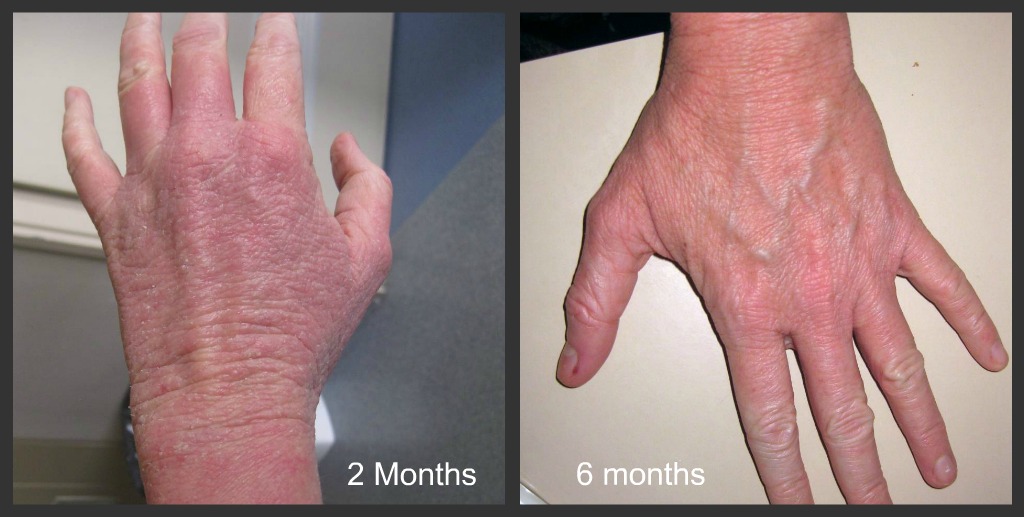
Frequently Asked Questions
Can red skin syndrome be cured permanently?
Some people improve fully or nearly fully, while others have recurring symptoms or an underlying skin disease that needs long-term care. Because the term is not defined in one consistent way, no doctor can promise a fixed recovery time or permanent cure.
Should I stop using hydrocortisone?
Do not make that decision based only on the name of the product. Hydrocortisone is usually weaker than many prescription steroids, but risk still depends on where, how often, and how long it is used. Ask the prescriber or a pharmacist for advice, especially if you use it on the face or on a child.
Is topical steroid withdrawal the same as eczema?
No. They can look similar, and both may cause red, itchy, inflamed skin. A person may also have eczema and experience a flare after changing treatment. A clinical exam helps separate these possibilities.
Can moisturizers make red skin syndrome worse?
They can if an ingredient causes irritation or allergy. Fragrance, essential oils, lanolin, preservatives, and plant extracts bother some people. Use a simple, fragrance-free product and stop it if burning or rash clearly worsens.
Can I treat red skin syndrome at home?
You can use gentle skin care while waiting for medical advice, but home care cannot confirm the diagnosis. Seek professional help for severe, spreading, painful, oozing, or persistent symptoms.
Conclusion
There is no proven universal cure for red skin syndrome. The condition usually refers to symptoms linked to topical steroid withdrawal, but the same symptoms can come from eczema, allergy, infection, rosacea, or another skin disorder.
The safest plan in the United States is to arrange a medical evaluation, avoid unsupervised steroid changes, use gentle fragrance-free skin care, and watch closely for infection or emergency symptoms. A correct diagnosis gives you the best chance of choosing treatment that helps rather than prolongs the flare.
