
A gentle routine, balanced hydration, and targeted care can clear combination skin without stripping or clogging it.
Combination skin can feel like two different skin types at once: oily around the forehead, nose, and chin, yet dry or tight on the cheeks. The key to how to clear up combination skin is not using harsh products everywhere. It is learning to balance oil, water, cleansing, and targeted treatment while giving your skin time to respond.
What Is Combination Skin?
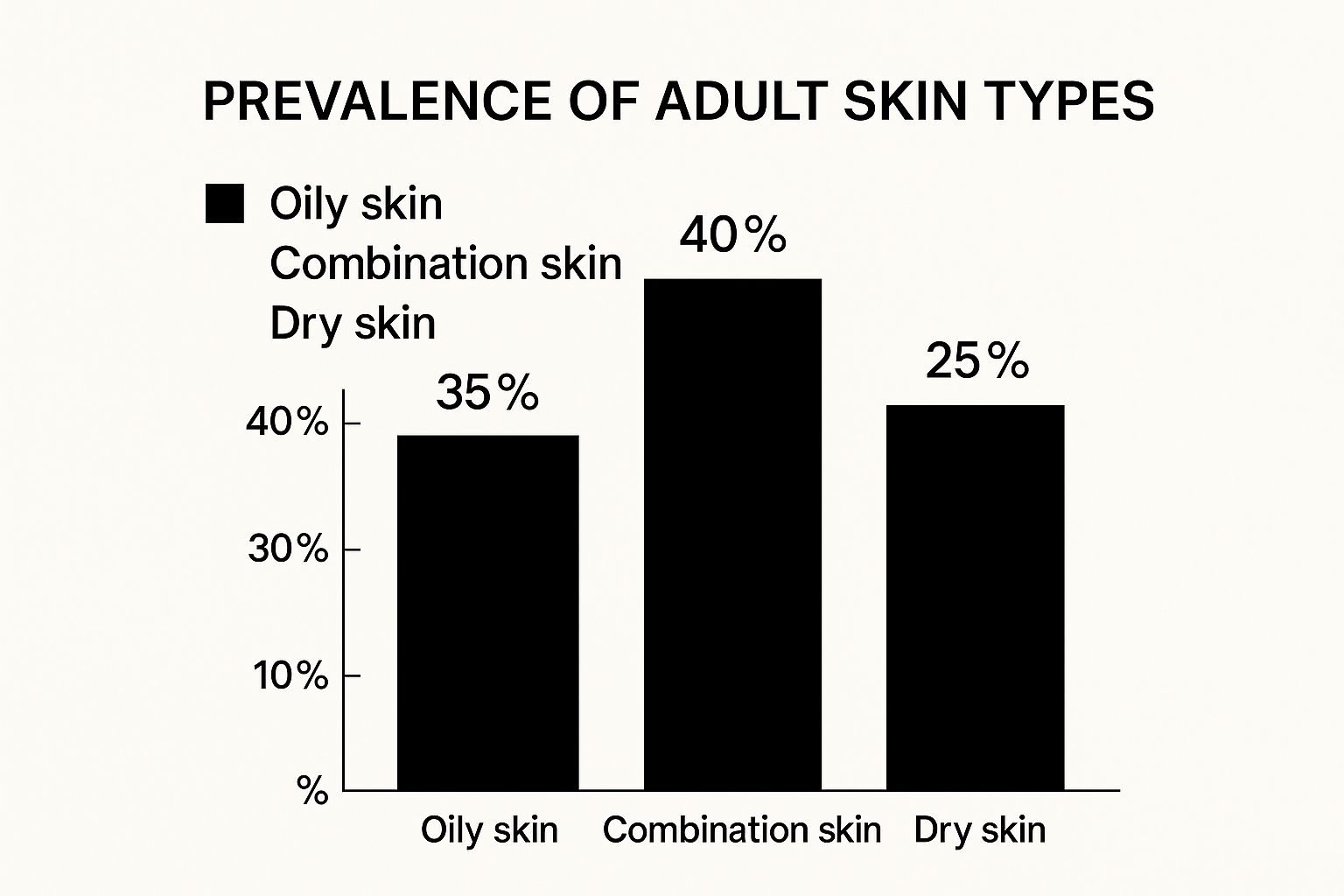
Combination skin has both oily and dry areas on the face. Most people notice extra shine in the T-zone, which includes the forehead, nose, and chin. The cheeks may feel normal, dry, flaky, or sensitive.
This happens because oil glands are not equally active across the face. The T-zone often produces more sebum, while the cheeks may have less oil or lose moisture more quickly.
Common signs include:
• Shine or enlarged pores around the nose and forehead
• Dry patches on the cheeks
• Blackheads or breakouts in the T-zone
• Tightness after washing
• Makeup that looks oily in one area and flaky in another
Combination skin can also change with the season. Cold air may make the cheeks drier, while heat and humidity can increase oil and sweat. Hormones, stress, skin-care products, and some medicines may also affect oil production.
Before trying to clear combination skin, check whether your skin is truly combination. If your entire face feels oily, you may have oily skin. If your entire face feels tight and rough, you may have dry or dehydrated skin. A dermatologist can help if the pattern is unclear or severe.

How to Clear Up Combination Skin: A Simple Routine
The best routine for combination skin is gentle, steady, and simple. You do not need a shelf full of products. You need a mild cleanser, a lightweight moisturizer, sunscreen, and one or two targeted treatments.
Follow this basic plan.
Morning routine
Cleanse with a gentle, low-foam cleanser.
Apply a lightweight moisturizer to the whole face.
Use broad-spectrum sunscreen with SPF 30 or higher.
Add an oil-control product only to areas that become shiny.
A gentle cleanser removes sweat and excess oil without damaging the skin barrier. If your face feels squeaky, tight, or hot after cleansing, the product may be too harsh.
Choose a moisturizer labeled noncomedogenic. This means it is designed to reduce the chance of clogged pores. Gel creams and light lotions often work well, but dry cheeks may need a richer cream.
Sunscreen matters even when your main concern is oil or acne. Daily sun exposure can worsen dark marks left by breakouts and may irritate sensitive skin. Mineral and chemical sunscreens can both work; the best one is the product you will use every day.
Evening routine
Remove makeup and sunscreen.
Wash with a gentle cleanser.
Apply one treatment, if needed.
Finish with moisturizer.
Do not scrub your face hard to remove oil. Scrubbing may create tiny areas of irritation and can make redness, dryness, and breakouts worse.
A practical lesson is to treat your face like a mixed garden. You would not give every plant the same amount of water. In the same way, apply richer hydration to dry cheeks and lighter products to oily areas.

Cleanse Without Stripping Your Skin
Cleansing is important, but overcleansing is one of the most common mistakes with combination skin. Washing too often or using a strong cleanser can remove protective oils from the skin barrier.
When the barrier becomes dry and irritated, the skin may feel tight while still looking shiny. This can create a frustrating cycle of more washing, more dryness, and more visible oil.
Use lukewarm water rather than hot water. Massage cleanser over your face for about 20 to 30 seconds, then rinse well. Pat your skin dry with a clean, soft towel.
Most people only need to cleanse twice a day. If your skin is dry or sensitive, cleansing once at night and rinsing with water in the morning may be enough.
Avoid these common cleansing mistakes:
• Using bar soap made for the body
• Washing more than twice daily
• Scrubbing with rough facial brushes
• Using alcohol-heavy toners
• Applying very hot water
If you exercise or sweat heavily, rinse soon afterward. Sweat, oil, and bacteria can build up around the hairline and jaw. Still, use a gentle method rather than repeated harsh washing.
Balance Oil and Dryness With the Right Moisturizer
Many people with combination skin skip moisturizer because they fear more shine. This often makes the skin feel worse. Moisturizer helps reduce water loss and supports the barrier that protects your face.
Look for ingredients such as:
• Glycerin
• Hyaluronic acid
• Ceramides
• Squalane
• Panthenol
• Niacinamide
Glycerin and hyaluronic acid attract water to the skin. Ceramides help support the outer barrier. Squalane can soften dry areas without feeling heavy for many people.
Apply moisturizer while your skin is slightly damp. Use a small amount over the whole face, then add a little more to dry patches if needed.
You can also use different textures on different areas. Try a gel moisturizer on the T-zone and a lotion or cream on the cheeks. This method, sometimes called multi-moisturizing, can help clear combination skin without making every area feel the same.
Do not assume that a thick product will always clog your pores. Texture alone does not determine whether a product causes acne. Your skin’s response matters more, so test one new product at a time.

Use Targeted Ingredients for Breakouts and Pores
Combination skin often includes clogged pores, blackheads, whiteheads, or small pimples. Targeted ingredients can help, but using too many at once may cause irritation.
Salicylic acid
Salicylic acid is a beta hydroxy acid that can move into oily pores. It may help reduce blackheads, whiteheads, and mild breakouts.
Start with a low-strength product one or two times per week. Apply it mainly to the T-zone if that is where congestion occurs. Increase use only if your skin remains comfortable.
Niacinamide
Niacinamide, also called vitamin B3, may help support the skin barrier, reduce the look of excess oil, and calm redness. A product with about 2% to 5% niacinamide is often enough.
Higher percentages are not automatically better. Some people develop stinging or redness with strong formulas.
Benzoyl peroxide
Benzoyl peroxide can reduce acne-causing bacteria and inflammation. It may help with red, swollen pimples.
Use a small amount as a spot treatment or in a low-strength wash. It can dry the skin and bleach fabrics, so use it carefully.
Retinoids
Over-the-counter adapalene can help prevent clogged pores and treat acne over time. It works gradually and may cause dryness during the first few weeks.
Use a pea-sized amount for the entire acne-prone area, not a thick layer on individual spots. Start two nights per week and use moisturizer before or after it if your skin is sensitive.
Avoid retinoids during pregnancy unless your health care professional specifically advises otherwise. Ask a dermatologist or doctor if you are pregnant, breastfeeding, or taking other acne treatments.
Treat Dry Patches Without Causing More Breakouts
Dry cheeks need water and barrier support, not harsh exfoliation. Flaky skin can make you want to scrub, but that often leads to more irritation.
Use a gentle moisturizer with ceramides, glycerin, or petrolatum on dry areas. At night, you can apply a very thin layer of a protective ointment over dry patches. Keep heavier products away from areas that clog easily if they cause pimples.
Avoid combining several drying products. For example, using a strong cleanser, clay mask, salicylic acid, and retinoid in the same routine can overwhelm your skin.
Signs that you need to reduce active products include:
• Burning or stinging
• Persistent redness
• Peeling that does not improve
• New sensitivity to products
• Tightness after applying moisturizer
A healthy routine should feel calm. Some treatments may tingle slightly, but burning is not proof that a product is working.

Exfoliate Carefully
Exfoliation removes dead skin cells from the surface. It may make skin feel smoother and help reduce some clogged pores. However, overexfoliation can damage the skin barrier.
For combination skin, chemical exfoliation is often easier to control than rough scrubs. Salicylic acid may suit oily areas, while a mild lactic acid product may suit some dry areas.
Do not use multiple exfoliating acids on the same night. Avoid pairing a strong exfoliant with a retinoid until your skin has adapted to each product on its own.
A safe starting plan is:
Exfoliate once weekly.
Apply the product to clean, dry skin.
Moisturize afterward.
Wait several weeks before deciding whether you need more.
Physical scrubs, cleansing brushes, and exfoliating gloves can be too rough for irritated or acne-prone skin. Smooth skin is not worth a damaged barrier.

Ingredients and Habits That May Make Combination Skin Worse
Some products can worsen dryness, shine, or breakouts. The problem is not always one “bad” ingredient. It may be the total effect of your routine.
Be cautious with:
• Fragranced products if your skin is sensitive
• High amounts of rubbing alcohol
• Harsh scrubs
• Heavy hair oils touching the forehead
• Thick makeup that is not removed well
• Frequent product switching
• Picking or squeezing pimples
Pore strips may remove surface debris for a short time, but they do not prevent blackheads. Clay masks may absorb oil, yet using them too often can dry the cheeks and irritate the skin.
Your pillowcase, phone, makeup brushes, and hands also touch your face. Clean pillowcases regularly and wash makeup tools as directed. These steps will not cure acne by themselves, but they can reduce avoidable buildup.
Diet is more complex than many skin-care posts suggest. Some research links high-glycemic eating patterns and dairy intake with acne in certain people, but the evidence is not the same for everyone. Do not follow extreme food restrictions without professional guidance.

How Long Does It Take to Clear Combination Skin?
Skin improvements take time. A moisturizer may improve tightness within days, but clogged pores and acne often need several weeks of consistent care.
A realistic timeline may look like this:
• One to two weeks: less tightness and irritation
• Four to six weeks: fewer new clogged pores for some people
• Eight to twelve weeks: clearer acne with consistent treatment
• Several months: fading of dark marks and more stable results
Do not change your entire routine every few days. Frequent changes make it hard to know what helps and what causes irritation.
Take a photo once a month in similar lighting. This gives you a clearer view of progress than checking your skin several times each day. Remember that acne can naturally rise and fall, so one bad week does not mean your routine failed.

A Practical Weekly Routine for Combination Skin
A simple weekly schedule can help you avoid treatment overload.
Every morning
• Rinse or cleanse gently
• Apply moisturizer
• Use SPF 30 or higher
Every evening
• Remove makeup and sunscreen
• Cleanse gently
• Apply moisturizer
One or two evenings each week
• Use salicylic acid on oily or congested areas
Two evenings each week
• Use a retinoid if appropriate for you
Do not use salicylic acid and a retinoid together at first. On the remaining nights, focus only on cleansing and moisturizing.
If your skin feels dry, skip active treatments for a few days. A short recovery period can help restore comfort and prevent a small irritation from becoming a larger problem.
This approach can clear combination skin more reliably than an aggressive routine. Think of skin care as training, not punishment. Small, repeatable steps usually beat intense short-term efforts.
When to See a Dermatologist
Home care may help mild oiliness, clogged pores, and occasional pimples. Professional care is important when acne is painful, deep, widespread, or leaving scars.
See a dermatologist if:
• Breakouts do not improve after about three months
• You have painful cysts or nodules
• Acne leaves dents or thick scars
• Dark marks continue to multiply
• Your skin burns or peels after basic products
• Breakouts began after a new medicine
• Acne affects your confidence or daily life
A dermatologist may recommend prescription retinoids, antibiotics, hormonal treatment, or other options. Treatment depends on your skin, medical history, age, and pregnancy status.
Be honest about every product you use. This includes supplements, home remedies, essential oils, and acne treatments. Clear information helps a professional create a safer plan.
Frequently Asked Questions About How to Clear Up Combination Skin
How can I clear combination skin naturally?
Use gentle cleansing, regular moisturizing, daily sunscreen, and avoid picking or harsh scrubbing. Natural products are not always safer, so patch-test ingredients such as essential oils or plant extracts before using them widely.
Should I moisturize if my T-zone is oily?
Yes. A light, noncomedogenic moisturizer can support the skin barrier without adding a greasy feel. Apply a thin layer to oily areas and more to dry cheeks if needed.
How often should I wash combination skin?
Most people should wash twice daily, once in the morning and once at night. If your skin feels tight or irritated, a morning water rinse and gentle evening cleanse may be enough.
Is salicylic acid good for combination skin?
Salicylic acid may help oily areas, blackheads, and clogged pores. Start slowly and apply it mainly to the T-zone if your cheeks are dry or sensitive.
Can combination skin use retinol?
Many people with combination skin can use an over-the-counter retinoid, but they should start slowly. Use a small amount at night, moisturize well, and seek medical advice if you are pregnant or have significant irritation.
Why is my skin oily and dry at the same time?
Combination skin can produce more oil in the T-zone while losing more moisture from the cheeks. Harsh cleansing can make this contrast more noticeable by drying the outer skin barrier.
How long does it take to clear combination skin?
Mild dryness may improve within days, but acne and clogged pores often need four to twelve weeks of consistent care. If there is no improvement after about three months, consult a dermatologist.
Conclusion
The best way to clear combination skin is to balance care instead of attacking every area with strong products. Cleanse gently, moisturize daily, protect your skin from the sun, and use targeted ingredients only where they are needed.
Start with a small routine and give it time. Add one new product at a time, watch for irritation, and adjust based on how your skin feels. If breakouts are painful or persistent, professional guidance can save time and prevent scars.
Try the routine for several weeks, track your progress, and share your skin-care questions or results in the comments.
