
Most skin needs a gentle cleanser, moisturizer, broad-spectrum sunscreen, and targeted products for specific concerns.
Knowing what products does my skin need can feel confusing when shelves are packed with serums, masks, oils, and creams. In practice, healthy skin often needs a much simpler routine than social media suggests. This guide explains how to choose useful products based on your skin type, goals, budget, and tolerance, with advice grounded in dermatology and real-world routine testing.

What products does my skin need for a basic routine?
Most people can build an effective skin care routine with four core products:
- A gentle cleanser
- A moisturizer
- A broad-spectrum sunscreen
- One targeted treatment, if needed
These products support the skin barrier, remove dirt and excess oil, reduce moisture loss, and protect against ultraviolet damage. You do not need ten steps to care for your skin well.
1. Gentle cleanser
A cleanser removes sweat, oil, makeup, sunscreen, and pollution from the skin. Choose a mild, fragrance-free formula that does not leave your face feeling tight or squeaky.
Look for terms such as:
• Gentle
• Non-comedogenic
• Fragrance-free
• Cream, lotion, gel, or cleansing balm
• Suitable for sensitive skin
Avoid harsh scrubs and strong soaps for daily use. They may remove too much oil and leave the skin dry, red, or irritated.
2. Moisturizer
A moisturizer helps reduce water loss and supports the skin barrier. Even oily skin can need moisturizer because dehydration may make the skin feel tight and may increase visible oiliness.
Common moisturizing ingredients include:
• Glycerin
• Hyaluronic acid
• Ceramides
• Squalane
• Petrolatum
• Colloidal oatmeal
• Shea butter
Choose a lightweight lotion or gel for oily skin. Dry skin often feels better with a cream or balm.
3. Sunscreen
Sunscreen is one of the most important answers to what products does my skin need. Daily ultraviolet exposure contributes to sunburn, dark spots, uneven tone, premature wrinkles, and skin cancer risk.
Choose a broad-spectrum sunscreen with SPF 30 or higher. Apply it every morning to your face, ears, neck, and other exposed skin. Reapply when outdoors for long periods, sweating, swimming, or exercising.
4. Targeted treatment
A targeted product addresses a specific concern. You may need one for acne, dark spots, rough texture, redness, or fine lines.
Useful ingredients include:
• Salicylic acid for clogged pores and some acne
• Benzoyl peroxide for acne-causing bacteria and inflamed pimples
• Azelaic acid for acne, redness, and uneven tone
• Retinoids for acne and signs of aging
• Vitamin C for antioxidant support and uneven pigmentation
• Niacinamide for oil control, redness, and barrier support
Start with one treatment. Adding several active ingredients at once makes irritation more likely and makes it hard to know what caused a reaction.

What products does my skin need based on skin type?
Your skin type gives you a starting point, but it does not define every product you need. Skin can also become dry, oily, sensitive, or dehydrated because of weather, hormones, medication, stress, or overuse of strong products.
Dry skin
Dry skin may feel tight, rough, flaky, or uncomfortable after cleansing. It often needs products that add water and seal in moisture.
A simple routine may include:
• A cream or lotion cleanser
• A rich moisturizer with ceramides or glycerin
• A balm for very dry areas
• Cream-based sunscreen
• A gentle hydrating serum, if desired
Avoid very hot water and frequent exfoliation. Both can weaken the barrier and increase dryness.
Oily skin
Oily skin produces more sebum. It may look shiny and may be more likely to develop clogged pores.
Try:
• A gentle gel cleanser
• A lightweight, non-comedogenic moisturizer
• A fluid or gel sunscreen
• Salicylic acid once or twice weekly, if tolerated
• Blotting papers for temporary shine control
Do not use harsh alcohol-based products to “dry out” oil. This can cause stinging and may lead to a cycle of irritation and more visible oil.
Combination skin
Combination skin is oily in some areas and dry in others. Many people notice oil in the forehead, nose, and chin, with normal or dry cheeks.
Use a balanced routine:
• A gentle cleanser
• Light moisturizer across the face
• Extra moisturizer on dry areas
• A targeted treatment only where needed
• Sunscreen every morning
You can use different textures on different areas. Skin care does not need to be identical across your entire face.
Sensitive skin
Sensitive skin may sting, burn, itch, flush, or become red after using products. The best routine is usually short and calm.
Choose:
• Fragrance-free products
• Mild cleansers
• Simple moisturizers
• Mineral or sensitive-skin sunscreen if chemical filters sting
• Fewer active ingredients
Patch-test new products on a small area before applying them to your whole face. Stop using a product if you develop swelling, blistering, severe burning, or a spreading rash.
Normal skin
Normal skin usually feels comfortable and does not have major oil or dryness concerns. It still needs protection from the sun and support for the skin barrier.
A cleanser, moisturizer, and sunscreen may be enough. Add a treatment only when you have a clear goal.

What products does my skin need in the morning?
A morning routine should protect the skin and create a comfortable base for the day. It does not need many layers.
Follow these steps:
- Cleanse gently or rinse with lukewarm water.
- Apply a treatment serum, if you use one.
- Apply moisturizer.
- Finish with broad-spectrum SPF 30 or higher.
- Reapply sunscreen during extended outdoor exposure.
Vitamin C may suit people who want antioxidant support and help with uneven skin tone. Niacinamide can be useful for oiliness, redness, and barrier support. Neither ingredient is essential for everyone.
Sunscreen should be the final skin care step before makeup. Use enough to cover the face, neck, and ears. A common approach is about two finger lengths of sunscreen for the face and neck, although the exact amount depends on the product and the area covered.
Makeup with SPF can add support, but it usually should not replace dedicated sunscreen. Most people do not apply enough makeup to reach the labeled protection level.
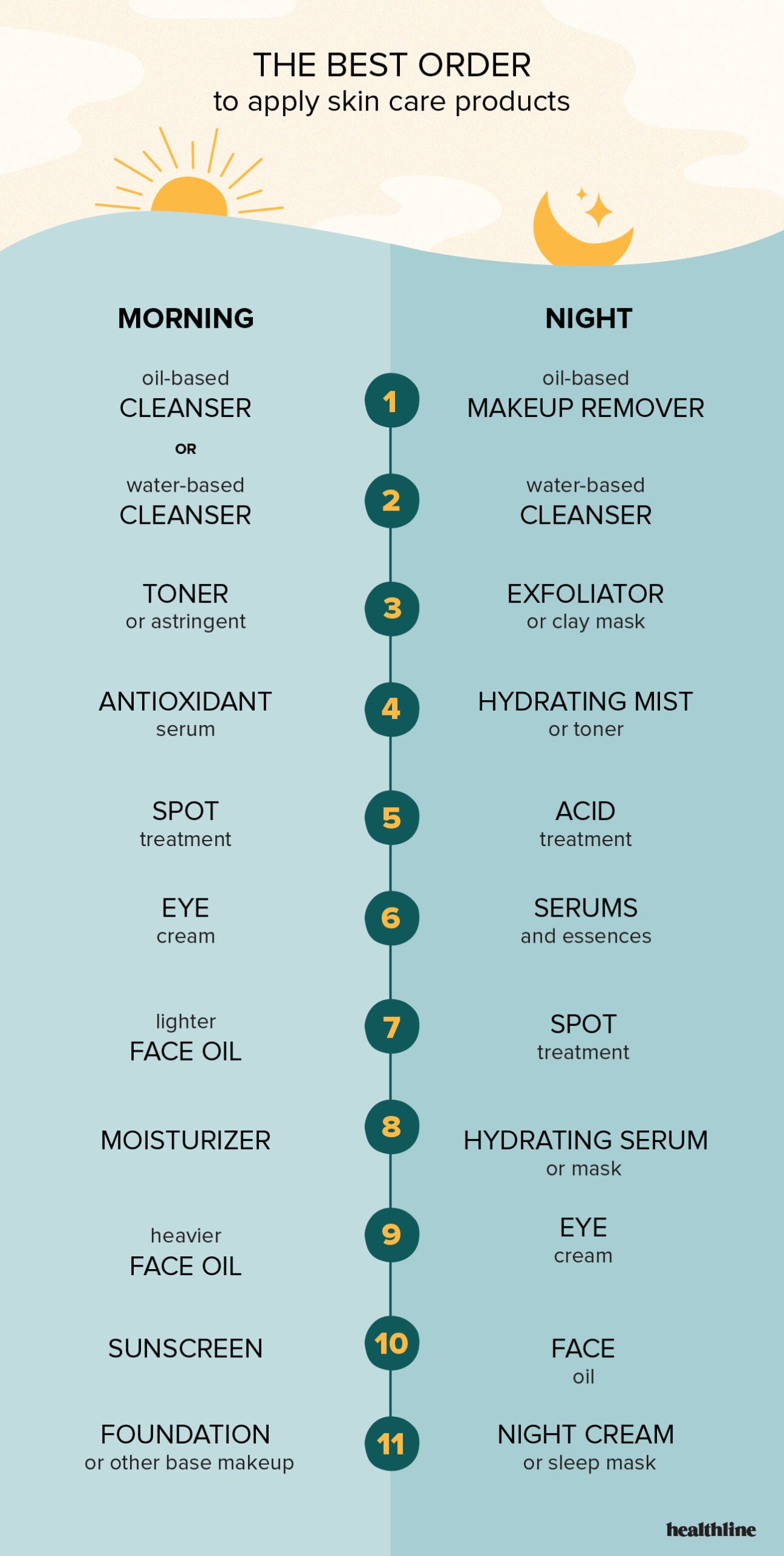
What products does my skin need at night?
Night care focuses on cleansing, repair, hydration, and treatment. The best evening routine removes the day without stripping the skin.
A basic nighttime routine looks like this:
- Remove makeup and sunscreen.
- Cleanse with a gentle product.
- Apply one treatment, if needed.
- Use moisturizer.
- Add a thin layer of petrolatum to very dry areas, if appropriate.
If you wear heavy makeup or water-resistant sunscreen, you may prefer a cleansing balm or oil followed by a gentle cleanser. Double cleansing is optional, not a requirement for everyone.
Retinoids are common nighttime treatments for acne and visible signs of aging. Begin slowly, such as two nights per week, and use a small amount on dry skin. Moisturizer can help reduce dryness.
Do not use retinoids during pregnancy unless your health care professional specifically tells you otherwise. Ask a medical professional about safe alternatives.

What products does my skin need for common concerns?
The right product depends on the problem you want to solve. A product can help one concern while worsening another if used too often or in the wrong combination.
Acne and clogged pores
For mild acne, useful options may include:
• Salicylic acid to help clear clogged pores
• Benzoyl peroxide to reduce acne-causing bacteria
• Adapalene, an over-the-counter retinoid, for recurring acne
• A non-comedogenic moisturizer
• Daily sunscreen to reduce dark marks after pimples heal
Use one acne active at first. Improvement often takes several weeks, and early dryness does not mean a product is working better.
See a dermatologist for painful cysts, scarring, widespread acne, or acne that does not improve with consistent care.
Dark spots and uneven tone
Dark spots can follow acne, skin injury, hormones, or sun exposure. Sunscreen is the foundation because ultraviolet light can make pigmentation last longer.
Potential ingredients include:
• Vitamin C
• Azelaic acid
• Niacinamide
• Retinoids
• Carefully formulated exfoliating acids
Avoid unregulated lightening creams. Products containing hidden steroids, mercury, or strong bleaching agents can cause lasting harm. A dermatologist can help identify the cause of pigmentation and choose a safe treatment.
Fine lines and sun damage
Sunscreen provides the most important daily protection. Retinoids have the strongest long-term support among common cosmetic ingredients for improving acne and some signs of photoaging.
Moisturizer can temporarily make fine lines look softer by increasing skin hydration. It does not erase wrinkles, but it can improve texture and comfort.
Be realistic with timelines. Skin changes usually take weeks or months, not a few days.
Redness and irritation
Redness may come from sensitivity, over-exfoliation, rosacea, eczema, allergies, or another condition. Start by removing unnecessary products and returning to a gentle cleanser, moisturizer, and sunscreen.
Azelaic acid may help some people with redness and blemishes, but persistent flushing or burning deserves medical advice. Skin care products cannot diagnose or treat every cause of redness.
Rough texture
Rough skin may improve with moisturizer and limited exfoliation. Lactic acid, glycolic acid, salicylic acid, or urea can help in the right formula.
Use exfoliating products slowly. Once or twice per week may be enough. Do not scrub hard, and do not combine several exfoliants with a retinoid when you are starting.

How do I choose safe and useful skin care products?
Product labels can be confusing, but a few rules make shopping easier.
Check the ingredient list
The first ingredients usually make up most of the formula. Look for ingredients that match your goal rather than buying based only on marketing words.
“Natural” does not always mean gentle. Essential oils and botanical extracts can irritate sensitive skin. “Chemical-free” is also not a useful claim because every product is made of chemicals, including water.
Consider your skin barrier
The skin barrier acts like a brick wall. Skin cells are the bricks, and fats such as ceramides help fill the gaps. Harsh cleansers, strong acids, frequent scrubbing, and overuse of retinoids can damage that wall.
Signs of a stressed barrier include:
• Burning after applying basic products
• New redness
• Flaking
• Tightness
• Sudden sensitivity
• Small bumps or rough patches
When this happens, pause strong treatments. Use a mild cleanser, a plain moisturizer, and sunscreen until the skin feels calm.
Patch-test new products
Apply a small amount to an area such as the inner arm or behind the ear for several days. A patch test cannot predict every facial reaction, but it can reduce the chance of a severe surprise.
Introduce only one new product at a time. This is one of the most useful answers to what products does my skin need when you are building a routine.
Avoid buying by trend alone
A viral product may work well for one person and irritate another. Skin type, climate, age, medication, allergies, and product combinations all matter.
I have found that simple routines are easier to follow and easier to evaluate. A product that you use consistently is usually more useful than an expensive product that sits unopened in a drawer.

Common skin care mistakes to avoid
Many skin problems come from doing too much rather than too little. Watch for these common mistakes:
• Washing the face several times a day
• Scrubbing acne or flaky skin
• Using multiple active ingredients at once
• Skipping sunscreen
• Changing products every few days
• Applying products in a painful or burning way
• Picking pimples
• Using expired products
• Ignoring irritation because a product is popular
• Expecting instant results
One mistake I often see is treating every new blemish with a different product. This can create redness, dryness, and more visible marks. A steady routine gives the skin time to respond and gives you a clearer view of what works.
Do not assume tingling means a product is effective. Tingling can signal irritation. A useful product should support your goal without causing ongoing pain or damage.

A simple routine for beginners
If you are unsure what products does my skin need, begin with the smallest routine that meets your needs.
Morning
• Gentle cleanser or water rinse
• Moisturizer
• Broad-spectrum SPF 30 or higher
Evening
• Gentle cleanser
• Moisturizer
Use this routine for two to four weeks. If your skin feels calm, add one targeted product for a specific concern.
How to add a treatment
- Choose one active ingredient.
- Read the product directions.
- Apply it less often than the maximum suggested amount at first.
- Use moisturizer regularly.
- Stop or reduce use if you develop lasting irritation.
- Give the product enough time to work.
Keep a simple note on your phone. Record the product, how often you use it, and any changes in your skin. This helps you avoid guessing.
Results vary. Acne treatments may need several weeks. Dark spots may take months. If symptoms worsen or you develop pain, swelling, crusting, or scarring, seek professional care.

What products does my skin need on a budget?
Effective skin care does not have to be expensive. Spend first on products that protect the barrier and prevent damage.
A budget-friendly priority list is:
- Gentle cleanser
- Moisturizer
- Broad-spectrum sunscreen
- One treatment for your main concern
You can skip face mists, eye creams, luxury oils, and multi-step kits if they do not serve a clear purpose. An eye cream may feel pleasant, but a gentle facial moisturizer can often work around the eye area unless the label warns against it.
Store products as directed. Heat, sunlight, and moisture can affect some formulas. Do not share products that touch the skin directly, such as jars, makeup, or applicators.
Price does not guarantee better results. Look for clear ingredient information, safe packaging, suitable directions, and a formula you can use consistently.
When should you see a dermatologist?
Skin care products are helpful, but they cannot solve every skin condition. Professional advice is especially important when symptoms are severe, sudden, or persistent.
Consider medical care for:
• Painful or deep acne
• Acne scars
• A changing mole or nonhealing sore
• Severe itching or swelling
• A spreading rash
• Repeated facial flushing
• Dark patches that appear suddenly
• Skin problems that do not improve after consistent care
• Suspected product allergy
A dermatologist can identify conditions such as rosacea, eczema, psoriasis, contact dermatitis, or fungal infections. Using more products without knowing the cause may delay proper treatment.
Pregnant or breastfeeding people should also ask a health professional before using prescription treatments or certain active ingredients. Product safety depends on the specific ingredient and personal health history.
Frequently Asked Questions About What Products Does My Skin Need
What products does my skin need every day?
Most people need a gentle cleanser, moisturizer, and broad-spectrum sunscreen. Add a targeted treatment only if you have a specific concern, such as acne or uneven tone.
Does oily skin need moisturizer?
Yes. Oily skin can still become dehydrated or irritated. Choose a lightweight, non-comedogenic lotion or gel moisturizer.
What products does my skin need for acne?
Common options include salicylic acid, benzoyl peroxide, or adapalene, along with a gentle cleanser, moisturizer, and sunscreen. Use one acne treatment at first, and see a dermatologist for painful, severe, or scarring acne.
Do I need a toner, serum, or eye cream?
No. These products are optional. A toner or serum may help with a specific goal, while an eye cream may provide a preferred texture, but neither is essential for a basic routine.
How long does skin care take to work?
Moisturizer may improve comfort within days, but acne, pigmentation, and texture often need several weeks or months. Consistent use matters more than changing products quickly.
Can I use several active ingredients together?
You can, but combining several strong ingredients increases the risk of irritation. Introduce one active at a time and avoid mixing products unless you know the combination is suitable for your skin.
What products does my skin need for sensitive skin?
Sensitive skin usually needs a short routine with a fragrance-free cleanser, a plain moisturizer, and gentle sunscreen. Patch-test new products and stop using anything that causes lasting burning, swelling, or rash.
Conclusion
The answer to what products does my skin need is usually simpler than it first appears. Start with a gentle cleanser, a suitable moisturizer, and daily broad-spectrum sunscreen. Then add one carefully chosen treatment for your main concern.
Pay attention to how your skin feels, introduce products slowly, and avoid chasing every trend. Build your routine step by step, and explore trusted skin care guidance or speak with a dermatologist when problems persist.
