
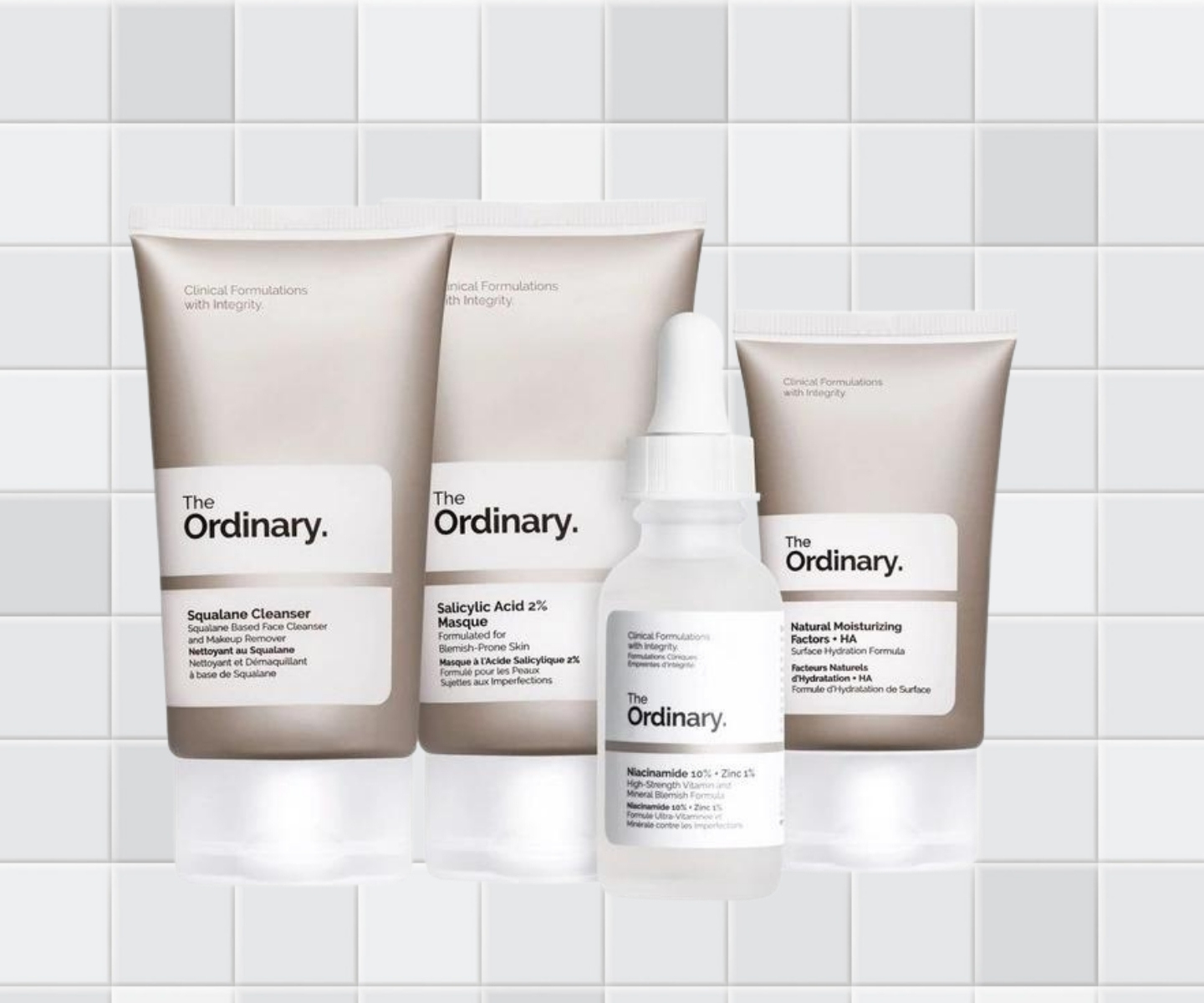
If you have combination skin in the United States, start with a gentle cleanser, a light moisturizer, sunscreen, and one treatment at a time. The Ordinary products that may fit this skin type include Squalane Cleanser, Glucoside Foaming Cleanser, Niacinamide 10% + Zinc 1%, Salicylic Acid 2% Solution, Azelaic Acid Suspension 10%, and Natural Moisturizing Factors + Beta Glucan.
Combination skin usually has more oil on the forehead, nose, and chin, while the cheeks may feel normal, dry, or tight. The goal is not to dry out the oily areas. It is to keep the whole face calm and hydrated while using targeted care only where needed.

What combination skin needs
Combination skin has both oily and dry or normal areas. The oily zone is often called the T-zone: the forehead, nose, and chin. The cheeks may have less oil and may become dry or irritated more easily.
A good routine should do four things:
- Remove sweat, oil, makeup, and sunscreen without stripping the skin.
- Support the skin barrier with a simple moisturizer.
- Reduce excess oil or clogged pores without over-drying the face.
- Protect the skin from ultraviolet radiation with daily sunscreen.
Skin type can change with weather, age, hormones, stress, medication, and the products you use. A routine that works in a humid Florida summer may feel too light during a dry Minnesota winter.
The best approach is to treat your face in zones. Use a gentle routine everywhere, then apply stronger products mainly to oily or congested areas if your skin tolerates them.
The best Ordinary products for combination skin
The following products are practical options for different needs. You do not need all of them. Choose based on your main concern.
1. The Ordinary Squalane Cleanser
Best for: Dry-feeling cheeks, makeup removal, and gentle cleansing.
Squalane Cleanser is a cream-to-oil cleanser. It can help remove sunscreen, makeup, and daily buildup without the tight feeling that some foaming cleansers cause.
It may suit combination skin when the cheeks feel dry or sensitive. Massage it onto dry skin, add a little water, and rinse well. If you wear heavy or water-resistant sunscreen, you may need a second gentle cleanse.
Limit: It may not feel strong enough for people who prefer a fresh, foaming finish or who produce a great deal of oil.
2. The Ordinary Glucoside Foaming Cleanser
Best for: Normal to oily combination skin and a light foaming wash.
This cleanser is designed to remove dirt and excess oil while providing a foaming texture. It may be a better fit than Squalane Cleanser if your T-zone feels greasy by the end of the day.
Use lukewarm water rather than hot water. Hot water can worsen dryness and irritation, especially on the cheeks.
Limit: If your skin feels tight, itchy, or dry after cleansing, use less cleanser, cleanse only at night, or switch to a gentler cream cleanser.
3. The Ordinary Niacinamide 10% + Zinc 1%
Best for: Excess shine, visible pores, and mild blemish-prone skin.
Niacinamide is a form of vitamin B3. It may help support the skin barrier and reduce the look of excess oil for some people. Zinc is included in the formula, but it should not be treated as a cure for acne.
Apply a small amount after cleansing and before moisturizer. You can use it on the whole face or mainly on the T-zone.
Limit: A 10% niacinamide serum may irritate some people. Burning, flushing, itching, or a rash means you should stop using it. You can also apply it less often or choose a lower-strength niacinamide product from another brand.
4. The Ordinary Salicylic Acid 2% Solution
Best for: Blackheads, clogged pores, and oily areas.
Salicylic acid is a beta hydroxy acid, or BHA. It can move into oil-filled pores and help loosen dead skin cells. This makes it useful for the nose, forehead, and chin when those areas have blackheads or small bumps.
Start one or two nights per week. Apply a thin layer to clean, dry skin, then use moisturizer. If your cheeks are dry, apply it only to the T-zone.
Do not use it on cracked, sunburned, or severely irritated skin. Avoid adding several exfoliating products at the same time.
Limit: Salicylic acid may not be enough for moderate or severe acne. A dermatologist can recommend a more suitable acne plan, such as a prescription retinoid or other treatment.
5. The Ordinary Azelaic Acid Suspension 10%
Best for: Redness, uneven tone, and mild blemish-related marks.
Azelaic acid is an acne and pigmentation ingredient used in dermatology. A 10% over-the-counter formula may help improve the look of uneven tone and post-blemish marks over time.
Apply a small amount after water-based products and before moisturizer. Start every other night if your skin is sensitive.
Limit: This product has a silicone-rich texture that may pill under makeup or sunscreen for some users. Use less product and allow each layer to settle before applying the next one.
6. The Ordinary Natural Moisturizing Factors + Beta Glucan
Best for: Combination skin that needs moisture without a heavy cream.
This is a light gel moisturizer. It may work well for oily areas and for people who dislike rich creams. Beta glucan is a moisturizing ingredient that can help support a comfortable skin feel.
Use it after serums. If your cheeks remain dry, apply a richer moisturizer only to those areas.
7. The Ordinary Natural Moisturizing Factors + HA
Best for: Combination skin with dry or tight areas.
This moisturizer contains several skin-identical or skin-supporting moisturizing factors, along with hyaluronic acid. It has a creamier feel than the Beta Glucan formula.
Use a small amount over the full face, or apply more to the cheeks and less to the T-zone.
8. Sunscreen from a separate trusted brand
The Ordinary may not be the simplest choice for daily sun protection in the U.S. Choose a broad-spectrum sunscreen labeled SPF 30 or higher. Pick a texture that you will use every day, such as a fluid, gel, or lightweight lotion.
Sunscreen matters because ultraviolet exposure can darken post-acne marks and worsen uneven tone. Apply it as the final morning skin-care step and reapply when you spend extended time outdoors, sweat heavily, or swim.
A simple morning routine for combination skin
A short routine is usually easier to follow and less likely to cause irritation.
Cleanse lightly.
Use water alone if your skin is not oily in the morning, or use Glucoside Foaming Cleanser if you wake up greasy.Apply one serum if needed.
Niacinamide may suit an oily T-zone. Skip this step if your skin feels sensitive or if you do not have a clear reason to use it.Moisturize.
Use Natural Moisturizing Factors + Beta Glucan over the whole face. Add more moisturizer to dry areas if needed.Apply broad-spectrum SPF 30 or higher.
Use enough to cover the face, ears, and neck. Follow the product label for the amount and reapplication instructions.
You can use no serum at all in the morning. Clean skin, moisturizer, and sunscreen are enough for many people.
A simple evening routine for combination skin
Your evening routine depends on whether you need treatment for clogged pores, marks, or dryness.
Remove sunscreen and makeup.
Use Squalane Cleanser or another gentle first cleanse.Cleanse again if needed.
Use Glucoside Foaming Cleanser if your skin still feels coated or oily.Use one treatment.
Choose Salicylic Acid 2% for clogged pores, Azelaic Acid 10% for uneven tone, or Niacinamide for excess shine.Moisturize.
Use the Beta Glucan moisturizer for a light finish or Natural Moisturizing Factors + HA for more comfort.
Do not begin salicylic acid, azelaic acid, and niacinamide all at once. Add one product, use it for several weeks, and watch how your skin responds.

How to choose the right product for your main concern
| Main concern | First product to consider | How to use it |
|---|---|---|
| Oily forehead and nose | Niacinamide 10% + Zinc 1% | Start once daily or every other day |
| Blackheads or clogged pores | Salicylic Acid 2% Solution | Use one or two nights per week at first |
| Red marks after acne | Azelaic Acid Suspension 10% | Start every other night |
| Dry cheeks | NMF + Beta Glucan or NMF + HA | Apply after cleansing and treatments |
| Tight skin after washing | Squalane Cleanser | Use at night and avoid hot water |
| Greasy skin after cleansing | Glucoside Foaming Cleanser | Use a small amount and rinse well |
| Uneven tone that worsens outdoors | Broad-spectrum SPF 30+ | Apply every morning |
This table is a starting point, not a diagnosis. The same symptom can have different causes. For example, shiny skin may come from natural oil production, harsh cleansing, heavy products, or irritation.
How to combine The Ordinary products safely
Use the smallest routine that meets your needs. More products do not always produce better results.
A simple weekly plan could look like this:
- Monday: Cleanser, niacinamide, moisturizer.
- Tuesday: Cleanser, moisturizer only.
- Wednesday: Cleanser, salicylic acid on the T-zone, moisturizer.
- Thursday: Cleanser, moisturizer only.
- Friday: Cleanser, azelaic acid, moisturizer.
- Saturday: Cleanser, moisturizer only.
- Sunday: Cleanser, moisturizer only.
This is only an example. If your skin is sensitive, use fewer treatment nights. If your skin remains comfortable after several weeks, you can adjust slowly.
Avoid using multiple strong exfoliants in one routine. Be cautious when combining salicylic acid with retinoids, strong acids, or abrasive scrubs. The Ordinary’s product instructions may change, so read the current label before use.

Common mistakes with combination skin
Using a harsh cleanser to control oil
A cleanser that leaves the skin squeaky or tight may remove too much surface oil. This can make the skin feel uncomfortable and may lead you to apply heavier products later.
Choose a gentle cleanser and let treatment products handle specific concerns.
Treating the whole face as oily
Your cheeks do not need the same treatment as your nose. Apply salicylic acid or a mattifying product mainly where you have oil or clogged pores.
Starting too many products at once
If you add four products in one week, you will not know which one caused a rash or breakout. Add one new product at a time.
Skipping moisturizer
Oily skin still needs water and barrier support. A light moisturizer can reduce the urge to use harsh products.
Forgetting sunscreen
Dark marks often last longer when exposed to sunlight. Daily sunscreen supports any routine aimed at uneven tone or post-acne marks.
Expecting fast results
A product may improve skin feel quickly, but clogged pores, acne, and uneven tone often take longer. Stop if you develop severe irritation rather than trying to push through it.
What to do if your skin reacts
Mild tingling can occur with some active products, but burning, swelling, hives, blistering, or persistent redness is not a good sign.
If irritation occurs:
- Stop the newest active product.
- Use a gentle cleanser, plain moisturizer, and sunscreen.
- Avoid scrubs, acids, fragrance, and picking at the skin.
- Reintroduce products only after the skin feels calm.
- Seek medical care for swelling, breathing trouble, eye involvement, widespread hives, or severe pain.
Patch-test a new product on a small area first. A patch test cannot guarantee that your face will not react, but it can reduce the chance of applying a problem product over your entire face.
People with eczema, rosacea, very sensitive skin, or a history of allergic reactions may need a more cautious plan. Ask a board-certified dermatologist if over-the-counter care causes repeated problems.

The Ordinary routine examples by skin pattern
If your T-zone is oily but your cheeks are dry
Use Squalane Cleanser at night, apply salicylic acid only to the T-zone once or twice weekly, and use a light moisturizer everywhere. Add a little more cream to the cheeks.
If you have blackheads but no major dryness
Use Glucoside Foaming Cleanser, then try Salicylic Acid 2% two nights per week. Keep using moisturizer even if your skin feels oily.
If you have acne marks and mild redness
Use a gentle cleanser, Azelaic Acid 10% on alternate nights, moisturizer, and daily sunscreen. Avoid picking at active blemishes, since skin injury can increase discoloration.
If your skin is easily irritated
Begin with cleanser, moisturizer, and sunscreen only. After your skin remains calm, add one treatment at a low frequency. Niacinamide may be gentler for some people, but even gentle ingredients can cause reactions.
If you use prescription acne treatment
Do not add several The Ordinary active products without checking with your prescriber. Prescription retinoids, benzoyl peroxide, antibiotics, and exfoliating acids can create a high irritation load when combined carelessly.

When The Ordinary may not be enough
Over-the-counter products can help mild oiliness, clogged pores, and uneven tone. They are not a complete answer for every skin problem.
See a dermatologist if you have:
- Deep, painful, or cyst-like acne.
- Acne that scars or leaves persistent dark marks.
- A rash that spreads or does not improve.
- Severe itching, swelling, or burning.
- Suspected rosacea, eczema, or contact dermatitis.
- No improvement after a consistent routine.
Pregnant or breastfeeding people should ask a health professional about active ingredients before use. Avoid assuming that a product is safe in pregnancy simply because it is sold without a prescription.

Frequently asked questions
Is The Ordinary good for combination skin?
It can be. Combination skin often benefits from The Ordinary’s simple cleansers, light moisturizers, niacinamide, salicylic acid, or azelaic acid. The right choice depends on whether your main concern is oil, clogged pores, dryness, redness, or uneven tone.
Should I use Niacinamide 10% + Zinc 1% every day?
Some people can use it daily, but it is not required. Start every other day. If you notice burning, itching, redness, or small irritated bumps, stop or reduce use.
Can I use Salicylic Acid 2% on my whole face?
You can, if your skin tolerates it and the product label permits it. For combination skin, applying it only to oily or congested areas may reduce dryness and irritation.
Can I use The Ordinary products under makeup?
Yes, but apply thin layers and allow each product to settle. Pilling can happen when too much serum, moisturizer, or sunscreen is layered. If pilling continues, simplify the routine or change the product order.
How long should I try a product?
Give a mild skin-care product several weeks unless it causes irritation. Acne and uneven tone often need consistent use and sun protection. Do not continue a product that causes a rash or significant burning.
Do I need both Squalane Cleanser and Glucoside Foaming Cleanser?
No. Use one cleanser that leaves your skin clean and comfortable. Some people use Squalane Cleanser first to remove makeup or sunscreen, followed by a foaming cleanser. A double cleanse is optional, not a requirement.
Final recommendation
For most people with combination skin, begin with one gentle cleanser, a light moisturizer, and broad-spectrum SPF 30 or higher. Add Niacinamide 10% + Zinc 1% for excess shine, Salicylic Acid 2% for clogged pores, or Azelaic Acid 10% for redness and post-blemish marks.
Use treatments slowly and mainly on the areas that need them. If your skin becomes tight, red, or painful, reduce the routine instead of adding more products. A calm, consistent routine usually serves combination skin better than a crowded shelf.
Sources and evidence
- American Academy of Dermatology Association: Skin care basics
- American Academy of Dermatology Association: How to control oily skin
- American Academy of Dermatology Association: Acne skin care
- U.S. Food and Drug Administration: Sunscreen: How to help protect your skin from the sun
- The Ordinary: Official product and regimen guidance
