
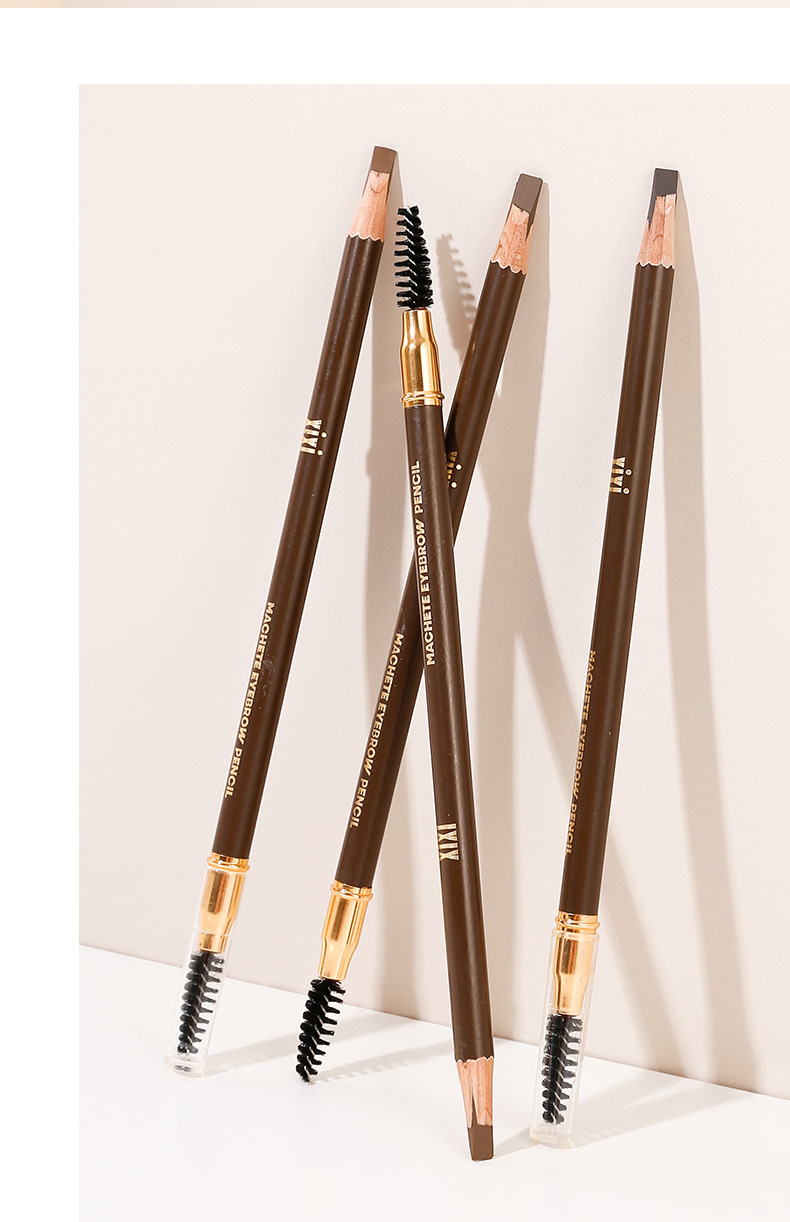
Eyebrow pencils are made from a blend of waxes, oils, pigments, fillers, and texture-control ingredients. In the United States, the formula may also include preservatives, antioxidants, silicones, and film-forming agents. A wood-cased pencil adds a painted wood barrel, while a retractable pencil uses a plastic case and a molded cosmetic core.
The exact recipe depends on the pencil’s finish. A soft, creamy brow pencil needs more oils and emollients. A firm pencil needs more waxes and powders. A waterproof pencil may use silicone-based ingredients or film-forming polymers to help the color resist sweat and water.
The Main Ingredients in an Eyebrow Pencil
Most eyebrow pencils contain four main parts: a color system, a base, texture ingredients, and stabilizers. Each part affects how the pencil feels, looks, and wears.
| Ingredient group | Common examples | Main purpose |
|---|---|---|
| Waxes | Beeswax, carnauba wax, candelilla wax, synthetic waxes | Give the pencil shape and firmness |
| Oils and emollients | Mineral oil, castor oil, plant oils, fatty esters | Help the pencil glide across the skin |
| Pigments | Iron oxides, titanium dioxide, ultramarines, lakes | Create the brow color |
| Fillers and powders | Mica, silica, talc, starches | Adjust texture, opacity, and slip |
| Silicones | Dimethicone and related compounds | Improve spread, smoothness, and water resistance |
| Film formers | Certain polymers and resins | Help color stay on the skin |
| Preservatives | Formula-dependent preservatives | Reduce the risk of microbial growth |
| Antioxidants | Tocopherol and similar ingredients | Help slow oil oxidation |
Not every eyebrow pencil contains every ingredient in this table. Ingredient lists vary by brand, shade, and product type.
Waxes create the pencil’s shape
Waxes are the structural part of an eyebrow pencil. They keep the core solid enough to draw a line but soft enough to deposit color.
Common waxes include:
- Beeswax, a natural wax used for structure and glide
- Carnauba wax, a hard plant wax that can add firmness
- Candelilla wax, another plant wax used for stiffness and texture
- Synthetic waxes, which help brands create a more controlled feel
A pencil with a high wax content may feel firm and precise. It may work well for drawing fine hair-like marks. A softer formula may fill a brow faster, but it can break more easily or create a heavier line.
Oils and emollients help the pencil glide
Oils and emollients reduce drag. They help the core move across the skin without pulling at the brow area.
Examples can include:
- Castor oil
- Mineral oil
- Hydrogenated vegetable oils
- Fatty esters
- Isododecane
- Caprylic or capric triglyceride
These ingredients do not all behave the same way. Some feel rich and creamy. Others evaporate or spread quickly, which can help a product feel light and dry down faster.
Pigments provide the color
Pigments are the ingredients that make an eyebrow pencil brown, black, blonde, taupe, gray, or auburn.
Many brow shades use iron oxides, which can create yellow, red, brown, and black tones. Titanium dioxide may lighten a shade or increase opacity. Some formulas use ultramarines or approved lakes to adjust the color.
A brow pencil is not colored by wax alone. The pigment must be dispersed evenly through the base. Poor dispersion can lead to a pencil that looks patchy, skips, or changes color as more product is applied.
The U.S. Food and Drug Administration regulates color additives used in cosmetics. A color additive must be permitted for its intended cosmetic use. Some color additives allowed on the face may not be allowed near the eyes, so a pigment cannot be assumed to be suitable for every area of the body.
Fillers and powders control the finish
Fillers help change the pencil’s feel and appearance. They can make the formula less greasy, improve slip, or create a softer, more powder-like finish.
Possible fillers include:
- Mica
- Silica
- Starch
- Kaolin
- Talc
- Nylon or other cosmetic powders
A matte brow pencil may use powders to reduce shine. A satin or slightly reflective pencil may use mica or similar materials. Fillers also affect how much pigment the pencil releases with each stroke.
Silicones and polymers improve wear
Some eyebrow pencils use silicones such as dimethicone. These ingredients can make the pencil feel smooth and help it spread evenly.
Water-resistant formulas may also contain film-forming polymers. These materials leave a thin layer on the skin after application. The layer can help the pigment resist moisture, rubbing, or oil.
“Waterproof” does not mean impossible to remove. It usually means the formula is more resistant to water under the conditions described by the brand. Cleansing oils, micellar products, or an eye-safe makeup remover may work better than plain water.

What Is the Eyebrow Pencil Core Made Of?
The core is usually a solid mixture of waxes, oils, pigments, and powders. It is molded or poured into shape, then placed inside a wood or plastic casing.
Traditional pencils often use a wood barrel. The cosmetic core is surrounded by wood and sharpened with a cosmetic pencil sharpener. Retractable pencils contain a similar type of solid core, but the core sits in a plastic tube that twists up and down.
Wood-cased eyebrow pencils
A wood-cased pencil usually contains:
- A colored cosmetic core
- A wood barrel
- Paint or a coating on the outside
- A cap, often made from plastic or metal
The wood is not normally the material that touches the skin. The core does that job. The barrel mainly provides support and allows the pencil to be sharpened.
Retractable eyebrow pencils
A retractable pencil usually contains:
- A molded cosmetic core
- A plastic casing
- A twist mechanism
- A cap
- Sometimes a spoolie brush
Retractable pencils do not need sharpening. However, the exposed tip can collect skin oils, makeup, and debris. Keeping the cap closed and avoiding shared use helps keep the product cleaner.
Does the casing change the formula?
Usually, the casing changes how the pencil is used more than what the core contains. A wood pencil can produce a freshly sharpened point. A retractable pencil offers convenience but may have a wider or less precise tip.
The formula can still differ between two products with different casings. That difference comes from the brand’s chosen waxes, oils, pigments, and polymers—not simply from the wood or plastic shell.

How Eyebrow Pencil Ingredients Affect Performance
The ingredient balance determines whether a pencil feels hard, creamy, powdery, waxy, or slippery.
Firm pencils
Firm pencils usually contain more hard waxes and less oil. They can help create narrow, controlled strokes.
They may suit people who want:
- Hair-like marks
- A soft, natural finish
- More control over pressure
- Less product deposited at once
A firm pencil may skip if the skin is very dry or if the tip is too blunt.
Soft pencils
Soft pencils tend to contain more emollients or softer waxes. They release more color with less pressure.
They may suit people who want:
- Quick brow filling
- A stronger makeup look
- Easy blending
- Application over a brow gel or powder
The trade-off is that soft pencils may smudge more easily. They may also break if pressed too hard.
Powder-finish pencils
Some pencils contain powders or powder-like fillers. These can reduce shine and create a look similar to brow powder.
Powder-finish formulas may feel less creamy than traditional pencils. They can be useful for filling sparse areas, but they may not create the sharpest individual hair strokes.
Waterproof and long-wear pencils
Long-wear pencils may use volatile ingredients, silicones, or film formers. These ingredients can help the color set and resist moisture.
The deciding trade-off is removal. A product that stays in place well may need a more effective makeup remover. Rubbing the delicate skin around the eyes can cause more irritation than using a suitable remover gently.
Are Eyebrow Pencils Safe for the Eyes?
Eyebrow pencils are designed for use on the brow area, not necessarily on the waterline or inside the eye. Use each product only in the way the label describes.
In the United States, cosmetic companies are responsible for ensuring that their products are safe when used as directed. The FDA regulates cosmetics under the Federal Food, Drug, and Cosmetic Act. Color additives have additional rules, including restrictions based on where they may be used.
A product labeled for eyebrows should not automatically be used as eyeliner. Some pigments allowed for external face use may have different rules for the eye area.
Ingredients that may concern some users
People may choose to avoid certain ingredients because of allergies, sensitivities, personal preferences, or skin conditions. Common examples include:
- Fragrance
- Certain preservatives
- Carmine
- Lanolin
- Specific plant oils
- Some resins or polymers
An ingredient is not unsafe for everyone simply because it has a complex name. Likewise, a “natural” ingredient can still cause irritation or allergy. The full ingredient list is more useful than a natural-versus-synthetic label.
What to do if irritation occurs
Stop using the pencil if it causes burning, swelling, rash, itching, or unusual redness. Do not keep applying it to “test” the reaction.
If a product gets into the eye and causes ongoing pain, vision changes, marked redness, or light sensitivity, seek medical care. For mild irritation, rinse as directed by a health professional or poison control resource and avoid further use until the cause is clear.
People with known allergies, eczema, very sensitive skin, or a history of eye reactions may wish to ask a dermatologist or eye-care professional for individual guidance.

How to Read an Eyebrow Pencil Ingredient List
The ingredient list can tell you what the pencil contains, but it cannot predict exactly how it will perform on your skin.
Ingredients are generally listed in descending order by amount, with some exceptions for color additives and low-level ingredients. The first several ingredients often reveal whether the base is mainly waxy, oily, powdery, or silicone-based.
Look for these groups:
- Waxes near the beginning: often suggest a firmer structure
- Oils and esters near the beginning: may indicate a softer, creamier feel
- Powders such as silica or mica: may affect finish and slip
- Iron oxides or other color additives: provide shade
- Silicones or film formers: may support smoothness or wear
- Preservatives: help protect formulas that may be exposed to contamination
Color additives may appear near the end or under names such as “CI” numbers, depending on the product’s labeling system.
Ingredient lists are useful for checking known allergens. They are less useful for predicting whether a shade will match your brows. Testing the color in natural light is still the best way to judge undertone and depth.

How Eyebrow Pencils Compare With Other Brow Products
Eyebrow pencils are only one type of brow makeup. The best format depends on the look, skin type, and amount of control you want.
| Brow product | Typical base | Best known for | Main limitation |
|---|---|---|---|
| Eyebrow pencil | Waxes, oils, pigments | Precise lines and easy shaping | Can look heavy if over-applied |
| Brow powder | Powders and pigments | Soft, blended color | Less useful for sharp hair strokes |
| Brow pomade | Waxes, oils, pigments, film formers | Strong definition and long wear | Requires more blending skill |
| Brow gel | Polymers, pigments, conditioning agents | Holding hairs in place | May not fill large gaps well |
| Brow marker | Water-based or solvent-based color system | Fine, quick strokes | Can look uneven on oily skin |
A pencil is often a practical middle ground. It can add color and shape without requiring the brush control of a pomade.

Common Mistakes With Eyebrow Pencils
Pressing too hard
Heavy pressure releases more pigment and can flatten the tip. Use short, light strokes instead. You can build the color gradually.
Using a dull tip
A dull tip may create a thick block of color. Sharpen wood pencils when needed with a clean sharpener made for cosmetic pencils. A damaged or dirty sharpener can break the core and contaminate the tip.
Applying too much product at the front
The inner brow often looks more natural with lighter, shorter strokes. Concentrate more definition through the arch and tail if that matches your natural brow shape.
Sharing the pencil
Do not share eye-area makeup. Sharing can transfer bacteria, viruses, or other contaminants.
Adding water or saliva
Do not wet the pencil with tap water or saliva to make it glide. This can change the formula and introduce microbes.
Continuing after an eye infection
The FDA advises replacing eye cosmetics used during an eye infection. Cleaning the surface may not remove contamination from the entire product.
Assuming “clean” means risk-free
Marketing terms do not replace the ingredient list or directions. A product can be free from one ingredient and still contain another ingredient that does not suit you.

How to Store and Use an Eyebrow Pencil
Store the pencil capped and away from excessive heat. Heat can soften the core, increase breakage, and change the way the formula applies.
Keep wood-cased pencils clean and sharpened. Wipe loose debris from the sharpener and follow the sharpener maker’s cleaning instructions. Do not share sharpeners used for eye-area makeup.
For a retractable pencil, twist up only a small amount. Too much exposed core can snap during use. Close the cap after each use.
Cosmetic products can change over time. Replace the pencil if it develops a new smell, changes texture, separates, grows mold, or causes irritation. Follow the product label for any period-after-opening guidance. In the United States, cosmetic products do not generally have a universal expiration date required by federal law, so the brand’s instructions and the product’s condition matter.

Key Takeaways
- Eyebrow pencils are mainly made from waxes, oils, pigments, powders, and texture-control ingredients.
- Iron oxides are common pigments in brown, black, red, and yellow brow shades.
- Waxes control firmness, while oils and emollients improve glide.
- Silicones and film-forming polymers may improve smoothness and wear.
- Wood-cased and retractable pencils usually differ in packaging and use, not just in the core formula.
- Use eyebrow pencils only as directed, and do not assume a brow product is safe for the waterline.
- Stop using a product if it causes irritation, and do not share eye-area makeup.
FAQs About What Eyebrow Pencils Are Made Of
Are eyebrow pencils made of real lead?
No. Modern cosmetic eyebrow pencils are not made with the lead found in writing pencils. Their cores are made from waxes, oils, pigments, and other cosmetic ingredients.
The word “pencil” describes the shape and delivery method. It does not mean the product contains metallic lead.
Are eyebrow pencils made with beeswax?
Some are, but not all. Beeswax can provide structure and help the pencil glide. Vegan formulas may use candelilla wax, carnauba wax, synthetic waxes, or other substitutes.
Check the ingredient list if you avoid animal-derived ingredients or have a known sensitivity.
Do eyebrow pencils contain animal ingredients?
They may. Possible animal-derived ingredients include beeswax, lanolin, and carmine. Many products use synthetic or plant-based alternatives, but “vegan” should be confirmed through the product label or the brand’s documentation.
Are eyebrow pencils made with charcoal?
Some dark cosmetics may use black pigments, but a black eyebrow pencil is not automatically made with household charcoal. Cosmetic black shades can use approved carbon-based pigments or blends of iron oxides and other colorants.
Do not use art charcoal or craft pigments on your brows or near your eyes.
Can eyebrow pencils contain gluten?
The answer depends on the specific formula and ingredient sourcing. Ingredients such as wheat-derived materials may appear in some cosmetics, although many pencils do not contain them.
People with celiac disease or a medically diagnosed allergy should check with the manufacturer about the finished product and contact risks.
Are natural eyebrow pencils safer?
Not necessarily. “Natural” describes a source or marketing position, not a guarantee of safety. Natural oils, waxes, pigments, and botanical extracts can still irritate the skin or cause an allergic reaction.
The safest choice depends on the individual formula, the label directions, and your personal sensitivities.
Conclusion
Eyebrow pencils are small, carefully balanced cosmetic formulas. Waxes give them shape, oils help them glide, pigments create the shade, and powders, silicones, polymers, preservatives, and antioxidants adjust the finish and shelf stability.
To choose one, focus on the result you want. Pick a firmer pencil for controlled hair-like marks, a softer pencil for quick filling, and a long-wear formula when moisture resistance matters. Then read the ingredient list, follow the label, keep the product clean, and stop using it if your skin or eyes react.
