
Introduction
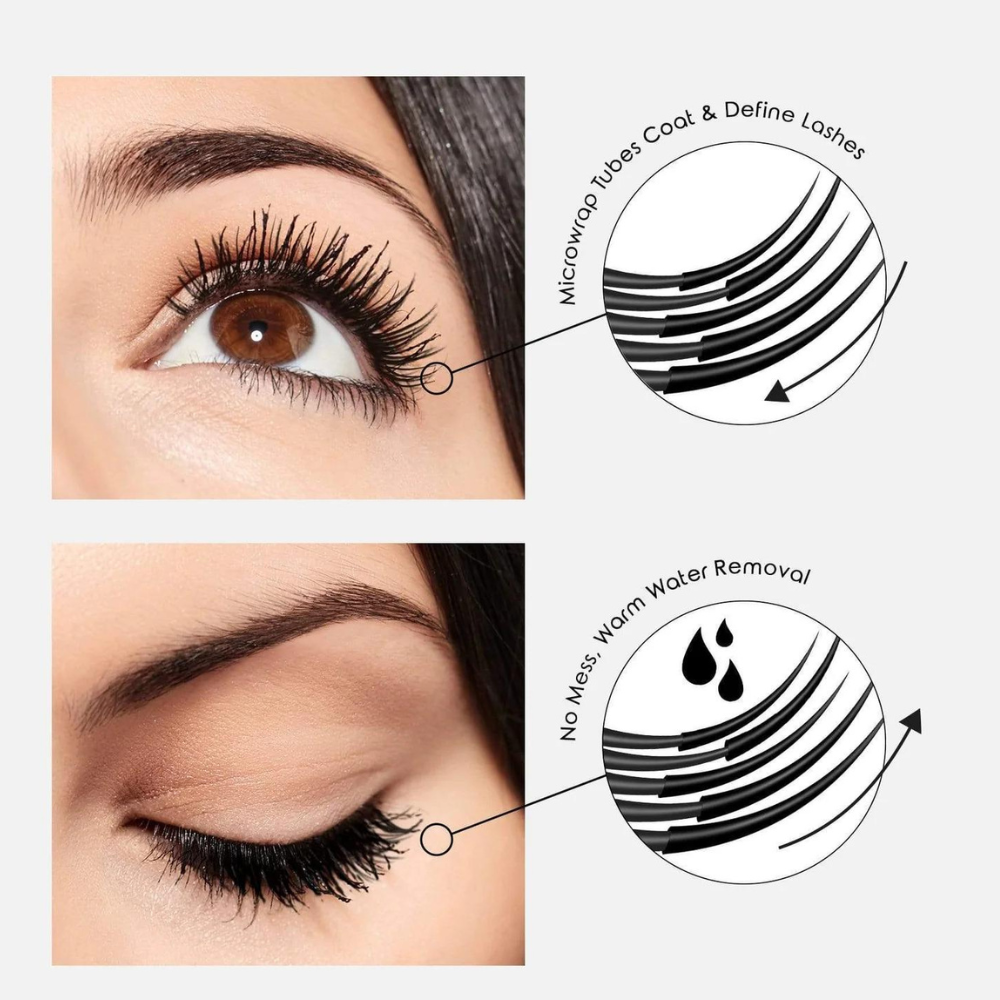
Tubing mascara is a good choice for beginners who want clean-looking lashes, less smudging, and easy removal. Unlike traditional mascara, it forms tiny water-resistant tubes around individual lashes instead of painting them with a simple pigment film.
To use it, apply thin coats from the lash roots to the tips. Let each coat set briefly, then remove the mascara with warm water and gentle pressure. You usually do not need makeup remover or cotton scrubbing.
This guide explains how tubing mascara works, how to apply it in the United States, how to remove it safely, and what to do if it clumps, flakes, or does not hold a curl.

What Is Tubing Mascara?
Tubing mascara is a type of mascara that uses film-forming ingredients to wrap each lash in a small coating, or “tube.” The tube gives lashes color and can add length and definition.
Traditional mascara often leaves a flexible layer of waxes, oils, pigments, and polymers on the lashes. Tubing formulas rely more on film-forming polymers. The exact formula varies by brand, so not every product behaves in the same way.
The word “tubing” describes how the product coats the lashes. It does not mean the mascara contains physical plastic tubes or that the tubes are permanent.
Tubing mascara vs. regular mascara
| Feature | Tubing mascara | Traditional mascara |
|---|---|---|
| How it coats lashes | Wraps lashes in a film | Paints lashes with a pigment-rich formula |
| Removal | Usually warm water and light pressure | Often requires eye makeup remover |
| Smudge resistance | Often strong once dry | Varies by formula |
| Water resistance | Often resists light moisture, but varies | Ranges from washable to waterproof |
| Lash feel | Can feel light or slightly firm | Can feel soft, waxy, or thicker |
| Best for | Clean definition and easy removal | Volume, dramatic effect, or strong curl hold |
A tubing formula is not automatically waterproof. Some can loosen with warm water, steam, oil, or rubbing. Check the product label if you need mascara for swimming, heavy sweating, or long outdoor events.
The U.S. Food and Drug Administration regulates cosmetics in the United States, but it does not approve most cosmetics before they reach the market. The FDA advises consumers to follow product directions and stop using eye cosmetics if they cause irritation. You can review its eye cosmetic safety guidance.

What You Need Before Applying Tubing Mascara
You need only a few items:
- Tubing mascara
- A clean lash curler, if you use one
- A clean spoolie or lash comb for separation
- A mirror with good light
- Warm water for removal
- A clean washcloth or soft cotton pad, if needed
Check the mascara before use. Do not use it if the smell, texture, or color has changed. Do not add water, saliva, or another liquid to the tube. This can change the formula and may introduce germs.
The American Academy of Ophthalmology advises replacing eye makeup regularly and avoiding makeup that is old, contaminated, or shared. Follow the replacement period on the label. If the product has no clear guidance, use the manufacturer’s instructions rather than guessing.
If you wear contact lenses, insert them before applying makeup unless your eye-care professional has told you otherwise. Wash your hands first. Avoid applying mascara while moving, driving, or in a poorly lit space.

How to Apply Tubing Mascara Step by Step
1. Start with clean, dry lashes
Remove old mascara, oil, and eye cream from your lashes. Tubing mascara may not grip well if the lashes are coated with oil or a rich eye product.
Pat the eye area dry. Do not apply mascara to wet lashes unless the product instructions specifically allow it.
2. Curl your lashes first
If you use an eyelash curler, curl before mascara. Place the curler near the lash roots without pinching the skin. Hold it gently for a few seconds, then move slightly toward the tips if you want a softer curve.
Do not curl lashes after the mascara dries. A dried film can make lashes stiff, and the curler may pull or break them.
If your lashes point straight down, curl them in two light steps rather than using strong pressure in one place.
3. Remove extra product from the wand
Pull the wand out slowly. If a large blob sits on the tip, wipe the excess on the inside rim of the tube or on a clean tissue.
Do not pump the wand up and down. That pushes air into the tube and can dry the mascara faster.
A thin first coat is easier to control. More product does not always create more length or volume. It can instead cause clumps and heavy lashes.
4. Place the wand at the lash roots
Look slightly down into the mirror. Place the wand close to the upper lash roots without pressing it into your eye or skin.
Use a small side-to-side motion at the base. This helps spread the formula near the roots. Then move the wand upward toward the lash tips.
For a softer look, use less product on the inner lashes. For more lift, direct the outer lashes toward the outer corner.
5. Sweep from root to tip
Move the wand slowly from the root to the tip. Use one steady pass rather than many fast strokes.
A vertical wand position can help reach short lashes near the inner corner. A horizontal position can cover the main upper lashes.
Keep the eye relaxed. If you blink while the formula is still wet, it may transfer to the eyelid.
6. Add a second coat while the first is slightly set
Wait a short time until the first coat feels less wet but is not fully hard. Then add a light second coat from root to tip.
Tubing mascaras can become harder to separate once they dry. Two thin coats usually give a cleaner result than one thick coat.
If you want more volume, focus the second coat on the upper outer lashes. Avoid repeatedly adding product to the same tiny section.
7. Separate any clumps
Use a clean lash comb or spoolie while the mascara is still workable. Start at the lash roots and comb toward the tips with a gentle motion.
Do not pull at stuck lashes. If several lashes have bonded together, let the mascara soften with warm water later rather than forcing them apart.
8. Clean the skin after the mascara dries
If mascara marks the eyelid, wait until the spot dries. Then use a dry cotton swab to lift it away. Removing a wet mark can spread the pigment.
Use a very small amount of makeup remover on the cotton swab only if a dry swab does not work. Keep liquid out of the eye.

How to Remove Tubing Mascara
Tubing mascara usually comes off with warm water and gentle pressure. The water softens the film, allowing the tubes to slide away from the lashes.
Follow these steps:
- Wash your hands.
- Wet your lashes with comfortably warm water.
- Hold a wet washcloth or clean fingertips over the closed eye for several seconds.
- Gently press and slide downward along the lashes.
- Let the softened tubes come away on their own.
- Rinse the eye area with clean water.
- Pat dry without rubbing.
You may see small dark pieces on your fingers or washcloth. That is expected. The mascara is coming off in sections rather than dissolving into a black smear.
Do not pull hard if the product does not release. Add more warm water and wait a little longer. Water that is too hot can irritate the skin and eyes.
You generally do not need an oil cleanser or strong makeup remover. However, a compatible eye makeup remover may help if the product label recommends one or if you also wear other eye makeup.
Do not sleep in mascara when you can avoid it. Leaving eye makeup on overnight can increase irritation and may allow product, oil, and debris to collect around the eyelids.
How to Make Tubing Mascara Look Better
The best technique depends on the result you want.
For length
Use a thin coat and pull the wand slowly from the roots to the tips. Keep the wand moving in the same direction as the lashes.
A second coat on the upper lash tips can add a longer look, but too much product may make the tips heavy.
For volume
Use a formula made for volume and add product mainly at the lash roots. Allow the first coat to set before adding a small second coat.
Tubing mascara often gives a defined look rather than the dense, false-lash effect of some traditional mascaras. If you want a very bold result, a volumizing formula may suit you better.
For a lifted look
Curl the lashes before applying mascara. Concentrate the product near the roots, then brush upward.
Avoid loading the tips with too much formula. Heavy tips can pull the curl down.
For lower lashes
Use the tip of the wand or a smaller mascara brush. Apply less product than you use on the upper lashes.
Keep the wand away from the skin. Lower lashes can transfer to the under-eye area if the formula is applied too thickly.
For sensitive eyes
Choose a product whose label fits your needs, such as fragrance-free or ophthalmologist-tested when available. These labels do not guarantee that a product will suit every person, but they may help narrow your choices.
Apply less product and avoid the waterline. Stop using the mascara if you develop burning, swelling, redness, pain, or unusual watering.

Troubleshooting Tubing Mascara Problems
The mascara looks clumpy
Possible causes:
- Too much product on the wand
- Several thick coats
- Applying a new coat after the first coat fully dries
- A formula that has started to dry out
Try this:
Remove excess product before application. Use two thin coats instead of one heavy coat. Separate lashes with a clean spoolie while the mascara is still slightly flexible.
Do not add water or saliva to a drying tube. Replace it according to the product directions.
The mascara flakes
Small flakes may result from too many coats, rubbing the eyes, oily skin-care products, or a formula that does not suit your eye area.
Use less product and allow each coat to set. Keep rich eye cream away from the lash line. If flakes enter your eye and cause discomfort, remove the mascara and rinse the eye with clean water.
The mascara smudges
Tubing mascara often resists ordinary smudging, but it may still transfer before it dries. Moisture, oily eyelids, tears, and contact with the skin can also cause marks.
Apply thinner coats and keep the eyes open for a short time after application. If transfer continues, try a different formula or use a suitable eye primer on the eyelid, not on the lashes.
The mascara will not come off
The water may be too cool, or you may be trying to wipe before the film softens.
Use comfortably warm water and hold a wet cloth over closed eyes for several seconds. Slide gently instead of rubbing side to side.
If the product still will not release, check its instructions. It may be a hybrid formula or a water-resistant mascara that needs a specific remover.
The mascara does not hold a curl
Some tubing formulas add weight or dry with a firm film. Curl the lashes before application and use a lighter coat.
If curl is your main goal, look for a curling formula. A mascara cannot always overcome naturally straight or downward-pointing lashes.
The mascara irritates your eyes
Remove it at once with clean, warm water. Do not keep using a product that causes burning, itching, swelling, pain, or persistent redness.
Seek medical care if symptoms are severe, affect your vision, include marked swelling, or do not improve after removal. Contact lens wearers should remove their lenses if they are uncomfortable and follow advice from an eye-care professional.

Common Beginner Mistakes to Avoid
- Applying too much at once: Thick coats are harder to separate and remove.
- Pumping the wand: This adds air and may dry the product faster.
- Using tubing mascara on wet lashes: Water can weaken the initial bond.
- Curling after application: This may pull or break stiff, coated lashes.
- Rubbing during removal: Warm water and patience work better than force.
- Sharing mascara: Eye products can spread germs between people.
- Using an old tube: Mascara has a short working life compared with many other cosmetics.
- Adding liquid to the tube: This can change the formula and increase contamination risk.
- Applying to the waterline: Mascara belongs on the lashes, not inside the eye.
- Ignoring discomfort: Burning or swelling is a reason to stop, not a problem to push through.
The biggest beginner lesson is simple: use less product than you think you need, then build slowly. Tubing mascara works best when each lash gets a clean, even coat.

Is Tubing Mascara Right for You?
Tubing mascara may suit you if you want:
- Easy removal with warm water
- Less under-eye smudging during normal wear
- Defined, separated lashes
- A lighter look than some thick volume formulas
- A mascara that does not require strong rubbing to remove
A different formula may suit you better if you need:
- A waterproof product for swimming
- Very dramatic volume
- Strong curl hold
- A formula designed for a specific contact lens or eye sensitivity concern
No mascara works the same for every person. Lash length, curl, eyelid oil, climate, tears, skin care, and the product formula all affect the result.
If you are unsure, test the product during a normal day at home. That gives you a chance to see how it wears and removes before using it for work, travel, or an event.

Frequently Asked Questions
Can beginners use tubing mascara?
Yes. Tubing mascara is often beginner-friendly because it applies like regular mascara and usually removes with warm water. Start with a thin coat and build slowly.
Does tubing mascara damage eyelashes?
Tubing mascara is not automatically damaging, but rough application and removal can pull or break lashes. Apply gently, avoid picking at dry product, and replace the mascara as directed.
Can you use tubing mascara on lower lashes?
Yes, but use a small amount. A smaller brush or the tip of the wand can help reduce transfer to the under-eye area.
Can you wear tubing mascara with contact lenses?
Many people do, but read the product label and follow your eye-care professional’s advice. Apply the mascara carefully, avoid the waterline, and stop if your lenses or eyes become uncomfortable.
Is tubing mascara safe for sensitive eyes?
It may be comfortable for some people, but no formula is guaranteed to suit everyone. Look for product information that matches your needs, avoid applying it inside the eye, and stop use if irritation occurs.
Conclusion
To use tubing mascara, begin with clean, dry lashes and curl them first if needed. Apply one thin coat from root to tip, let it set slightly, and add a second light coat for more definition.
Remove it with warm water and gentle pressure. If it clumps, flakes, smudges, or irritates your eyes, use less product, check the formula, and stop using it if discomfort continues.
For your first try, practice at home with one thin coat. That small step helps you learn how the mascara sets, how much product your lashes need, and how easily it removes.
