
Yes, you can have rosacea without obvious redness, especially early or between visible flare-ups.
Many people think rosacea always causes bright red cheeks, but that is not true. The condition can first appear as burning, stinging, dry skin, visible blood vessels, eye irritation, or small bumps. Understanding these quieter signs can help you seek the right care before symptoms become harder to control.
Can you have rosacea without redness?
Yes, you can have rosacea without redness that is easy to see. Rosacea is a long-term skin condition with several subtypes, and not every person has the same symptoms. Some people have mild color changes that are hard to notice, while others mainly have bumps, rough skin, or eye symptoms.
Redness may also come and go. Your skin may look normal between flare-ups, especially in the early stages. Indoor lighting, makeup, skin tone, and photographs can also hide mild redness.
A useful way to think about rosacea is like a smoke alarm with more than one signal. Redness is one signal, but warmth, stinging, flushing, bumps, and eye discomfort can be others.

Signs of rosacea that may occur without obvious redness
Rosacea without clear redness can still cause noticeable changes. The symptoms may seem unrelated at first, which is why some people wait months before asking a health professional for help.
Look for signs such as:
• Burning or stinging after using skin care products
• Skin that feels hot, tight, or unusually sensitive
• Small red, skin-colored, or pus-filled bumps
• Rough or dry patches
• Tiny visible blood vessels
• Flushing after heat, exercise, alcohol, spicy foods, or stress
• Watery, gritty, itchy, or irritated eyes
• Swollen eyelids or repeated eyelid bumps
• Skin that reacts to products it once tolerated
The bumps of rosacea can resemble acne, but rosacea often lacks blackheads and whiteheads. The skin may also burn when you apply products that usually feel gentle.
In people with darker skin tones, color changes may be less visible. Rosacea may appear as brown, violet, gray, or darker patches rather than classic bright red skin. This is one reason diagnosis can be missed.

Rosacea subtypes and less visible symptoms
Doctors often describe rosacea by its main pattern. A person can have more than one pattern at the same time.
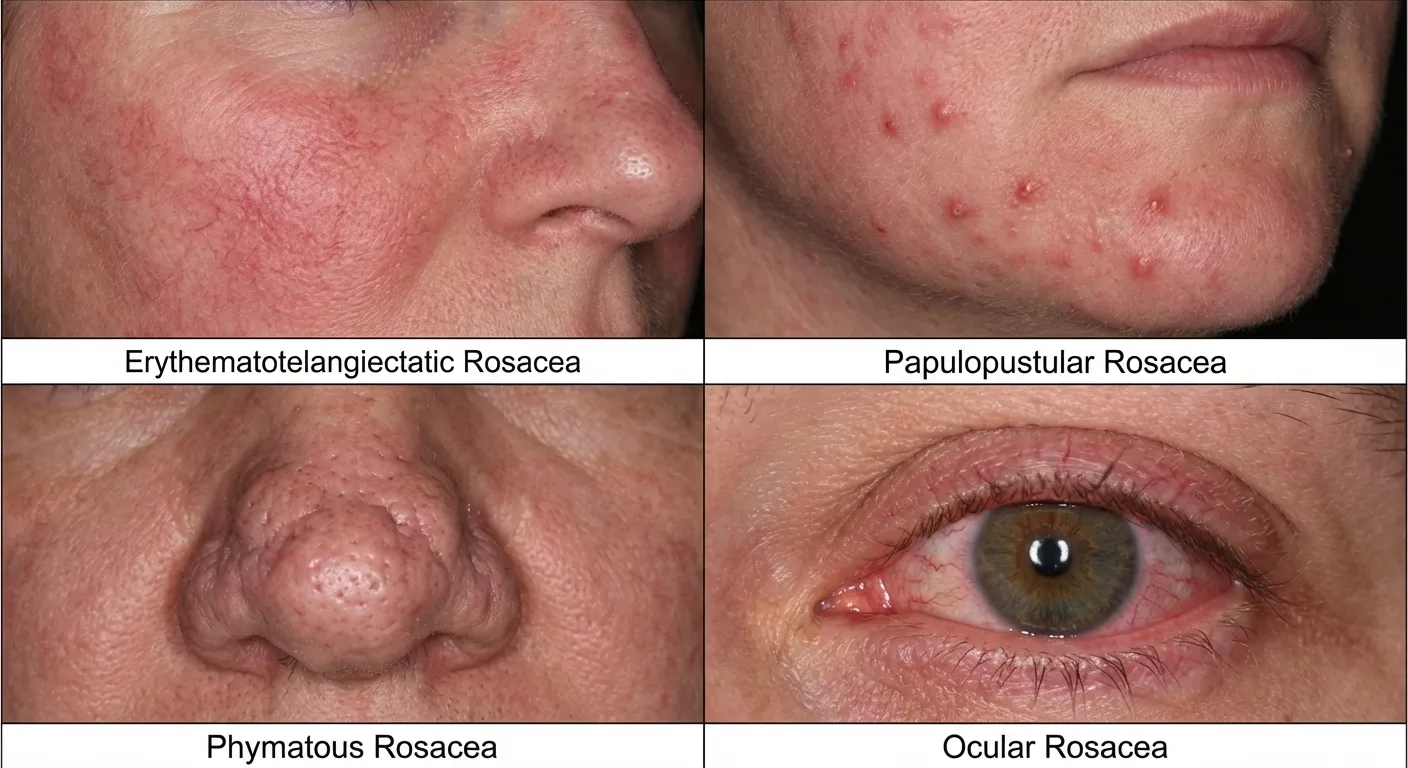
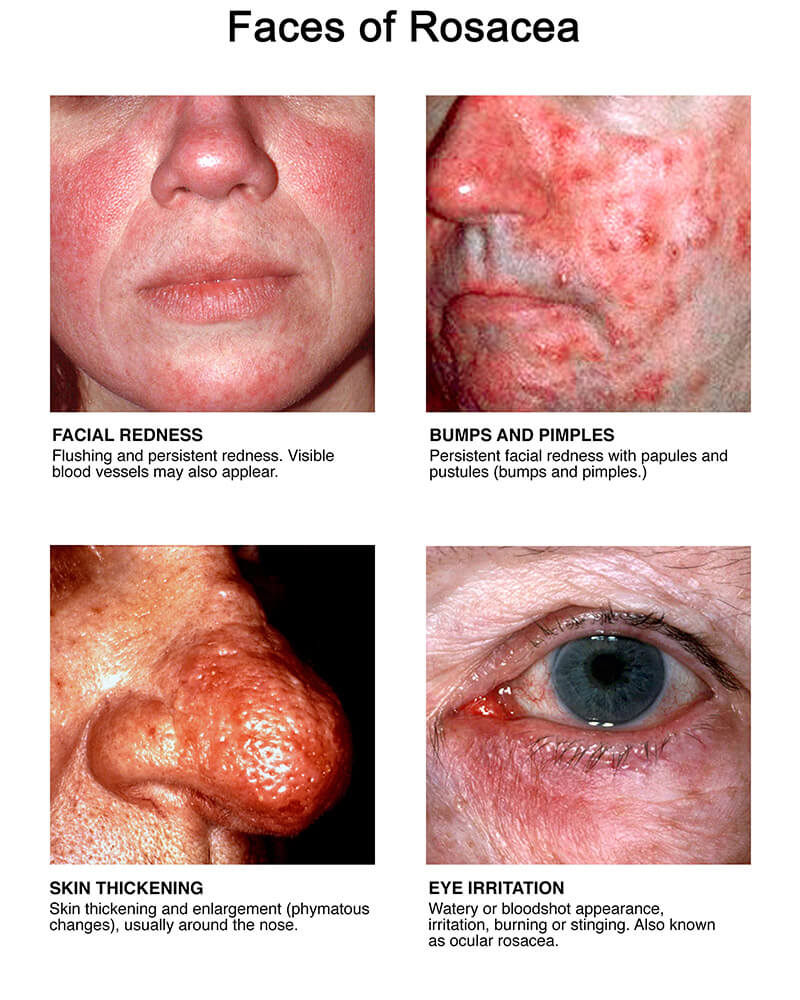
Erythematotelangiectatic rosacea
This type commonly causes flushing and persistent redness. However, early or mild color change may be subtle. Tiny blood vessels may be easier to spot than the redness itself.
Papulopustular rosacea
This type causes bumps and pus-filled spots. It can look like acne, but blackheads are usually absent. Some people notice the bumps before they notice any background redness.
Phymatous rosacea
This less common type causes thickened skin and enlarged pores. It most often affects the nose, but it can affect other areas. Redness may not be the main feature at first.
Ocular rosacea
Ocular rosacea affects the eyes and eyelids. Symptoms may include dryness, burning, light sensitivity, gritty eyes, or swollen eyelids. You may have eye rosacea with little or no visible facial redness.
Knowing these patterns explains why the answer to “can you have rosacea without redness” is yes. Rosacea is not one single look. It is a group of related symptoms that can change over time.
What can cause rosacea symptoms without visible redness?
Rosacea develops through a mix of skin barrier changes, blood vessel sensitivity, immune activity, and genetic factors. Researchers continue to study the exact cause. There is no single trigger that explains every case.
Common triggers can include:
• Sun exposure
• Hot weather or cold wind
• Hot drinks
• Spicy meals
• Alcohol
• Exercise
• Emotional stress
• Hot baths or saunas
• Harsh skin care products
• Fragrance and essential oils
A trigger may cause burning or warmth without a strong color change. For example, your face may feel hot after a workout even if a mirror does not show much redness.
Some people also have a weak skin barrier. When the barrier is damaged, water escapes more easily and irritants enter more easily. This can create stinging, dryness, and tightness that resemble rosacea.

Conditions that can look like rosacea
Not every case of facial burning, bumps, or sensitivity is rosacea. Several other skin problems can look similar.
Possible alternatives include:
• Acne, especially when blackheads and whiteheads are present
• Seborrheic dermatitis, which often causes greasy scale near the nose or eyebrows
• Contact dermatitis from a product or ingredient
• Perioral dermatitis around the mouth, nose, or eyes
• Lupus, which can cause facial rashes and other body symptoms
• Eczema, which often causes itch, dryness, and irritation
• Sun damage or actinic keratosis
• Folliculitis, which affects hair follicles
• A reaction to medication
This matters because the best treatment depends on the cause. Using strong acne products on rosacea-prone skin may increase burning and dryness. Steroid creams may briefly reduce inflammation but can worsen rosacea when used on the face without medical guidance.
A dermatologist can examine your skin and ask about timing, triggers, products, and other symptoms. There is no single blood test that confirms rosacea in most cases.
How doctors diagnose rosacea without redness
A diagnosis usually starts with a skin exam and a detailed history. Your clinician may ask when symptoms began, what makes them worse, and whether your eyes feel dry or irritated.
Helpful information to bring includes:
• Photos taken during a flare-up
• A list of skin care products
• A record of suspected food, weather, or lifestyle triggers
• Details about burning, itching, bumps, and flushing
• A list of medicines and supplements
Photos are especially useful when redness comes and goes. Take them in natural light before applying makeup, if possible. Avoid changing every product at once, since this can make triggers harder to identify.
If you are wondering, “can you have rosacea without redness,” a dermatologist may look for the pattern rather than one visible sign. The absence of strong redness does not rule it out, but it also does not prove that rosacea is present.

Treatment options for rosacea without redness
Treatment depends on the symptoms and subtype. A health professional may recommend a gentle skin routine, prescription medicine, or both.
Common medical options include:
• Topical medicines for bumps and inflammation
• Prescription creams or gels that reduce persistent facial color
• Oral antibiotics for moderate or severe inflammatory bumps
• Eye treatments for ocular rosacea
• Laser or light treatment for visible blood vessels or lasting color
Gentle skin care can support treatment:
Wash with lukewarm water and a mild, fragrance-free cleanser.
Use your fingertips instead of a scrub, brush, or rough cloth.
Apply a simple moisturizer after cleansing.
Wear broad-spectrum SPF 30 or higher each day.
Test one new product on a small area first.
Stop products that cause strong burning or swelling.
Do not assume that a product labeled “natural” is safe for sensitive skin. Essential oils, menthol, camphor, alcohol, and strong acids may irritate rosacea-prone skin.
There is no universal rosacea diet. Instead, keep a short trigger diary. This can help you notice patterns without cutting out many foods without a clear reason.
Practical mistakes to avoid
People with subtle rosacea often make the same understandable mistakes. They may treat every bump as acne or scrub away rough skin. This can damage the skin barrier and make symptoms feel worse.
Try to avoid:
• Scrubbing or exfoliating irritated skin
• Using benzoyl peroxide or retinoids without guidance
• Applying steroid cream to the face without medical advice
• Changing several products in the same week
• Ignoring eye symptoms
• Waiting for severe redness before seeking care
One practical lesson from dermatology care is that symptom patterns often tell more than a single photograph. Write down what your skin feels like, not just what it looks like. Burning and stinging are valuable clues.
If you use makeup, choose noncomedogenic, fragrance-free products when possible. Remove makeup gently at night. Green-tinted makeup may reduce the look of redness, but it will not treat the underlying condition.

When to see a dermatologist or eye doctor
Make an appointment if facial burning, bumps, flushing, or sensitivity continue for several weeks. You should also seek care if symptoms affect your daily life or keep returning despite gentle skin care.
Contact an eye doctor promptly if you have:
• Eye pain
• Blurred vision
• Strong light sensitivity
• A feeling that something is stuck in the eye
• Severe redness or swelling around the eye
Ocular rosacea can affect the surface of the eye and, in rare cases, threaten vision. A painful or sudden change in vision needs urgent medical attention.
The earlier you get a clear diagnosis, the easier it may be to control triggers and protect your skin barrier. A diagnosis can also prevent months of using the wrong products.

Can rosacea get worse even without redness?
Yes, rosacea can change over time even when redness is mild. Bumps, eye irritation, visible vessels, or skin sensitivity may become more frequent. Early care and trigger control may help reduce flare-ups.
Rosacea can also remain mild for years. Its course differs from person to person, so subtle symptoms do not predict exactly how the condition will develop.
Can you have rosacea without redness but with bumps?
Yes. Some people mainly have small bumps or pustules, especially with papulopustular rosacea. Acne usually causes blackheads and whiteheads, while rosacea often causes burning, flushing, or sensitivity along with the bumps.
A dermatologist can tell these conditions apart and recommend safer treatment.
Can you have rosacea without redness on darker skin?
Yes. On darker skin, rosacea may appear as brown, violet, gray, or deeper skin color changes rather than bright red patches. Burning, warmth, bumps, visible vessels, and eye symptoms may be easier to notice than redness.
A clinician experienced with diverse skin tones can improve the chance of an accurate diagnosis.
Can you have rosacea without redness around the eyes?
Yes. Ocular rosacea may cause dry, gritty, burning, watery, or light-sensitive eyes without obvious facial redness. Swollen eyelids and repeated styes can also occur.
See an eye doctor if you have pain, blurred vision, or strong light sensitivity.
How is rosacea without redness treated?
Treatment depends on the main symptoms. Options may include gentle skin care, sunscreen, prescription topical medicines, oral medicine, or eye treatment.
Avoid starting strong acne products or steroid creams on your face without professional advice. These products may worsen irritation in some people.
Is rosacea without redness easy to diagnose?
It can be harder to recognize because several conditions cause bumps, burning, or dryness. A clinician usually reviews your symptoms, triggers, skin history, and photographs rather than relying on redness alone.
There is no single test that confirms every case of rosacea, so an in-person assessment is important.
Conclusion
Yes, you can have rosacea without obvious redness. Burning, stinging, bumps, flushing, visible vessels, dry skin, and eye symptoms may appear first or may occur with little color change. Rosacea can also look different across skin tones and may vary from one flare-up to the next.
Use gentle products, protect your skin from the sun, track possible triggers, and avoid treating every bump as acne. If symptoms continue, a dermatologist can help identify the cause and create a safe treatment plan. Consider sharing your symptoms with a qualified health professional and exploring trusted dermatology resources for your next step.
