
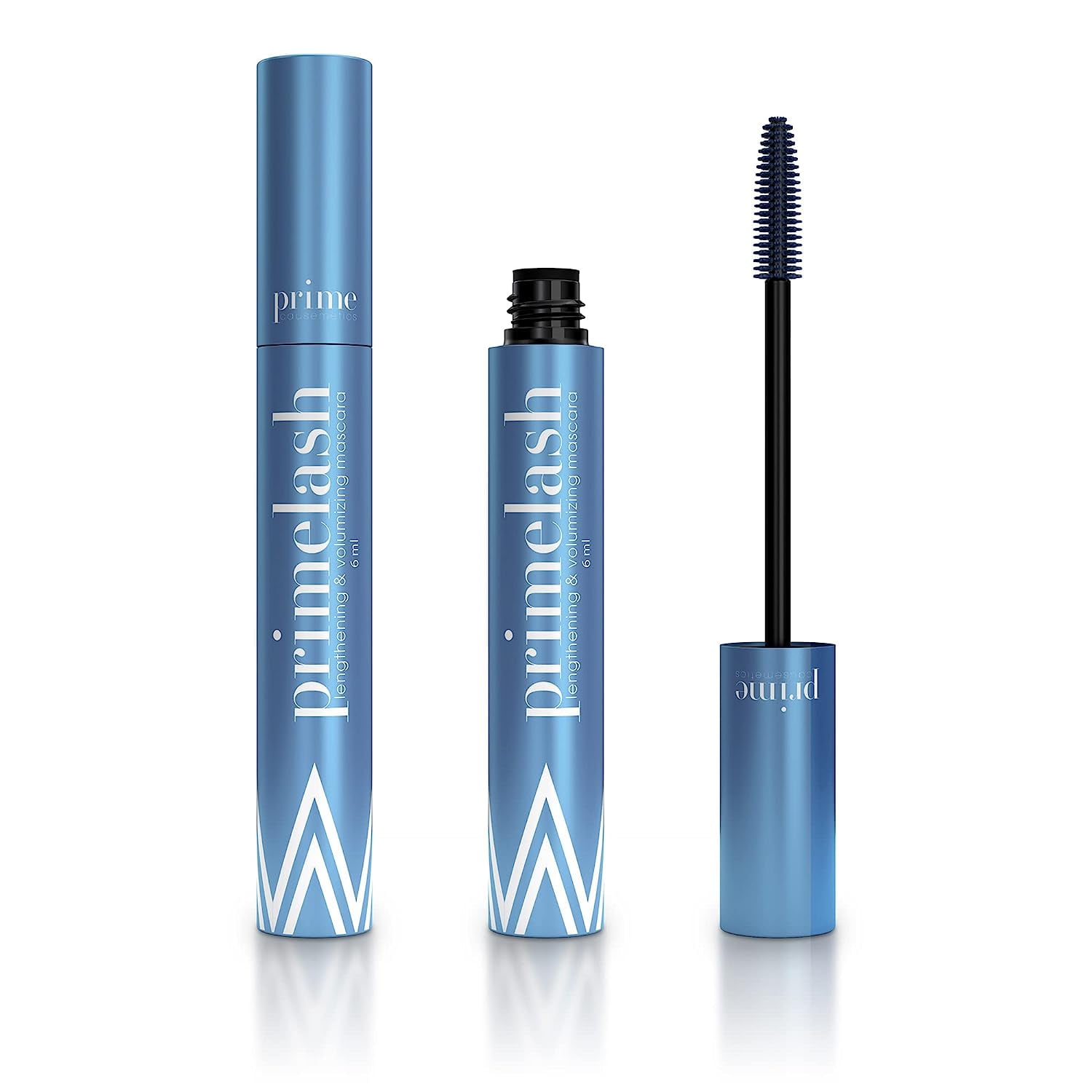
For shoppers in the United States, the short answer is probably no—not in the strict cosmetic sense. PrimeLash may be marketed as smudge-resistant, water-resistant, or easy to remove, but those claims do not prove that it is a tubing mascara.
A true tubing mascara uses film-forming polymers to wrap each lash in a small “tube.” The package or brand usually says tubing mascara, tube-forming, or explains that the product removes with warm water in small tubes or flakes.
PrimeLash’s public product claims should be checked against the current US package and official product page, because cosmetic formulas and labels can change. If the label does not clearly identify PrimeLash as a tubing formula, the safest answer is no, or not confirmed.

What Is Tubing Mascara?
Tubing mascara forms a flexible film around each eyelash instead of placing most of its color on the lash surface. When you remove it with warm water and gentle pressure, the film often slides off in tiny pieces that look like short tubes.
This is different from ordinary mascara, which often relies on waxes, oils, pigments, and film-forming agents that dissolve or loosen with makeup remover.
Common signs of a tubing mascara
Look for these clues on the product package or official instructions:
- “Tubing mascara”
- “Tube-forming”
- “Polymer tubes”
- “Removes with warm water”
- “Slides off in tubes”
- “No makeup remover needed”
Warm-water removal alone is not enough to prove that a mascara is a tubing formula. Some traditional mascaras are water-soluble or designed to rinse away easily.
How tubing mascara differs from regular mascara
| Feature | Tubing mascara | Traditional mascara |
|---|---|---|
| How it coats lashes | Forms a flexible film around each lash | Deposits pigment, wax, and film on the lash |
| Typical removal | Warm water and gentle pressure | Oil cleanser, micellar water, or eye-makeup remover |
| Common benefit | Often resists smudging and flaking | May offer more formula and finish choices |
| Removal appearance | Small tubes or film-like pieces | Dark liquid, smears, or dissolved pigment |
| Waterproof performance | Varies by product | Varies by product |
The key difference is the removal system, not simply whether the mascara lasts all day.

Why PrimeLash May Be Confused With Tubing Mascara
PrimeLash can be mistaken for a tubing mascara because many modern mascaras make similar claims. Words such as smudge-proof, long-wearing, water-resistant, and easy to remove describe performance. They do not name a specific mascara category.
A traditional mascara can resist tears and humidity through waxes and film-forming ingredients. It may still come off with warm water if the formula is water-soluble. That does not automatically make it a tubing mascara.
The same issue applies to “flake-free” or “gentle removal” claims. These features may be useful, but they do not show that each lash is wrapped in a polymer tube.
The label test
To check the current PrimeLash formula, use this order:
- Read the front of the US package.
- Check the product description on the official PrimeLash website.
- Read the removal instructions.
- Look for a clear statement about tubes, polymers, or warm-water removal.
- Check the ingredient list if the marketing language remains unclear.
If the brand calls it tubing mascara, that is the clearest evidence. If the brand only says it is lengthening, smudge-resistant, water-resistant, or easy to remove, classify it as not confirmed tubing.

How to Test Whether PrimeLash Removes Like a Tubing Mascara
You can perform a simple removal check at home. This test can show whether PrimeLash behaves like a tubing formula, but it cannot identify the exact chemistry of the product.
What you need
- Clean hands
- Warm water
- A clean, soft washcloth or cotton pad
- A mirror
- A gentle eye-makeup remover as a backup
Steps
- Wash your hands. Eye products can transfer bacteria to the eye area.
- Wet your lashes with warm water. The water should feel comfortable, not hot.
- Hold the warm, damp cloth over closed eyes. Let it rest for several seconds.
- Gently press and slide downward. Do not scrub or pull at the lashes.
- Look at the removed product. Note whether it comes away as small sleeves, soft films, dark smears, or dissolved residue.
- Stop if the area stings or becomes red. Use a gentle cleanser to remove any remaining product.
How to read the result
- Small sleeves or tubes: This behavior is consistent with tubing mascara.
- A soft film that peels away: This may be a polymer-rich formula, but it is not definitive proof of tubing technology.
- Black smears or liquid residue: This is more typical of traditional mascara.
- Little removal with warm water: PrimeLash may need a makeup remover and is unlikely to be a classic warm-water tubing formula.
Do not repeat the test by tugging hard. Eyelashes are delicate, and force can break or pull them out.
Is PrimeLash Waterproof or Water-Resistant?
Do not assume that PrimeLash is waterproof unless the current US label specifically says waterproof. “Smudge-proof,” “long-wearing,” and “water-resistant” are different claims.
A water-resistant mascara may handle light moisture but fail with heavy tears, swimming, or prolonged exposure to water. A waterproof mascara is designed to resist water more strongly, but even waterproof formulas can wear down with oil, rubbing, sweat, and makeup remover.
Tubing mascara is also not automatically waterproof. Some tubing formulas resist water well but loosen with warm water. Others may soften in a shower while remaining stable against normal eye moisture.
The useful question is not just “Does it resist water?” Ask instead:
- Does it survive tears?
- Does it withstand humidity?
- Does it remove with warm water?
- Does it need an oil-based cleanser?
- Does the brand use the word “tubing”?
These answers help you choose the right formula for work, exercise, travel, or sensitive eyes.

PrimeLash Compared With a True Tubing Mascara
If your main goal is easy removal, compare PrimeLash with a product that clearly identifies itself as tubing mascara.
| Your priority | What to look for |
|---|---|
| Easy removal | Warm-water removal instructions |
| Less under-eye smearing | A clear tubing or tube-forming claim |
| Strong water resistance | Waterproof or water-resistant labeling |
| Sensitive-eye use | Fragrance information, gentle removal, and proper eye-area use |
| Lash definition | A narrow brush and instructions to apply thin coats |
| Removing makeup without rubbing | A formula that slides off or dissolves with the stated cleanser |
PrimeLash may still suit someone who wants a conventional mascara with long wear or lash definition. It may not suit someone who specifically wants the tube-removal experience.
The deciding factor is the product’s documented formula and removal method—not the fact that it is advertised as long-lasting.

Common Mistakes When Identifying Tubing Mascara
Mistake 1: Treating “smudge-proof” as “tubing”
Smudge resistance describes an outcome. Tubing describes how the formula coats the lash. A mascara can be smudge-proof without forming tubes.
Mistake 2: Assuming warm-water removal proves the formula
Some non-tubing mascaras rinse away with water. Look for the brand’s description of tubes or polymer film, not just a claim that the product is easy to remove.
Mistake 3: Calling every polymer-based mascara a tubing mascara
Many mascaras contain film-forming polymers. The presence of a polymer in an ingredient list does not automatically mean the product uses a classic tube-forming system.
Mistake 4: Pulling at the lashes during removal
Tubing formulas can loosen with warm water, but they should still be removed gently. If the product does not slide away, use a suitable eye-makeup remover instead of applying more force.
Mistake 5: Using hot water
Hot water can irritate the thin skin around the eyes. Use comfortably warm water and keep your eyes closed.

Is PrimeLash a Good Choice for Sensitive Eyes?
A tubing formula is not automatically safer for every person. Eye comfort depends on the full formula, preservatives, fragrance, application habits, allergies, and personal sensitivity.
Before using PrimeLash:
- Check the current ingredient list.
- Do not use it if the product smells unusual or has changed texture.
- Avoid sharing mascara.
- Do not add water or saliva to the tube.
- Replace old mascara according to the package directions.
- Keep the wand away from the eye surface.
- Stop use if you notice burning, swelling, pain, discharge, or lasting redness.
The US Food and Drug Administration advises consumers to avoid eye cosmetics when they have an eye infection and to discard eye makeup used during an infection. If irritation continues after you stop using the product, contact an eye-care professional.

Key Takeaways
- PrimeLash is not confirmed to be a tubing mascara unless the current product label or official instructions say so.
- Smudge-proof, water-resistant, and easy-removal claims do not prove a mascara is tubing.
- A true tubing mascara usually forms a film around each lash and removes with warm water in small tubes or pieces.
- Test removal gently, but do not treat a home test as a chemical analysis.
- Check the current US packaging because cosmetic formulas and claims may change.
FAQs
Does PrimeLash mascara come off with warm water?
That depends on the current formula and its instructions. If it removes as small sleeves or tubes, it may behave like a tubing mascara. If it leaves dark smears or needs eye-makeup remover, it is more likely a traditional formula.
Can I remove PrimeLash with micellar water?
Use the removal method listed on the current product packaging. If warm water does not remove it fully, a gentle micellar water or eye-makeup remover may help. Avoid rubbing the eye area.
Is tubing mascara better than regular mascara?
Neither type is best for everyone. Tubing mascara may suit people who want less smearing and easy removal. Traditional mascara may offer more choices in volume, curl, waterproof wear, and finish.
Does tubing mascara damage eyelashes?
Tubing mascara itself is not automatically damaging. Problems are more likely when someone pulls at the lashes, scrubs the eye area, sleeps in mascara, or uses an old or contaminated product.
How can I confirm the exact PrimeLash formula?
Check the current US package, official PrimeLash product page, and ingredient list. Contact the brand if the label does not explain whether the mascara is tube-forming.
Conclusion
PrimeLash should not be called a tubing mascara based only on claims such as smudge-proof, long-wearing, or easy to remove. Unless the current US product information clearly says that it forms tubes or uses tube-forming technology, the accurate answer is no or not confirmed.
If easy removal is your top priority, choose a mascara that clearly says tubing mascara and explains its warm-water removal method. If you already own PrimeLash, check the label first and remove it gently without pulling or scrubbing your lashes.
