
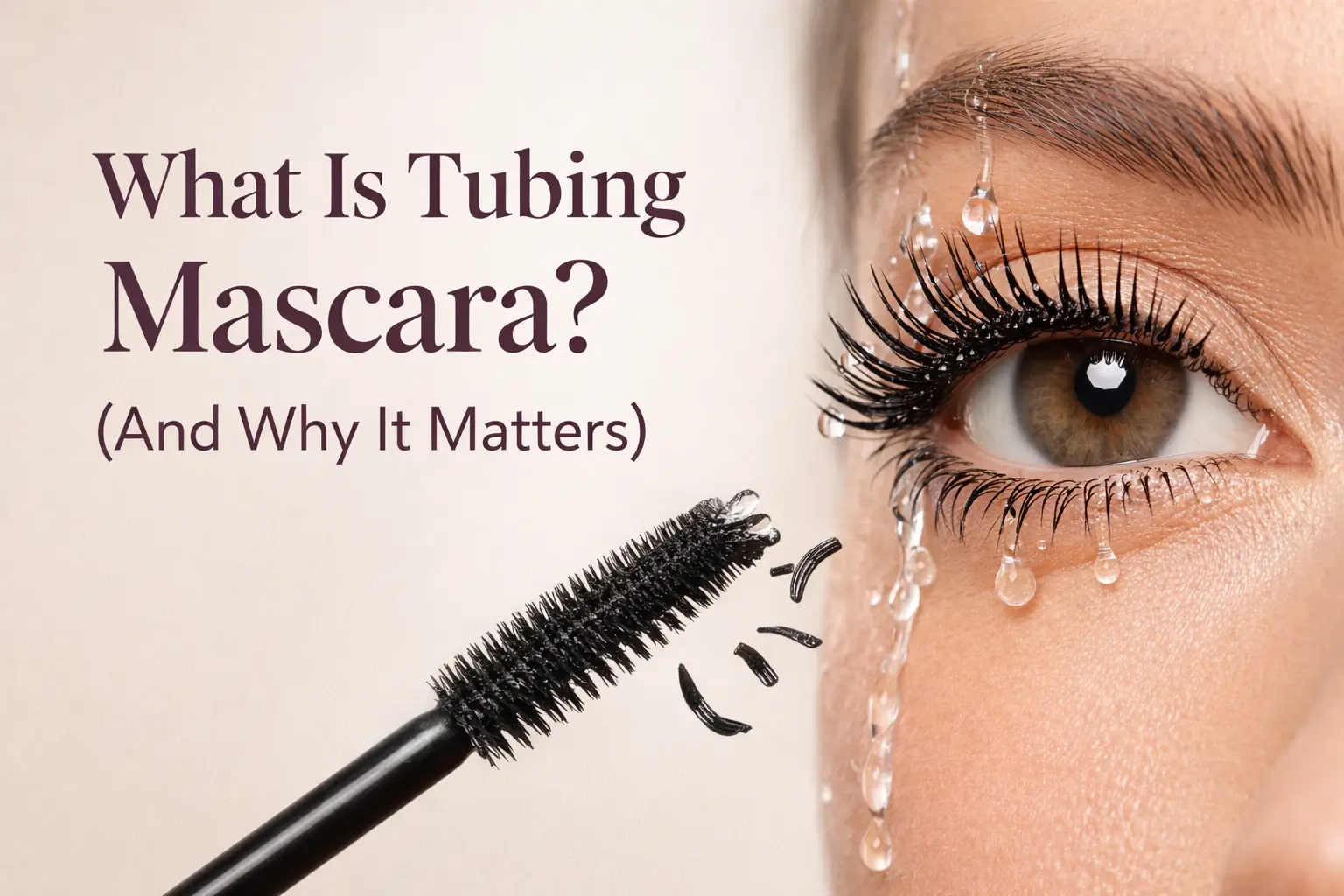
Tubing mascara is a type of mascara that forms tiny, flexible films around each lash. In the United States, the easiest way to identify it is to check the package for terms such as “tubing,” “tube technology,” “polymer film,” or “removes with warm water.” You can also confirm it at home: when wet, tubing mascara often slides off in small lash-shaped tubes instead of smearing like traditional mascara.

What Is Tubing Mascara?
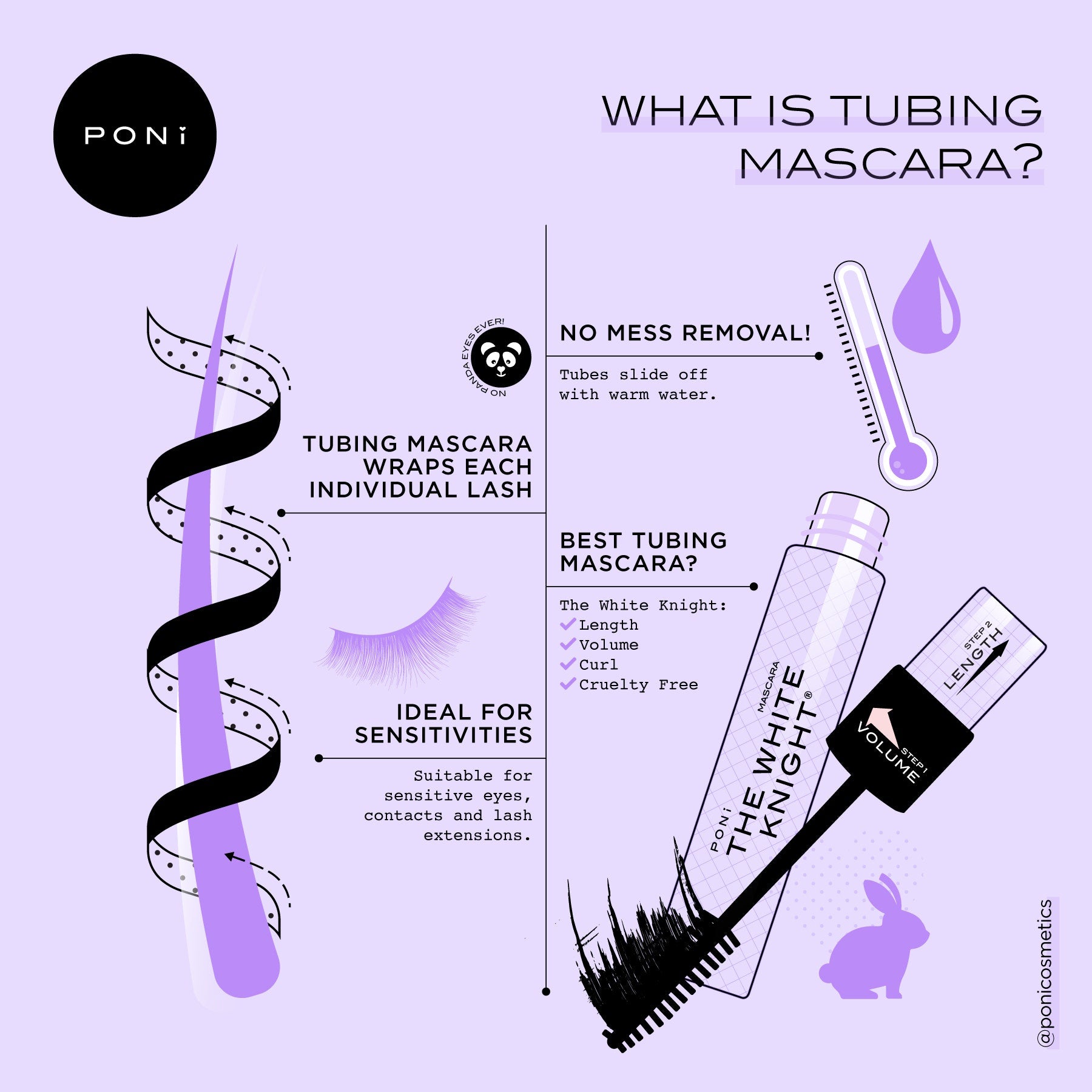
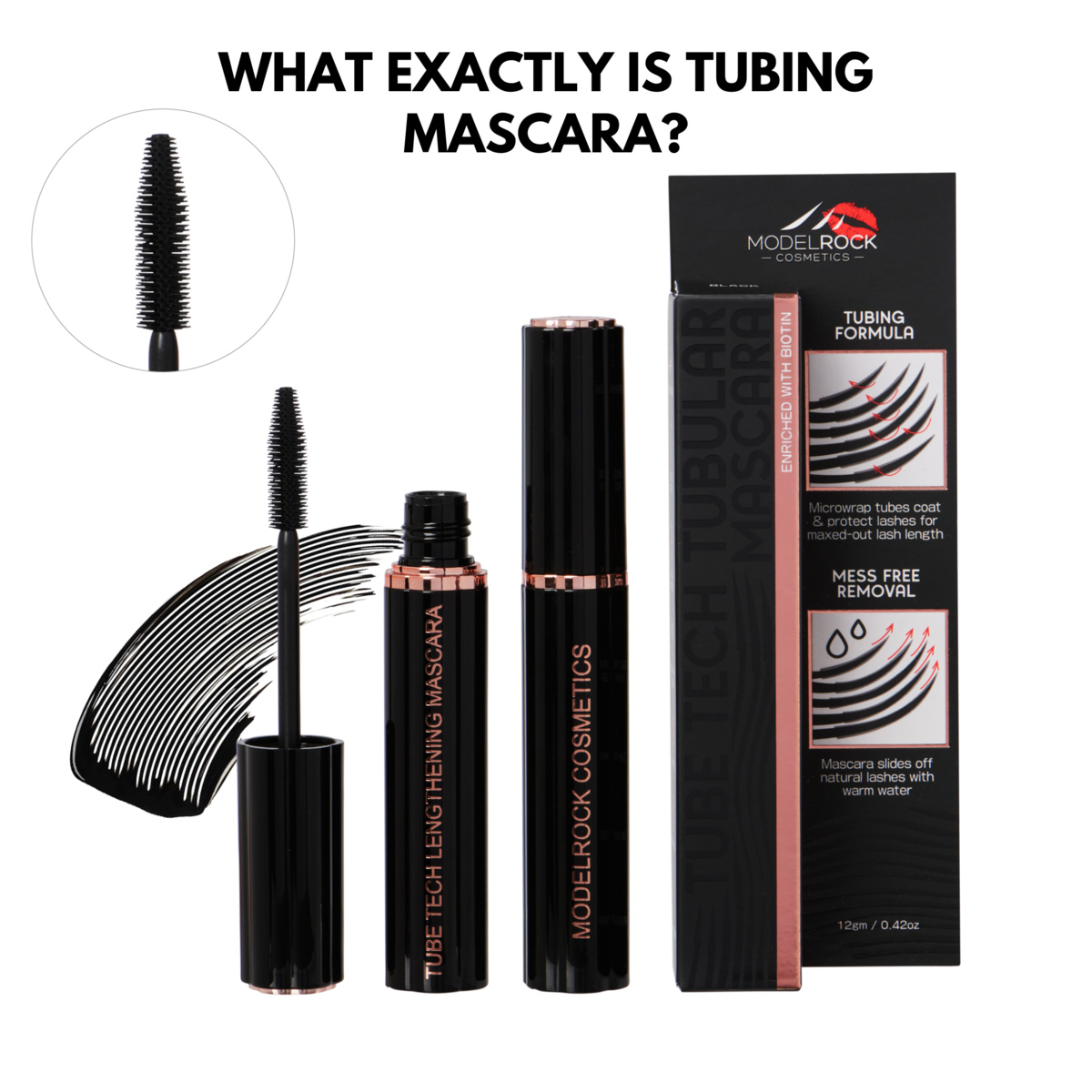
Tubing mascara uses film-forming ingredients to wrap individual lashes. Traditional mascara usually paints color onto the surface of the lashes. Tubing formulas create a light coating around them.
These coatings are often made with water-resistant polymers. The exact formula varies by brand, so “tubing mascara” is best treated as a product description rather than a single regulated formula category.
A tubing formula may:
- Resist sweat, oil, and light moisture
- Smudge less than many standard mascaras
- Add length by coating each lash
- Come off with warm water and gentle pressure
- Leave behind small tubes, flakes, or flexible pieces
A tubing mascara is not the same as a fiber mascara. Fiber formulas add small fibers to create length. A tubing formula forms a film around the lash. Some products can use both technologies.
Tubing mascara also differs from waterproof mascara. Waterproof mascara is made to resist water and often needs an oil-based remover. Tubing mascara may resist water during wear but loosen when exposed to warm water for long enough.
How to Identify Tubing Mascara on the Package
The package wording is the fastest way to check whether a mascara is a tubing formula. Look at the front label, product description, and removal instructions.
1. Look for the word “tubing”
The clearest clues include:
- Tubing mascara
- Tube technology
- Lash tubes
- Tube-forming mascara
- Polymer tube technology
- Forms a film around each lash
A product does not need to use the exact word “tubing.” Some brands describe the same effect with phrases such as “wraps each lash” or “forms flexible tubes.”
2. Check the removal directions
Removal claims can provide a strong clue. Look for directions such as:
- Removes with warm water
- Gently slides off with water
- No makeup remover needed
- Use warm water and light pressure
- Removes in small pieces or tubes
“Removes with water” is not proof by itself. Some washable mascaras also remove with water. The most useful clue is a combination of warm-water removal and film or tube language.
3. Read the product page, not just the front label
The front of the tube may only say “longwear” or “smudge-resistant.” The brand’s product page may explain the formula more clearly.
Search the product description for:
- Polymer
- Film-forming
- Wraps lashes
- Tubes
- Warm water
- Gently slide
- Lash coating
The U.S. Food and Drug Administration requires cosmetic labels to list ingredients, but it does not create a special “tubing mascara” certification. A brand’s use of the term is a marketing description, so check the removal method as well.
4. Do not rely on the ingredient list alone
A tubing mascara may contain film-forming ingredients, but most shoppers cannot identify the product with certainty from the ingredient list alone.
Common film-forming ingredients can include certain acrylate copolymers, cellulose-based ingredients, and other polymers. However, these ingredients can also appear in non-tubing mascaras.
The ingredient list is useful for checking allergies or sensitivities. It is less useful for proving that a mascara is tubing mascara.

How to Test Mascara at Home
If the package is unclear, you can test the mascara during removal. This is the most practical way to identify a tubing effect.
Step 1: Wear the mascara as directed
Apply the mascara to clean lashes. Let it dry fully. If the product needs several coats, follow the label directions.
Do not test a new eye product if you already have eye irritation. The American Academy of Ophthalmology advises stopping eye cosmetics when irritation occurs and replacing products that may be contaminated.
Step 2: Use comfortably warm water
Wet your fingers or a soft, clean washcloth with warm water. The water should feel comfortable on the skin. Do not use hot water near your eyes.
Hold the damp cloth over closed eyes for several seconds. This gives the film time to soften.
Step 3: Apply gentle pressure
Gently press the lashes between clean fingertips or use the damp cloth to lightly pinch and slide downward.
Do not scrub. Do not pull individual lashes. Do not use tweezers.
Step 4: Watch how the mascara comes off
A tubing mascara often:
- Slides off in small flexible pieces
- Looks like tiny dark tubes
- Comes away from the lash in strips
- Leaves less black residue under the eyes
Traditional mascara more often:
- Smears into dark streaks
- Dissolves into the remover
- Leaves pigment on the skin
- Requires repeated wiping
This test is a useful clue, not a laboratory test. Mascara formulas vary, and some tubing products may flake rather than form obvious tubes.
Step 5: Check your lashes after removal
Your lashes should feel clean without harsh rubbing. If you need to tug, scrub, or use force, stop and change your removal method.
A product that claims warm-water removal but does not release easily may need more soaking time, a different water temperature, or an oil-free cleanser. It may also be a washable or water-resistant formula rather than a true tubing-style product.

Tubing Mascara vs. Other Mascara Types
The table below compares the clues that can help you tell formulas apart.
| Mascara type | Main clue | Typical removal pattern | Common trade-off |
|---|---|---|---|
| Tubing | Wraps lashes in a film or tube | Slides off with warm water and gentle pressure | May not provide the same heavy volume as some traditional formulas |
| Washable | Water-based, easy to rinse | Smears or dissolves with water | May smudge more during the day |
| Waterproof | Labeled waterproof or water-resistant | Usually needs an oil-based or dual-phase remover | Can take more effort to remove |
| Fiber | Contains fibers for added length | Fibers may flake or rinse away | Fibers can irritate some eyes |
| Volumizing | Focuses on thickness or fullness | Varies by formula | May clump if layered |
| Lengthening | Focuses on a longer look | Varies by formula | May offer less fullness |
The label matters because “long-wearing,” “smudge-proof,” and “water-resistant” do not automatically mean tubing mascara.
Tubing versus waterproof mascara
A tubing mascara can resist small amounts of moisture, but it may still come off with warm water. Waterproof mascara is designed to resist water more strongly and usually needs a dedicated remover.
If a product must be removed with an oil cleanser, balm, or dual-phase eye makeup remover, it may be waterproof rather than tubing. Some products combine film-forming technology with strong water resistance, so the directions remain the best guide.
Tubing versus washable mascara
Both formulas may remove with water. The difference is how they behave.
Washable mascara often breaks down into a dark smear. Tubing mascara tends to release as a coating around the lash. Some washable formulas can also form small flakes, so look for matching package claims before making a decision.
Tubing versus fiber mascara
Fiber mascara contains visible fibers that cling to the lashes. Those fibers may look like tiny threads or specks during removal.
Tubing mascara does not need fibers to create length. It makes each lash look longer by forming a coating around it and extending the visible tip.
Signs You Have Found a True Tubing-Style Formula
No single sign proves a formula is tubing mascara, but several clues together are useful.
You probably have a tubing-style product if:
- The brand uses “tubing,” “tube,” or “film-forming” language.
- The directions mention warm water and gentle pressure.
- The product claims to wrap or coat each lash.
- It resists ordinary smudging but releases after soaking.
- It comes off in flexible pieces instead of black liquid.
- The brand explains that the formula forms a film around lashes.
You may not have a tubing mascara if:
- The product only says “longwear” or “smudge-proof.”
- It requires an oil-based remover.
- It dissolves into a dark liquid when wet.
- The brand describes fibers but not films or tubes.
- The formula remains firmly attached after warm-water soaking.
The strongest identification method is package language plus removal behavior. Either clue alone can be misleading.
What to Do If Tubing Mascara Will Not Come Off
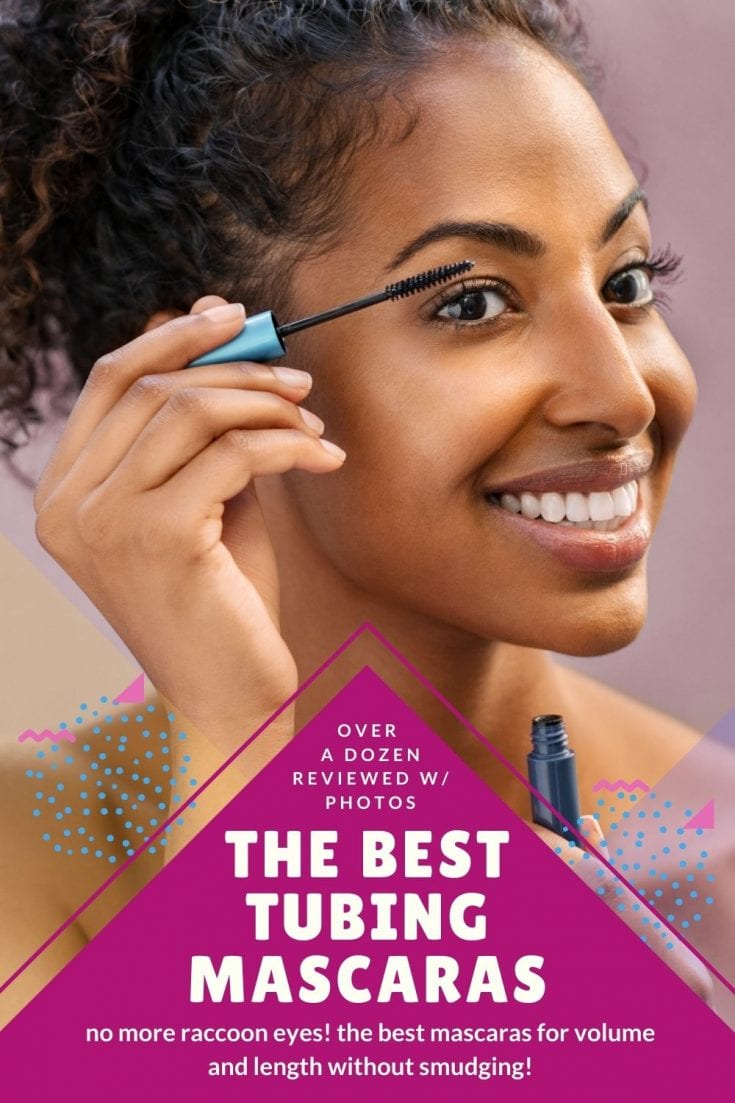
Tubing mascara should not require aggressive rubbing. If it does not release, check the following points in order.
Use more soaking time
Hold a warm, damp cloth over closed eyes for about 20 to 30 seconds. This may soften the film more effectively than a quick splash of water.
Do not increase the heat. Warm water is enough.
Use gentle downward pressure
After soaking, lightly press and slide along the lashes. Avoid rubbing back and forth, which can irritate the eyelids and lash line.
Check whether the product is waterproof
Read the package again. A formula may be labeled tubing but also contain strong water-resistant properties. The brand may recommend a cleanser or makeup remover for complete removal.
Try the brand’s stated method
Follow the product’s own directions if they differ from general advice. Cosmetic formulas are not identical, and removal instructions are based on the product’s intended use.
Stop if your eyes feel irritated
Remove contact lenses before cleansing around the eyes. Stop using the product if you notice burning, swelling, redness, pain, or vision changes. Seek medical advice for severe or persistent symptoms.
Never use household solvents, alcohol, or harsh soap near the eyes.

Benefits and Limits of Tubing Mascara
Tubing mascara can be useful for people who dislike under-eye smudges or harsh makeup removal. Because the film wraps the lash, the pigment may stay in place better than some standard washable formulas.
It can also be a practical choice for people who want a clean removal process. The coating may come off in pieces, which can reduce the need for repeated wiping.
Still, tubing mascara has limits:
- It may not create the bold volume of some traditional mascaras.
- Some formulas can flake as they wear.
- “Tubing” does not guarantee that the product is waterproof.
- Warm-water removal may not work well in cold water.
- Eye sensitivity can occur with any cosmetic.
- Product performance varies by formula, lash type, climate, and application.
A tubing formula may be a good fit if easy removal and low smudging matter most. A traditional or waterproof formula may suit someone who wants maximum volume or stronger resistance to water.

Common Mistakes When Identifying Tubing Mascara
Mistaking “smudge-proof” for “tubing”
Smudge resistance describes performance, not the formula type. A wax-based or waterproof mascara may also resist smudging.
Assuming every water-removable mascara is tubing
Many regular washable mascaras come off with water. Look for the combination of a film-forming claim and tube-like removal.
Judging by the brush
A curved, narrow, thick, or plastic brush does not identify the formula. The brush affects application. The formula determines how the mascara behaves after it dries.
Expecting perfect tubes every time
A tubing product may come off as flakes or soft strips, especially if only a thin coat was applied. Removal appearance can change with the number of coats and the amount of water used.
Pulling at the lashes
If the coating does not slide away, do not force it. Tugging can break or remove natural lashes and may irritate the eyelid.
Key Takeaways
- The clearest label clues are “tubing,” “tube technology,” “film-forming,” and “removes with warm water.”
- Test the formula by soaking the lashes with comfortably warm water and gently sliding the product away.
- Tubing mascara often comes off in small flexible pieces rather than dark smears.
- “Water-resistant,” “longwear,” and “smudge-proof” do not automatically mean tubing.
- Do not pull, scrub, or use harsh products near the eyes.
- When in doubt, follow the brand’s removal directions and check the ingredient list for personal sensitivities.
Frequently Asked Questions
Can tubing mascara be waterproof?
Some tubing mascaras are highly water-resistant, but many are not fully waterproof. Warm water may soften and remove the tubes, while swimming, heavy tears, or oil can affect wear differently. Check the exact product label for its water-resistance claim.
Does tubing mascara damage eyelashes?
Tubing mascara is not automatically damaging. The main risk comes from poor removal, rubbing, or pulling. Remove it with warm water and gentle pressure, and stop using it if it causes irritation.
Can I remove tubing mascara with micellar water?
You may be able to, but warm water often works better for formulas designed to release their film. Some micellar waters can help remove leftover pigment. Follow the brand’s directions first.
Why does my tubing mascara flake?
Flaking can result from too many coats, an old or dried-out product, rubbing the eyes, or the formula’s normal wear pattern. Do not add water to the mascara tube. Replace it if the texture, smell, or performance changes.
How can I tell if a mascara is tubing before buying it?
Check the brand’s U.S. product page and packaging for “tubing,” “tube technology,” “wraps each lash,” or “removes with warm water.” If the description only says “lengthening,” “longwear,” or “smudge-proof,” the formula type is not confirmed.
Conclusion
To identify tubing mascara, start with the label and then confirm the claim through removal. Look for tube or film language, warm-water directions, and a product that slides off in small flexible pieces instead of smearing.
The safest approach is gentle: soak, press lightly, and stop if the product resists or your eyes become irritated. This method helps separate true tubing-style mascara from ordinary washable, waterproof, fiber, and long-wear formulas.
