
Tubing mascara is different because it uses flexible polymers to form tiny “tubes” around each eyelash. Traditional mascara paints the lash with pigment and wax. Tubing mascara creates a light film that grips each lash, which can reduce smudging and make removal easier with warm water.
For many people in the United States, the main appeal is simple: tubing mascara can give clean, defined lashes without the dark under-eye marks that regular mascara may leave behind. It is not automatically better, though. The best choice depends on whether you want volume, curl, easy removal, water resistance, or long wear.
What Is Tubing Mascara?
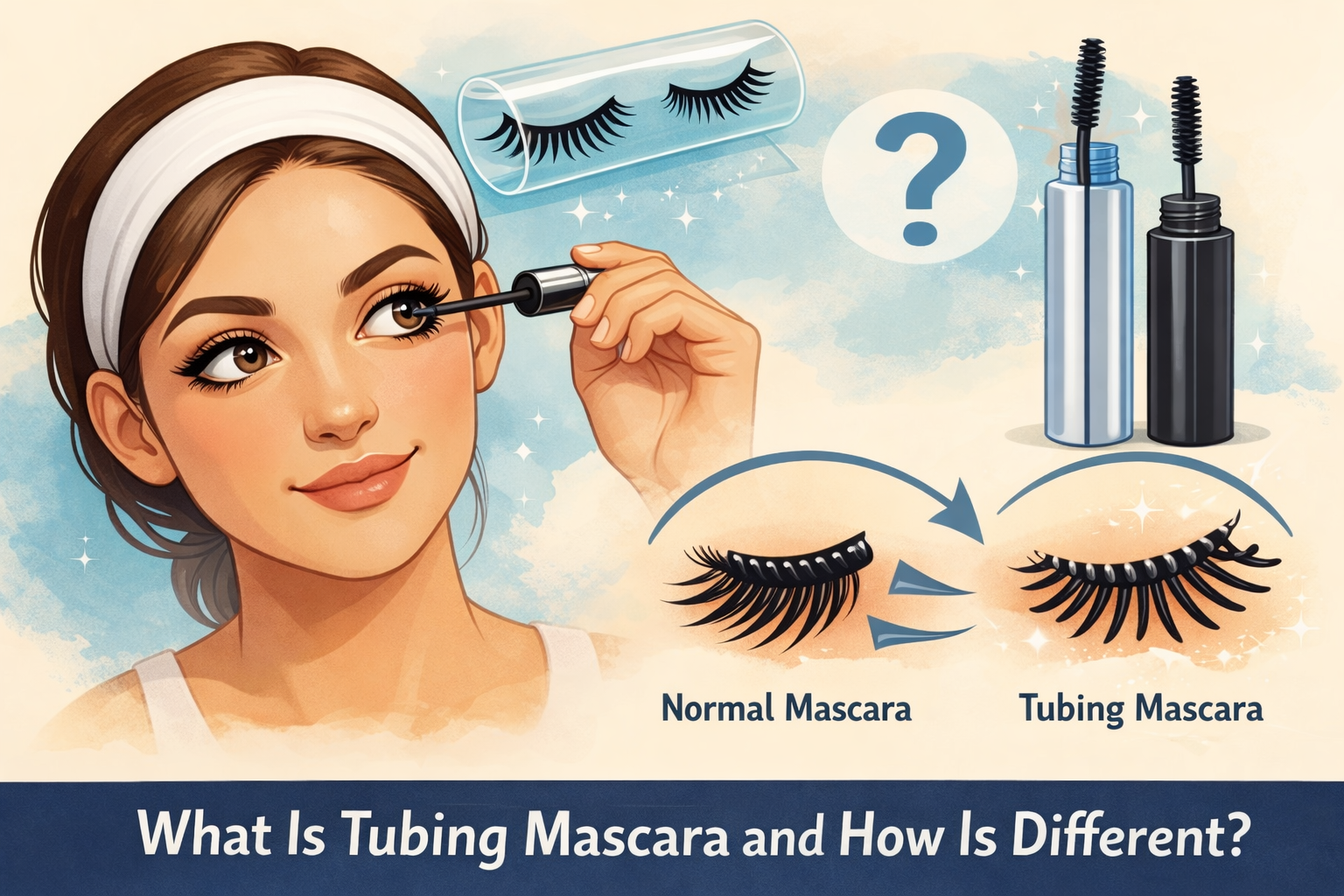
Tubing mascara is a mascara formula that coats each lash with film-forming polymers. As the product dries, these polymers wrap around the lash instead of sitting on it as a soft layer of wax and pigment.
The “tubes” are not tiny plastic pipes. They are a name for the tube-like coating that forms around individual lashes. You usually cannot see the tubes while wearing the mascara, but you may notice them when the product comes off in small flakes or short pieces.
A typical tubing mascara contains:
- Pigments for color
- Film-forming polymers
- Water and other liquid ingredients
- Preservatives
- Conditioning or thickening ingredients
- Waxes or oils in some formulas
The exact formula varies by brand. Some tubing mascaras focus on length and definition. Others add volume, curl, or a thicker brush. So the word “tubing” describes the coating method, not one fixed level of performance.
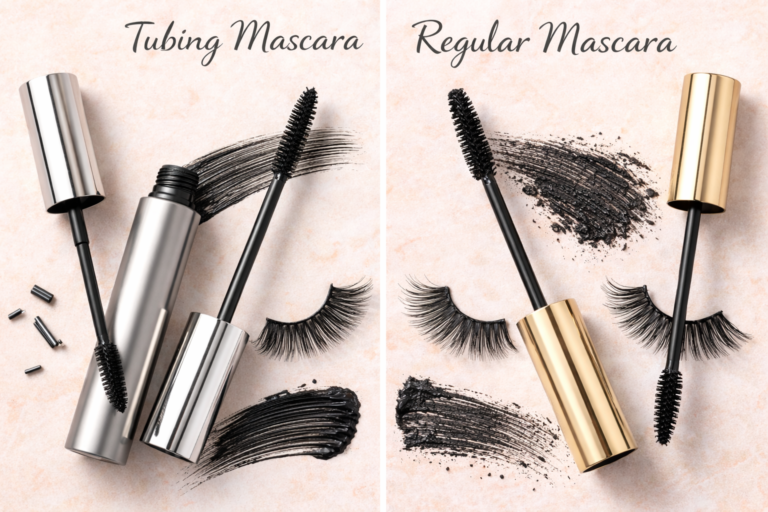
Tubing Mascara vs. Regular Mascara
The main difference is how each formula stays on the lashes. Regular mascara usually uses waxes, oils, pigments, and polymers to paint the lash. Tubing mascara relies more heavily on polymers that form a flexible film around each lash.
| Feature | Tubing mascara | Traditional mascara |
|---|---|---|
| How it coats lashes | Forms a film or tube around each lash | Paints lashes with pigment, wax, and other ingredients |
| Smudge resistance | Often high after it dries | Varies by formula |
| Removal | Usually loosens with warm water and gentle pressure | Often needs makeup remover or cleanser |
| Flaking | May come off in small tubes or flakes | May smudge, crumble, or leave dark residue |
| Oil resistance | Can vary by formula | Can vary by formula |
| Waterproof performance | Often water-resistant, but not always waterproof | Available in both regular and waterproof versions |
| Lash look | Often clean, separated, and lengthened | Can offer more volume or a softer, fuller look |
| Best known benefit | Easy removal with less rubbing | Broad range of volume, curl, and finish options |
This table shows general patterns, not guarantees. A traditional waterproof mascara may last longer in water than a tubing formula. A tubing mascara with a large brush may create more volume than a thin, defining formula.
Does tubing mascara smudge?
Tubing mascara often smudges less than standard mascara because the dried film is less likely to dissolve into a dark paste. This can help if mascara usually transfers to your lower eyelids.
Still, smudging can happen. Common causes include:
- Applying too many coats
- Not allowing the mascara to dry
- Naturally oily eyelids
- Rubbing the eyes
- Sweat, tears, or skin care products
- A formula that is not well suited to your skin
Tubing mascara may also flake if the film becomes dry or if you apply several thick layers. Less smudging does not mean no maintenance is needed.

How Does Tubing Mascara Work?
Tubing mascara works by using polymers that create a flexible coating around the lashes. When the product dries, the film holds pigment against the lash and helps the mascara resist some moisture and friction.
This design changes both wear and removal.
With regular mascara, water may spread the pigment and wax across the skin. That is why a wet eye or tear can leave a black streak. With tubing mascara, warm water can soften the film so that it slides away from the lash in small pieces.
The result often feels different, too. Tubing mascara may feel lighter and less creamy than a wax-heavy mascara. Some people like the clean feel. Others prefer the soft, thick finish of a traditional formula.
Why does it come off in small pieces?
The coating can loosen as a whole or in sections. When you gently press a warm, wet cloth against the lashes, the film softens. The pieces may look like tiny black fibers, flakes, or short tubes.
This does not mean your lashes are falling out. However, pulling hard can remove natural lashes. Let water and gentle pressure do most of the work.
How to Apply Tubing Mascara
Apply tubing mascara to clean, dry lashes for the most even result.
- Curl your lashes first if you use an eyelash curler. Mascara can make lashes less flexible, so curling after application may cause breakage.
- Wipe excess product from the wand. Too much formula can create clumps and make the film peel.
- Start at the lash base. Wiggle the wand lightly, then move toward the tips.
- Add a second coat while the first coat is still slightly workable. Follow the product label because some formulas perform better with one coat.
- Let the mascara dry. Avoid rubbing your eyes or pressing lashes against wet skin.
- Separate clumps with a clean lash comb if needed. Use light pressure and do not tug.
Tubing mascara often gives the best result with slow, even strokes. Fast, heavy application can make lashes look stiff or cause the film to break apart later.
How many coats should you use?
One coat usually gives a natural, separated look. Two coats may add more length or body. More coats do not always create more volume. They can instead make the coating thick, brittle, or prone to flaking.
If you want a dramatic look, choose a formula and brush designed for volume rather than adding many layers to a lengthening formula.

How to Remove Tubing Mascara
Most tubing mascaras are designed to loosen with warm water. The removal process is often easier than removing waterproof mascara, but you still need to follow the label.
- Wet your lashes with warm water. The water should feel comfortable, not hot.
- Hold a wet washcloth or clean cotton pad over your closed eye. Keep it there for several seconds.
- Gently press and slide downward. Do not scrub from side to side.
- Repeat if needed. Use clean water and light pressure.
- Clean the eye area after removal. Check that no pieces remain along the lash line.
- Pat dry. Avoid rubbing the eyelids.
Some tubing mascaras require an oil cleanser, micellar water, or a specific remover. Others may resist oily products. The package directions matter because formulas differ.
What if warm water does not remove it?
Try these checks in order:
- Confirm that the water is warm enough to soften the film.
- Hold the wet cloth on the lashes longer.
- Use a gentle downward motion rather than rubbing.
- Check the label for a recommended remover.
- Stop if your eyes sting, turn red, or feel scratched.
Do not pull off dry mascara with your fingernails. If the product will not release, a gentle eye makeup remover may help. Persistent pain, swelling, discharge, or vision changes need medical attention.
Is Tubing Mascara Waterproof?
Tubing mascara is often water-resistant, but it is not automatically waterproof. This distinction matters.
A water-resistant formula may handle light moisture, sweat, or brief contact with water. A waterproof formula is designed to resist more exposure, although no eye makeup stays perfect under every condition.
Warm water can remove many tubing formulas because the combination of heat, water, and gentle pressure weakens the film. Some brands create formulas that resist cool water or light tears but still remove with warm water. Others may come off more easily.
Read the product label if you need mascara for:
- Swimming
- Heavy exercise
- Long outdoor events
- Humid weather
- Frequent tearing
- Contact with rain or water
If you need strong water resistance, test the formula before an important event. Eye shape, skin oil, humidity, and application thickness can change wear.
Benefits and Drawbacks of Tubing Mascara
Tubing mascara can be useful for people who want clean wear and simple removal. It also has limits.
Potential benefits
- Less transfer: The dried film may reduce dark marks under the eyes.
- Easy removal: Many formulas loosen with warm water.
- Less rubbing: You may not need to scrub with an oil-based remover.
- Good lash definition: Film-based formulas often separate lashes well.
- Light feel: Some formulas feel less waxy than traditional mascara.
- Useful for sensitive removal routines: Less rubbing may help people whose eyelids become irritated during makeup removal.
These are common formula advantages, not medical claims. A person can still react to an ingredient or experience irritation.
Potential drawbacks
- Less dramatic volume: Some tubing mascaras create a defined look rather than a thick, false-lash effect.
- Possible flaking: Dry films can break apart, especially after many coats.
- Limited curl: A formula may not hold a curl as well as a wax-based mascara.
- Variable removal: Warm water may not work equally well with every product.
- Different texture: Some people dislike the firm or slightly crisp feel.
- Not always suitable for water exposure: Many formulas are not made for swimming.
The right choice depends on the trade-off you prefer. Choose tubing mascara for clean definition and easier removal. Choose a traditional or waterproof formula when maximum volume, softness, or water resistance matters more.

Is Tubing Mascara Safe for Sensitive Eyes?
Tubing mascara is a cosmetic, not a treatment for sensitive eyes. Its polymer technology does not guarantee that it will prevent irritation or allergies.
The U.S. Food and Drug Administration recommends using eye cosmetics carefully, keeping applicators clean, and not sharing eye makeup. The FDA also advises replacing mascara regularly because bacteria can grow in the product over time. Follow the product’s expiration guidance, and many eye-care sources advise replacing mascara about three months after opening.
For safer use:
- Do not use mascara if the eye is red, swollen, infected, or injured.
- Stop using it if you feel burning, itching, pain, or unusual watering.
- Do not add water or saliva to a dried mascara.
- Do not share mascara or use another person’s wand.
- Keep the wand inside the tube when not applying it.
- Avoid pumping the wand repeatedly, which can push air into the tube.
- Remove eye makeup before bed.
- Keep the product away from direct heat and contamination.
The FDA’s eye-cosmetic guidance is available through its Eye Cosmetic Safety page. The American Academy of Ophthalmology also provides guidance on eye makeup safety.
If you have known allergies, chronic dry eye, eyelid inflammation, or a recent eye procedure, ask an eye-care professional which products are appropriate for you.

Who Should Choose Tubing Mascara?
Tubing mascara may suit you if regular mascara often smudges, transfers, or takes too much effort to remove. It can also work well if you prefer separated lashes and a neat, lengthened look.
You may prefer another type if you:
- Want very bold volume
- Need reliable performance while swimming
- Prefer a soft, creamy lash feel
- Need a strong curl-holding formula
- Dislike the way mascara tubes peel away during removal
When choosing one, look beyond the word “tubing.” Check the brush shape, finish, claims about water resistance, removal instructions, and the stated shelf life.
A narrow brush often supports precise definition. A thicker brush may add more body but can be harder to use on short lashes. A curved brush may help with lift, but the result depends on the formula and your natural lash shape.
Common Mistakes With Tubing Mascara
The most common mistake is treating tubing mascara exactly like a wax-heavy formula. A thick layer is not always the best path to fuller lashes.
Avoid these errors:
- Applying several coats after the first layer has fully dried
- Using a lash curler after the mascara dries
- Rubbing the eyes during removal
- Assuming every tubing formula is waterproof
- Using hot water near the eyes
- Keeping the product long after opening
- Adding water to revive a dry tube
- Sharing the product
- Applying mascara to lashes coated with heavy oil or eye cream
If the mascara flakes, try fewer coats and allow each coat to set. If it smudges, check whether the eyelids are oily or whether the formula has been exposed to tears or skin care products. If it feels impossible to remove, use the remover named on the package rather than pulling at the lashes.

Frequently Asked Questions
Does tubing mascara damage eyelashes?
Tubing mascara does not automatically damage eyelashes. Damage is more likely when you pull at the coating, use a dirty applicator, curl lashes after they become stiff with product, or rub the eyes during removal. Use gentle pressure and stop if your lashes become painful or unusually brittle.
Can you wear tubing mascara every day?
Many people wear it daily, but daily use is not risk-free for everyone. Remove it fully each night, keep the wand clean, and replace the product according to its label. Stop using it if you develop irritation or an eye infection.
Can you use tubing mascara on lower lashes?
Yes, but use a small amount. Lower lashes can transfer product to the skin, especially if the lower eyelid is oily. A smaller brush can make application more controlled.
Can you use an oil cleanser with tubing mascara?
It depends on the formula. Some tubing mascaras loosen with warm water, while others need a makeup remover. Check the package directions. Avoid scrubbing, regardless of the cleanser you use.
Is tubing mascara better than waterproof mascara?
Neither is better for every person. Tubing mascara often offers easier removal and less transfer. Waterproof mascara may provide stronger resistance to water and more dramatic volume. Choose based on the conditions you expect and the finish you want.
Key Takeaways
- Tubing mascara forms a flexible polymer film around each lash.
- Traditional mascara usually paints lashes with pigment, wax, oils, and polymers.
- Tubing formulas often resist smudging and remove with warm water.
- They are not always waterproof.
- They may give a clean, separated look rather than heavy volume.
- Use gentle removal and follow the package directions.
- Replace eye makeup regularly and stop using it if irritation occurs.
Conclusion
Tubing mascara is different because it wraps lashes in a film instead of coating them mainly with a traditional wax-and-pigment layer. That design can mean less smudging, cleaner definition, and easier removal.
It is a practical choice if you want length and separation without much under-eye transfer. If you need bold volume, strong curl, or dependable performance in water, compare other formulas as well. Start with one or two light coats, let the product dry, and remove it with warm water or the method listed on the label.
