
Introduction
You can physically sleep in tubing mascara, but you should not make it a habit. Tubing mascara is often easier to remove than traditional mascara, yet it is still eye makeup. Leaving it on overnight may irritate your eyes, clog the eyelid glands, stiffen lashes, or raise the chance of infection.
For people in the United States, the safest routine is simple: remove tubing mascara before bed with warm water and a gentle washcloth. Follow the product label if it gives different removal instructions. If your eyes are red, painful, swollen, or sensitive after wearing mascara, stop using it and seek medical advice when symptoms do not improve.
This guide explains why tubing mascara is different, how to remove it without pulling your lashes, and when eye symptoms need professional care.

What Is Tubing Mascara?
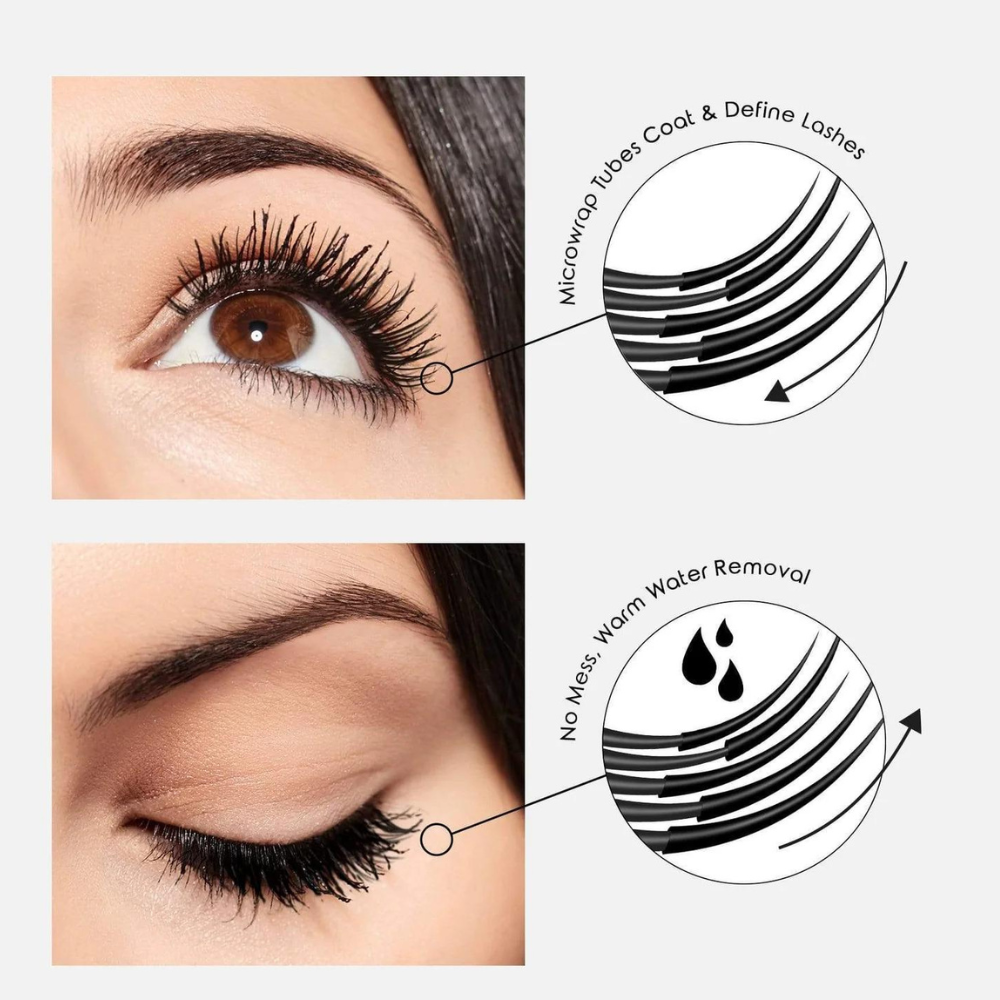
Tubing mascara is a type of mascara that forms small polymer “tubes” around individual lashes. Traditional mascara usually coats lashes with pigments, waxes, and oils. Tubing mascara uses film-forming ingredients to wrap each lash instead.
The result can look like tiny sleeves around the lashes. This design may help reduce smudging and flaking during the day. Many tubing formulas also come off with warm water rather than an oil-based remover.
However, “easy to remove” does not mean “safe to sleep in.” The formula still contains pigments, preservatives, and other ingredients that can remain against the eyelid and eye area for hours.
Tubing mascara compared with regular mascara
| Feature | Tubing mascara | Traditional mascara |
|---|---|---|
| How it coats lashes | Forms polymer tubes around lashes | Applies a film of waxes, oils, pigments, and other ingredients |
| Common removal method | Warm water and gentle pressure | Makeup remover, cleansing oil, or micellar water |
| Smudge resistance | Often high, but varies by formula | Varies from low to waterproof |
| Overnight safety | Not intended for sleeping in | Not intended for sleeping in |
| Main removal risk | Pulling or rubbing off tubes | Scrubbing, rubbing, or leaving residue |
The exact ingredients and instructions vary by brand. A tubing mascara may also contain conditioning agents, waxes, or water-resistant ingredients. Read the label rather than assuming every tubing formula behaves the same way.

Is It Safe to Sleep in Tubing Mascara?
No. Tubing mascara is not designed to be worn overnight. The main concern is not that the mascara will suddenly damage your eyes after one night. The concern is repeated or prolonged contact with the eye area.
The U.S. Food and Drug Administration advises consumers to use eye cosmetics safely, keep applicators clean, and avoid sharing eye makeup. The American Academy of Ophthalmology also recommends removing eye makeup before sleep because makeup residue can irritate the eyes and contribute to blocked oil glands.
There is no strong evidence that tubing mascara is a safe exception to this general guidance. Its tube-forming technology may change how the mascara comes off, but it does not remove the need for nighttime cleansing.
What may happen if you sleep in it?
Sleeping in tubing mascara may cause:
- Eye irritation: Residue can make the eyes feel gritty, dry, itchy, or watery.
- Eyelid irritation: Mascara can sit along the lash line and irritate the surrounding skin.
- Blocked oil glands: The eyelids contain meibomian glands that help keep tears from evaporating too quickly. Makeup residue may interfere with the lash-line area.
- Lash breakage: Dried tubes can make lashes stiff. Rubbing or pulling them off may break lashes.
- Flaking: Small pieces may fall into the eye and cause a foreign-body sensation.
- Higher contamination risk: An old or contaminated mascara wand can transfer microbes near the eye.
- Contact lens discomfort: Residue may make lenses feel dry or dirty.
These risks do not mean one missed wash will definitely cause harm. They explain why removal before sleep is the safer routine.
What if you accidentally slept in tubing mascara once?
Do not panic. Remove it gently when you wake up, and avoid rubbing your eyes.
Use warm water to soften the tubes. Hold a clean, wet washcloth against closed eyelids for several seconds, then lightly sweep downward or outward. If the mascara does not come off easily, repeat the process instead of pulling.
Remove contact lenses before cleaning your eyes. If you develop pain, marked redness, light sensitivity, discharge, blurred vision, or swelling, contact an eye-care professional promptly.

How to Remove Tubing Mascara Before Bed
The safest method is to soften the mascara first and let it slide away. The goal is to remove the tubes without scraping the lashes or rubbing the eyelids.
You will need
- Clean, lukewarm water
- A clean, soft washcloth or reusable makeup-removal cloth
- Mild facial cleanser, if needed
- Clean hands
- A clean towel
Avoid very hot water. Heat can irritate the delicate skin around the eyes.
Step-by-step removal
Wash your hands.
Clean hands reduce the chance of transferring dirt or microbes to your eyes.Remove contact lenses.
Take out lenses before washing away mascara or using any cleanser.Wet the lashes with lukewarm water.
Close your eyes and allow the water to soften the mascara for several seconds.Press, do not scrub.
Hold a damp washcloth over the closed eye for about 10 to 20 seconds. Use only gentle pressure.Sweep the mascara away.
Move the cloth gently along the lashes. Many tubes should slide off in small pieces.Clean the lash line if residue remains.
Use a small amount of mild cleanser around the closed eye. Keep cleanser out of the eye itself.Rinse well.
Remove any cleanser or remaining mascara from the eyelid area.Pat dry.
Use a clean towel. Do not rub the lashes or eyelids.
Signs that you removed it properly
Your lashes should feel flexible rather than stiff. There should be no visible black flakes at the lash line, and your eyes should not feel gritty or coated.
If your eyes still feel irritated after removal, stop using the product until the symptoms settle. Continuing to apply mascara can make it harder to identify the cause.
If warm water does not remove it
Some products marketed as tubing mascara are hybrids. They may contain water-resistant ingredients and need a specific remover.
Check the package instructions first. If the label recommends an eye-makeup remover, use one made for the eye area. Apply it to a cotton pad or soft cloth, hold it against the closed eye, and wipe gently.
Do not use alcohol, harsh soap, nail-polish remover, or household oils near the eyes. Also avoid repeatedly scrubbing with cotton pads, since friction can irritate the eyelid and pull lashes.

Why Removing Mascara Matters for Eye Health
Mascara sits close to the eye surface and the eyelid margin. The eyelid margin contains the openings of small glands that contribute oil to the tear film. Keeping this area clean can help limit residue and irritation.
This does not mean mascara directly causes every case of dry eye, blepharitis, or a stye. Those conditions have several possible causes. The practical point is that sleeping in eye makeup adds avoidable exposure and makes good eyelid hygiene harder.
Tubing mascara and sensitive eyes
Tubing mascara may feel more comfortable for some people because it can require less scrubbing during removal. That is a practical advantage, not proof that every formula suits sensitive eyes.
If you have allergies, eczema around the eyes, dry eye disease, blepharitis, or a history of reactions to cosmetics, check the ingredient list and test cautiously. “Hypoallergenic” does not guarantee that a product will not cause a reaction.
Stop using the mascara if you notice:
- Burning or stinging
- Itching
- Swelling
- A rash on the eyelids
- Persistent watering
- New redness
- A gritty feeling that does not go away
Seek urgent eye care for severe pain, vision changes, strong light sensitivity, significant swelling, or thick discharge.
Tubing mascara and contact lenses
If you wear contact lenses, remove them before taking off mascara. This helps prevent makeup particles and cleanser from becoming trapped between the lens and the eye.
Do not put contact lenses back in while your eyes are red, painful, or irritated. Follow your lens-care instructions, and contact your eye-care professional if symptoms continue.
Common Mistakes to Avoid
The most common mistake is assuming that easy removal makes overnight wear acceptable. Tubing mascara can be gentler to remove than waterproof mascara, but it is still not a sleep product.
Avoid these habits:
- Pulling off dry mascara tubes: This can tug on lashes and irritate the lash line.
- Scrubbing with a dry cotton pad: Dry friction can cause redness and lash breakage.
- Using very hot water: Hot water may worsen skin irritation.
- Sharing mascara: Sharing can transfer germs, even when the product looks clean.
- Adding water to old mascara: Water can change the formula and may introduce contamination.
- Using mascara after an eye infection: Replace it if your eye-care professional advises you to do so.
- Keeping mascara far past its recommended use period: Follow the package directions and replace it sooner if the smell, texture, or performance changes.
- Pumping the wand repeatedly: This pushes air into the tube and may dry the formula faster.
- Applying makeup over irritated eyes: Cosmetics can prolong irritation and hide worsening symptoms.
The FDA notes that eye cosmetics need special care because they are used close to a sensitive body area. Keep the container closed when not in use, and do not use products that appear contaminated or have changed noticeably.

What to Do If Your Eyes Are Irritated
First, remove contact lenses and stop using the mascara. Rinse the closed eyes with clean water if you think a product particle entered the eye. Do not scratch or rub the eye.
For mild irritation, rest from eye makeup and monitor your symptoms. Do not use someone else’s eye drops. If you use an eye drop, choose one appropriate for your symptoms and follow the label; ask a pharmacist or eye-care professional if you are unsure.
Get prompt medical advice if you have:
- Eye pain
- Blurred or reduced vision
- Strong sensitivity to light
- Severe redness
- Pus-like or thick discharge
- A swollen eyelid that is worsening
- Symptoms after an eye injury
- Symptoms that do not improve after stopping the product
People who wear contact lenses should be especially cautious. Contact-lens-related infections can become serious, so pain, light sensitivity, or vision changes require prompt professional attention.

Tubing Mascara: A Simple Decision Guide
Use this guide when deciding what to do after wearing tubing mascara.
| Situation | Best next step |
|---|---|
| You wore it during the day and your eyes feel normal | Remove it before sleep with warm water and gentle pressure |
| You slept in it once and have no symptoms | Remove it gently and avoid rubbing |
| It will not come off with water | Follow the label and use a gentle eye-makeup remover |
| Your eyes are itchy or burning | Stop using it and avoid eye makeup until symptoms settle |
| You have pain, vision changes, or strong light sensitivity | Seek prompt eye-care advice |
| The mascara smells different or has changed texture | Discontinue use and replace it |
| You wear contact lenses and your eye feels painful | Remove the lens and contact an eye-care professional promptly |
The deciding factor is not whether the mascara is tubing, waterproof, natural, or expensive. The deciding factor is whether the product is intended for overnight use and whether your eyes remain healthy. Standard mascara products are generally not intended for sleep.

Frequently Asked Questions
Can tubing mascara damage your eyelashes overnight?
One night is unlikely to permanently damage healthy lashes, but dried mascara can make lashes stiff. Pulling or rubbing off the tubes may cause breakage or lash loss. Removing the product gently is safer.
Is tubing mascara better for sensitive eyes?
It may be easier to remove because many formulas release with warm water and less scrubbing. Still, it can cause irritation or allergy. Check the ingredients, follow the label, and stop using it if symptoms appear.
Can you remove tubing mascara with micellar water?
Sometimes, but it depends on the formula. Many tubing mascaras come off best with warm water. If micellar water is recommended on the label, use it gently and rinse the eye area afterward if the product instructions advise rinsing.
Do you need an oil cleanser for tubing mascara?
Usually not. Oil cleansers can be useful for some traditional or waterproof mascaras, while many tubing formulas are designed to release with warm water. Use the removal method listed by the manufacturer.
How often should you replace tubing mascara?
Follow the product label. Replace it sooner if it becomes dry, changes smell or texture, or causes irritation. Never share mascara, and replace eye makeup if advised after an eye infection.
Conclusion
You should not sleep in tubing mascara. Its polymer tubes may make removal easier, but they do not make overnight wear risk-free. Remove the mascara before bed with warm water, gentle pressure, and a clean cloth. Never pull off dry tubes or scrub the lash line.
If you have pain, vision changes, major redness, light sensitivity, or persistent discharge, stop using the product and seek professional eye care.
